Travertine vs Travertine-Look Porcelain: An Honest Comparison
Real stone or the smarter swap? Here is the honest trade-off between authentic travertine and travertine-look porcelain, and how to pick the right one for each room.
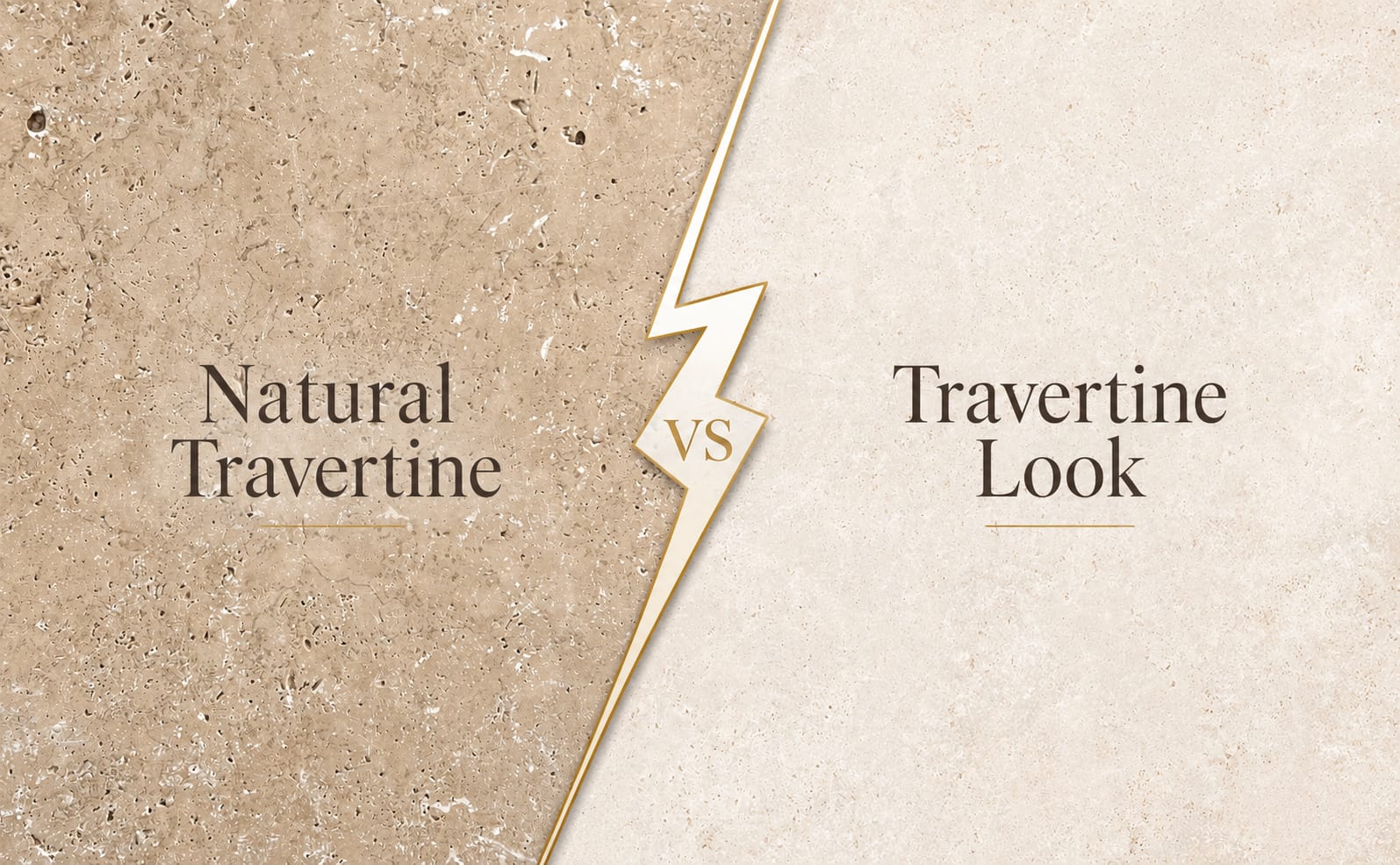
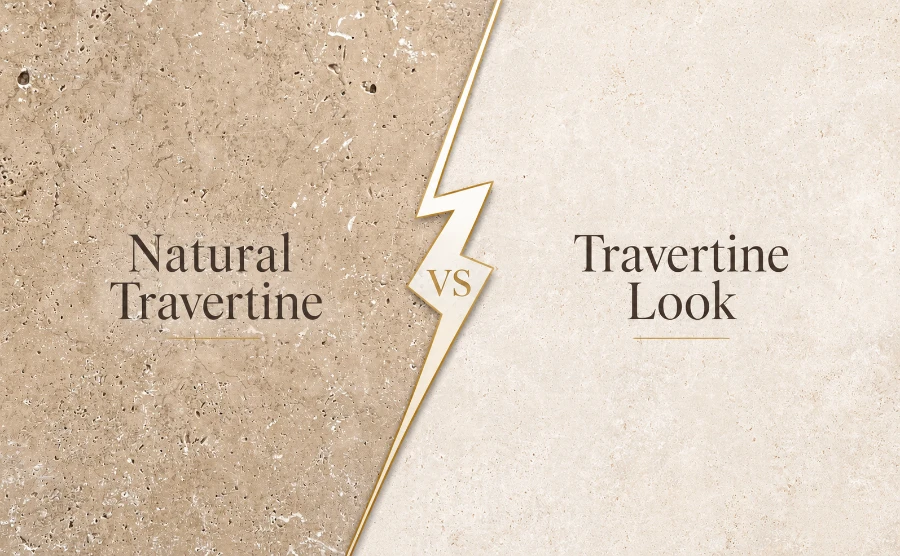
If you love the warm, sun-bleached look of travertine, you have two ways to get it: the real stone, or a travertine-look porcelain that reproduces it. Both are beautiful, and at Design Tiles we help buyers choose between them every day. The honest difference comes down to authenticity versus upkeep, and which one belongs in which room. Here is the straight comparison, without the sales gloss.
The verdict, up front
Choose real travertine for genuine stone, natural character and a surface that ages beautifully, if you are happy to seal and care for it. Choose travertine-look porcelain for the same warm look with no sealing, easy cleaning and strong stain resistance, especially in bathrooms, busy floors and around pools. Many people use porcelain inside and out, and save real stone for a feature.
What is the difference between travertine and travertine-look porcelain?
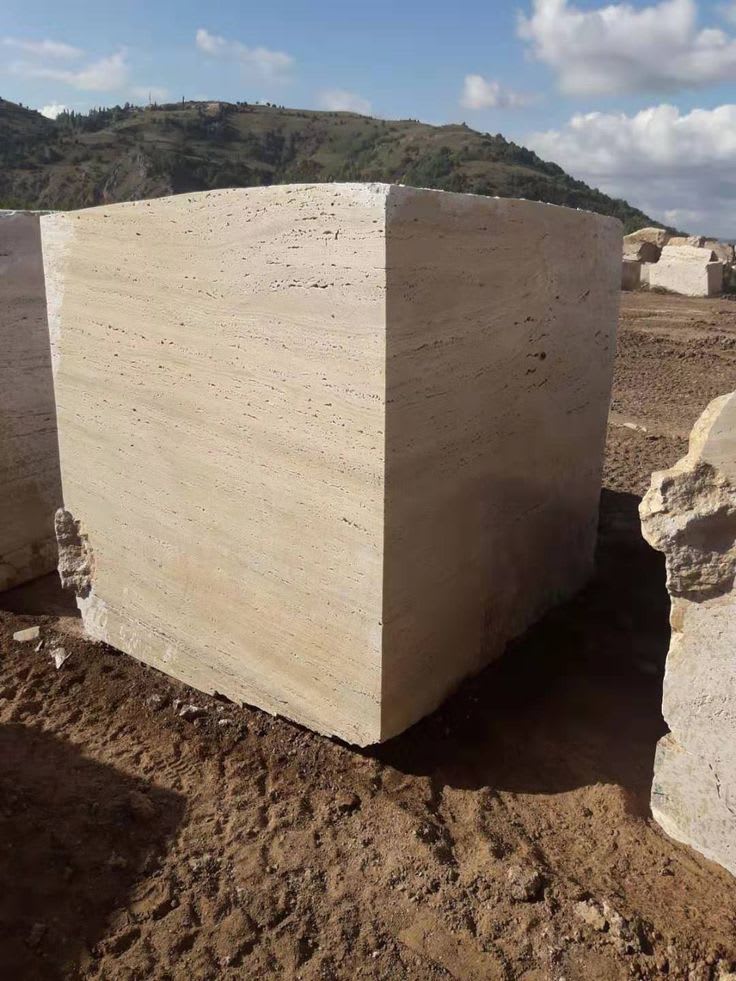
Real travertine is a natural stone, a form of limestone laid down by mineral springs over thousands of years. It has genuine depth, natural pitting and tonal movement that no two tiles share. It is also porous, so it needs sealing and a little ongoing care. Travertine-look porcelain is a dense, fired porcelain tile printed and textured to reproduce that stone look. It carries the warmth and the matt finish of travertine in a surface that is non-porous, hard-wearing and essentially maintenance-free.
So the look can be almost identical. What differs is what happens underneath: one is natural and characterful but needs protecting, the other is engineered to be easy.
The honest comparison
Side by side, on the things that actually affect your decision.
| Real travertine | Travertine-look porcelain | |
|---|---|---|
| Material | Natural stone (limestone) | Fired porcelain |
| Look and feel | Authentic, unique, cool natural touch | Very convincing, consistent, warm matt |
| Sealing | Required, after laying and periodically | None required |
| Maintenance | pH-neutral cleaners, avoid acids | Mop like any porcelain floor |
| Stain and scratch | Can etch and stain if unsealed | Highly resistant |
| Wet and outdoor | Great, sealed, cool underfoot | Great, 20mm pavers, high slip options |
| Price guide | Varies; add lifetime care cost | Similar buy-in, very low upkeep |
| Best for | Feature floors, character, purists | Bathrooms, busy homes, indoor-outdoor |
Does travertine-look porcelain need sealing?
No. This is the single biggest practical difference. Porcelain is non-porous, so travertine-look porcelain never needs sealing and resists water, soap and stains from day one. Real travertine is porous and must be sealed after installation and topped up over its life, and it prefers pH-neutral cleaning so acids do not etch the surface. If low maintenance is high on your list, that usually settles the choice on its own.
If you do choose real travertine or another natural stone, a good penetrating sealer is what keeps it looking new. We use and recommend the Aqua Seal Gold+ natural-look sealer.
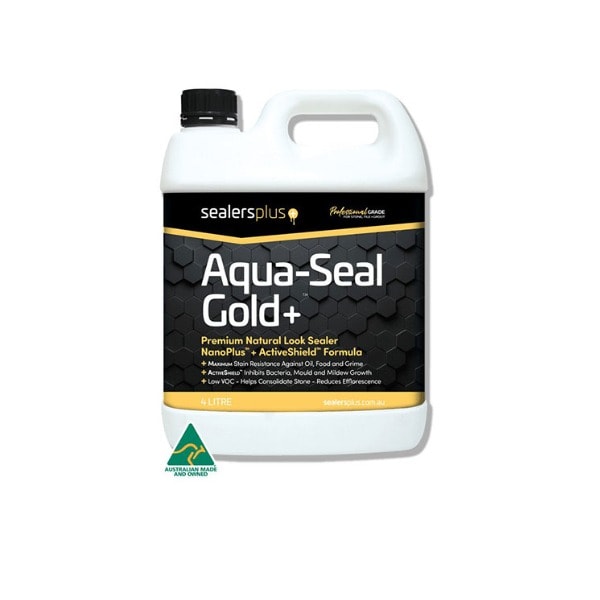
Sealer · stone, grout & terrazzo
Aqua Seal Gold+ Natural-Look Sealer
A premium water-based penetrating sealer that protects real travertine and natural stone from oil, food and grime while keeping a natural, non-yellowing finish. Stain resistance in about four hours, for indoor and outdoor use.
View Aqua Seal Gold+ →Which is better for bathrooms, pools and alfresco?
In a bathroom, porcelain is the easy winner for most people: it handles water and products with no sealing, so it stays looking new with almost no effort. Real travertine can be stunning in a bathroom, but it asks for sealing and careful cleaning. Around a pool or alfresco, both are lovely; travertine pavers are a timeless, cool-underfoot classic, while travertine-look porcelain pavers in a 20mm format give the same look with a high slip rating and less upkeep. The bonus with porcelain is indoor-outdoor flow: many ranges offer a matching internal tile and external paver, so one look runs from the living room to the courtyard.
So which should you choose?
If you want real stone and you value authenticity and patina over convenience, choose travertine and commit to sealing it. If you want the warmth of travertine with an easy life, especially in wet areas, busy family floors or a seamless indoor-outdoor scheme, choose travertine-look porcelain. Plenty of homes do both: porcelain for the hard-working floors, a touch of real travertine where its character can shine. For more on why porcelain has become our best-selling travertine option, see our guide to getting the travertine look for less.
Compare by format: real travertine vs travertine-look
The choice plays out differently across formats. Here is a real stone option beside a travertine-look porcelain in three popular formats. Confirm current pricing with our team.
Large format floor & wall
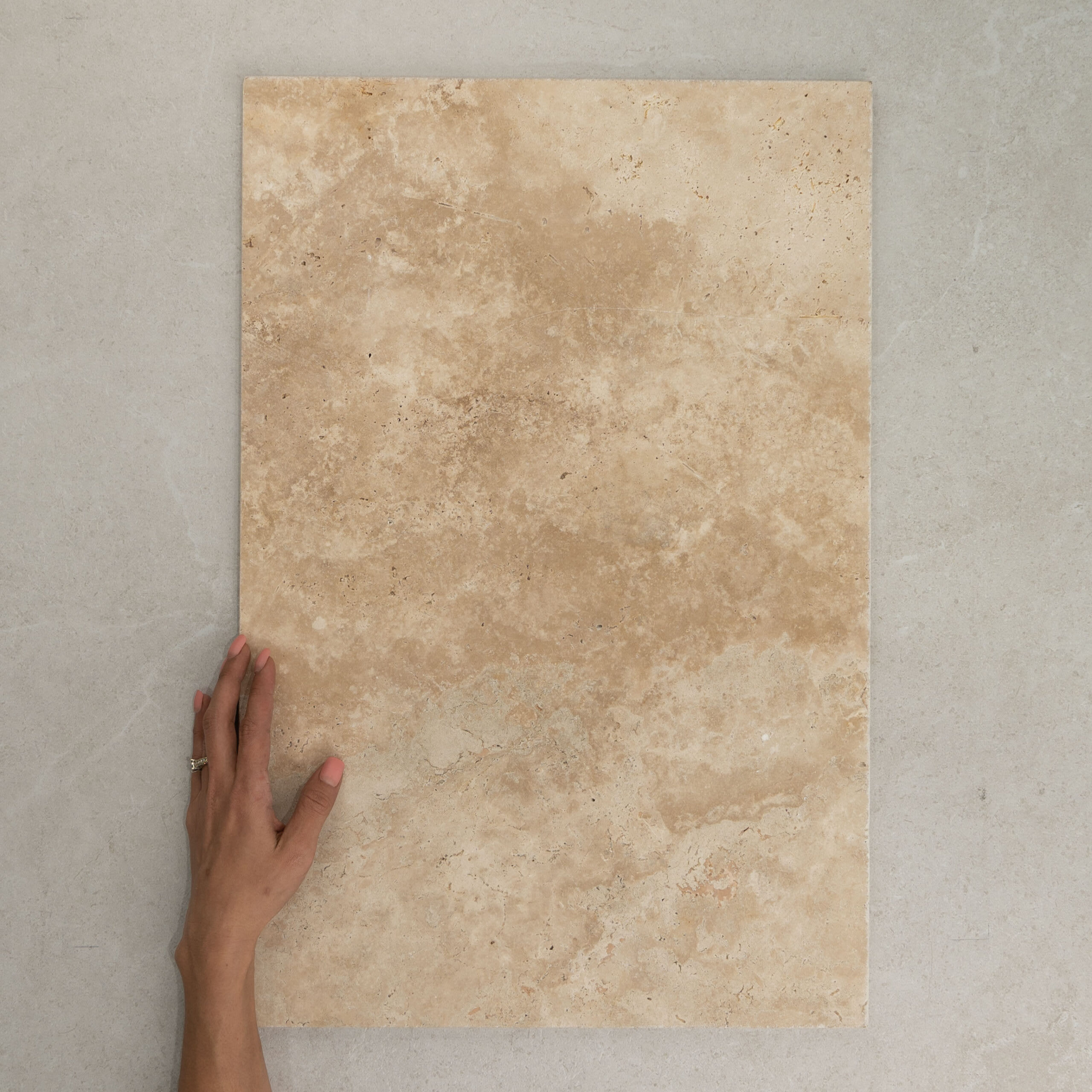
Natural stone · seal required
Classic Tumbled Travertine
Genuine Turkish travertine in large-format tiles, 30mm pavers and the French pattern. Warm, characterful stone for feature floors and pool surrounds. Must be sealed.
View Classic Travertine →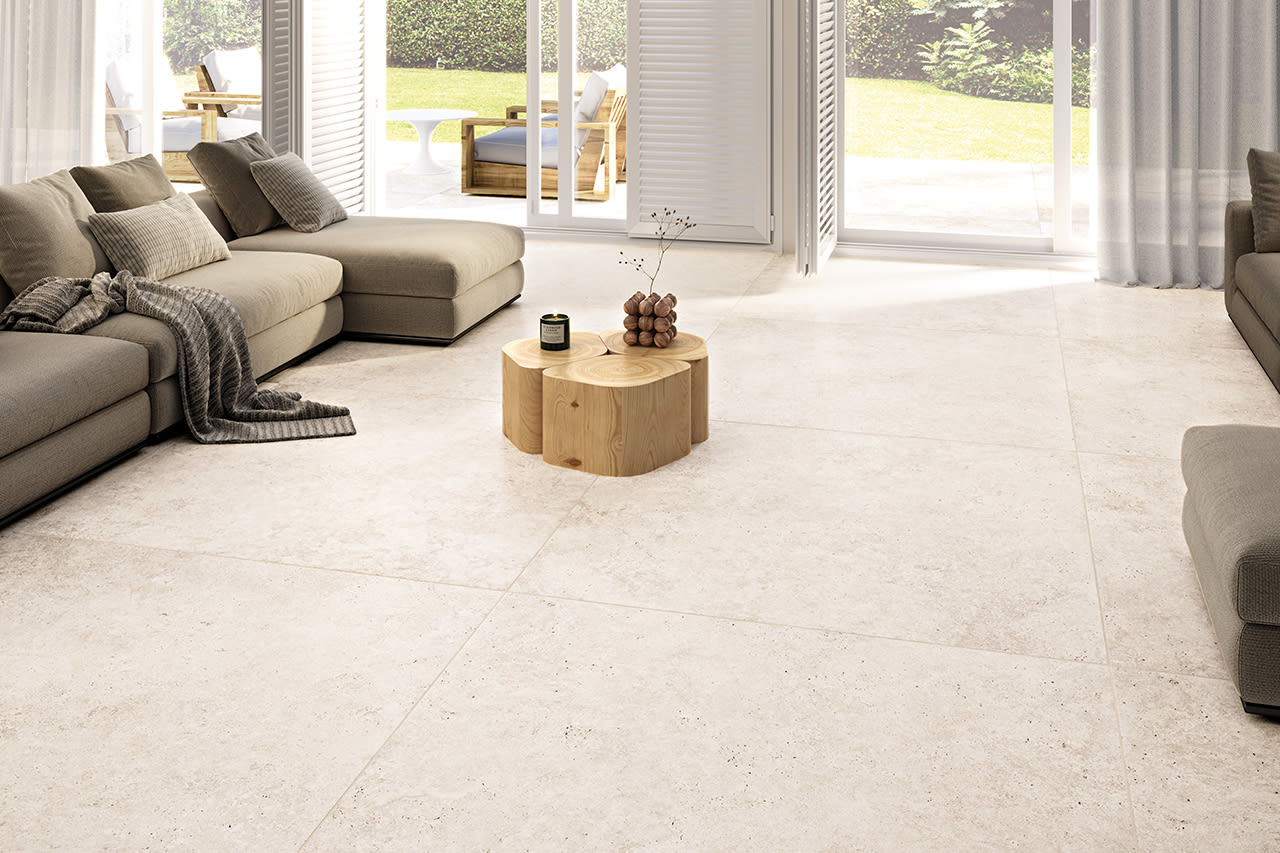
Porcelain · from $130/m² · no sealing
Tivoli Travertine-Look Porcelain
A cross-cut travertine look in matt porcelain, up to 1200 by 1200mm, for calm large-format floors and walls with seamless indoor-outdoor flow.
View Tivoli →Subway
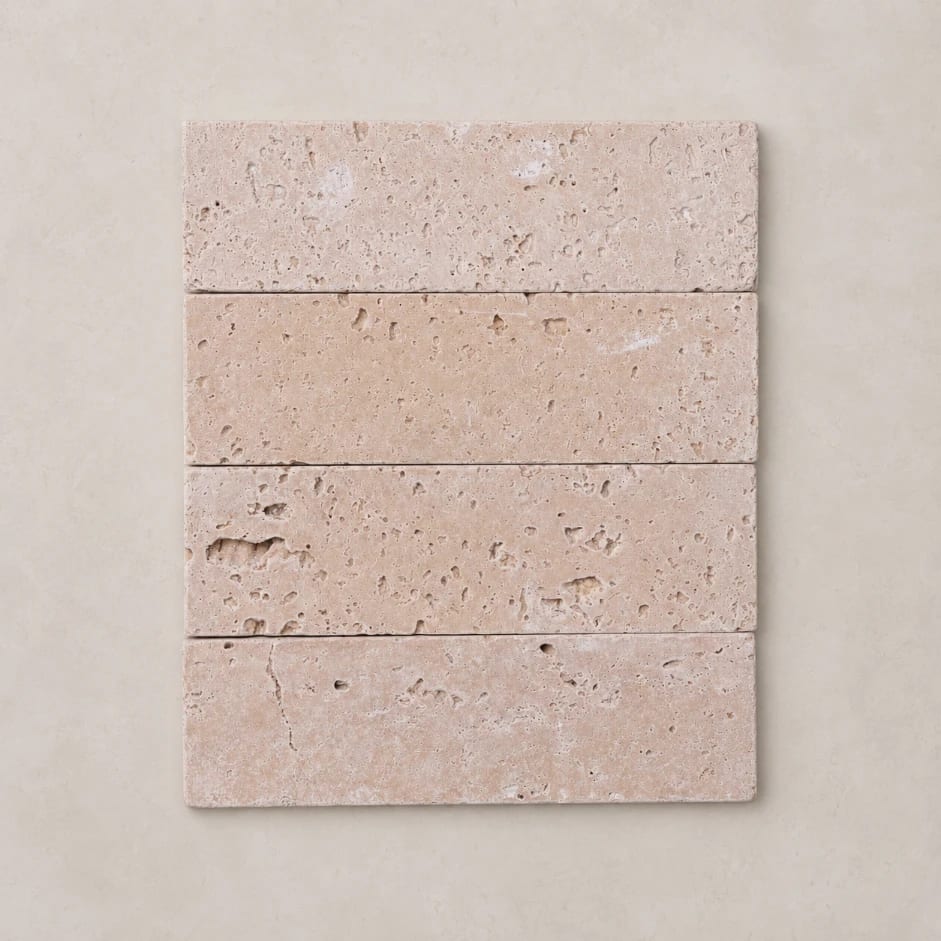
Natural stone · from $264/m²
Subway Rome Travertine
Real tumbled travertine in a slim 45 by 150mm subway, for a characterful heritage splashback or feature wall. Natural stone, sealed.
View Subway Rome →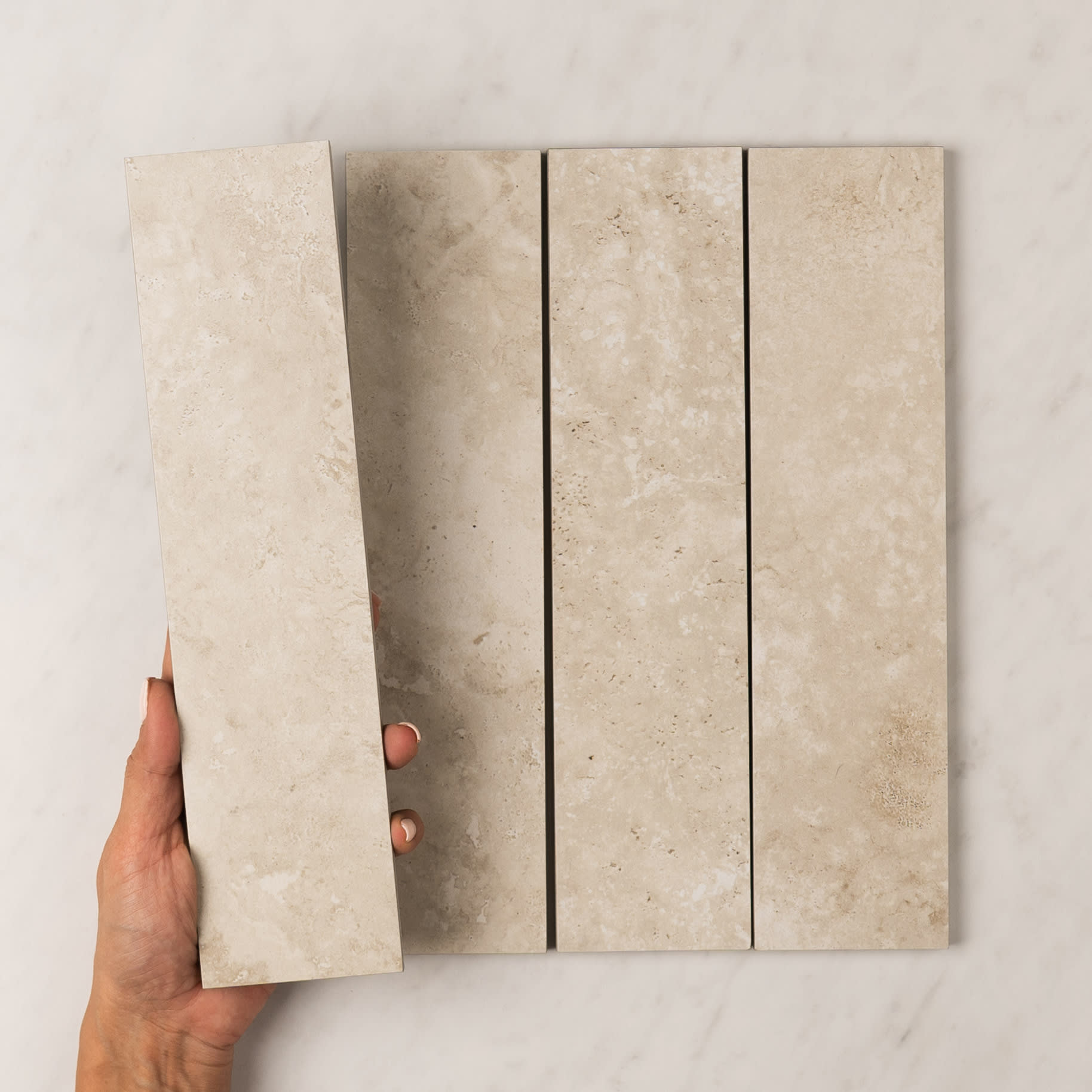
Porcelain · from $73/m² · no sealing
Precious Travertine Subway
The travertine look in a 75 by 300mm porcelain subway, easy to clean and ready for wet areas. No sealing required.
View Precious Subway →Mosaic
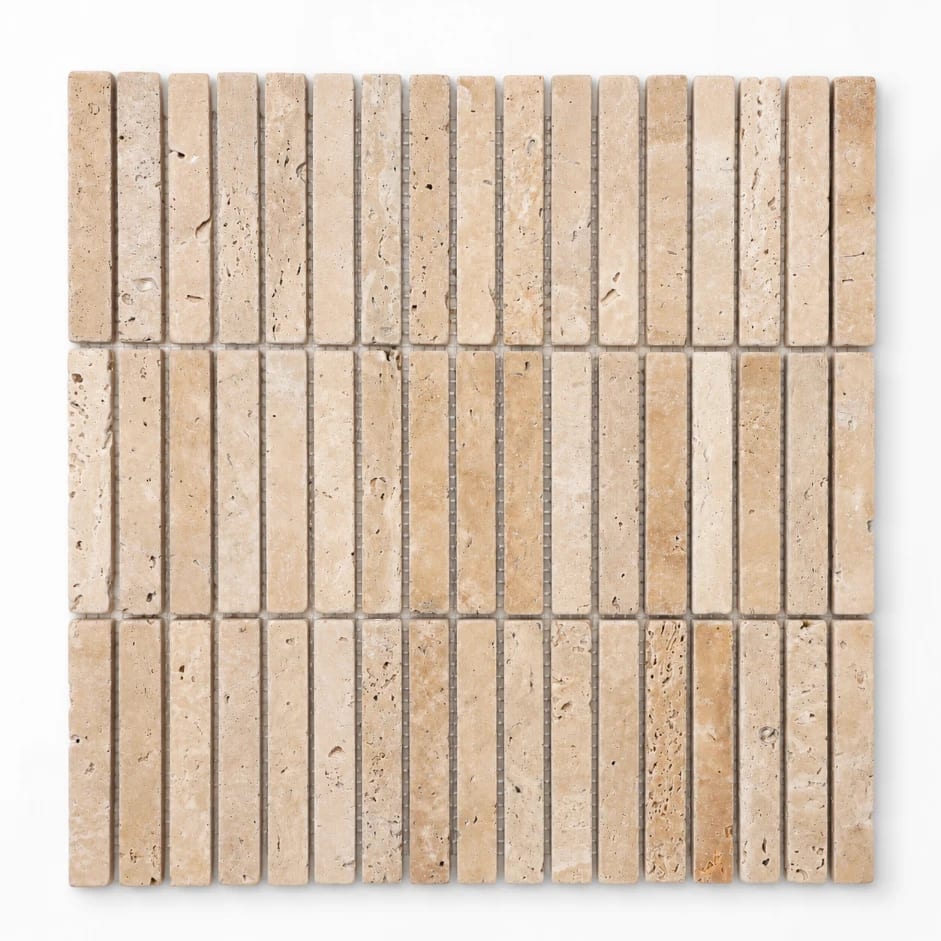
Natural stone · from $290/m²
Stack Rome Travertine Mosaic
A stacked brick mosaic in real tumbled travertine, 15 by 100mm chips on a sheet, for a textural stone feature wall or splashback. Sealed.
View Stack Rome →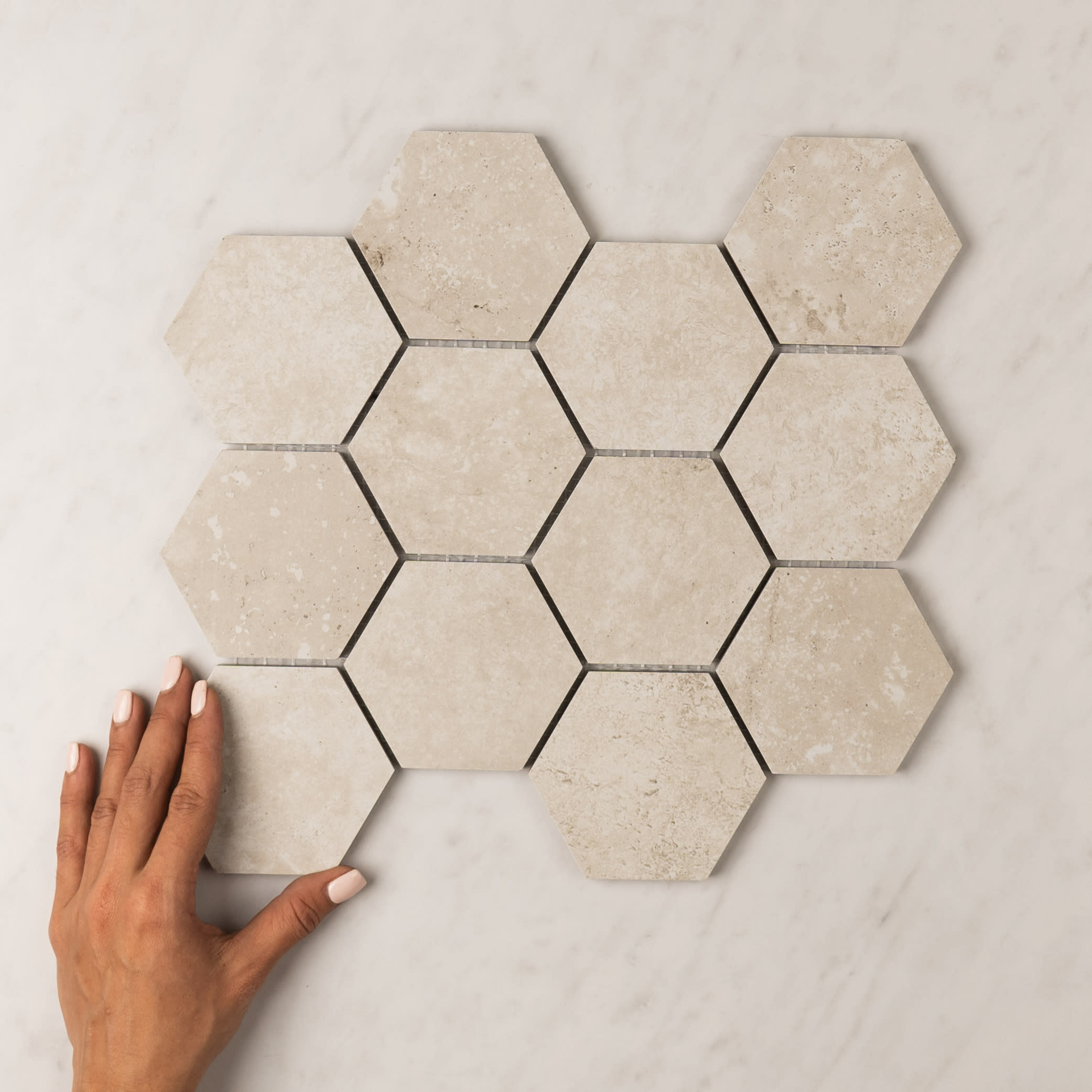
Porcelain · from $133/m² · no sealing
Precious Travertine Hexagon Mosaic
A travertine-look porcelain hexagon mosaic for a warm feature floor or splashback, with the look of stone and none of the upkeep.
View Precious Hexagon →Frequently asked questions
What is the difference between travertine and travertine-look porcelain?
Real travertine is a natural limestone formed by mineral springs, cut and finished into tiles and pavers. Travertine-look porcelain is a man-made porcelain tile printed and textured to reproduce that stone look. Travertine gives you genuine stone with natural pitting and depth but needs sealing and care. Porcelain gives you the same warm appearance in a dense, low-maintenance tile that does not need sealing.
Is porcelain or real travertine better?
Neither is simply better; they suit different priorities. Choose real travertine if you want authentic stone, natural variation and a surface that develops character over time, and you are happy to seal and maintain it. Choose travertine-look porcelain if you want the warm look with far less upkeep, no sealing, strong stain and scratch resistance, and an easier life in busy or wet areas.
Does travertine-look porcelain need sealing?
No. Porcelain is dense and non-porous, so travertine-look porcelain does not need sealing and resists stains and moisture out of the box. Real travertine is porous and does need sealing, both after installation and periodically over its life, to protect it from staining and etching.
Is travertine good for bathrooms and wet areas?
Both can work, with a difference in care. Travertine-look porcelain is ideal for bathrooms because it shrugs off water, soap and products with no sealing. Real travertine can be beautiful in a bathroom but must be sealed and cleaned with pH-neutral products, as acidic cleaners and some toiletries can etch natural stone.
Can travertine and travertine-look porcelain be used around a pool?
Yes, both are popular around pools. Real travertine pavers stay cool underfoot and are a classic pool choice, sealed for protection. Travertine-look porcelain pavers, usually in a 20mm outdoor format with a high slip rating, give the same look with less maintenance and excellent grip. Confirm the slip rating suits the pool zone before ordering.
Which is cheaper, travertine or porcelain?
It depends on the range and format, and on the whole-of-life cost. Entry travertine can look affordable per square metre, but sealing, care and the occasional repair add up over time. Travertine-look porcelain often lands in a similar purchase range and then costs very little to maintain, which is why many buyers find it the better value overall. Ask us for current pricing on both.
Does travertine-look porcelain look fake?
The best ranges are genuinely convincing. Modern porcelain uses high-resolution printing and multiple surface textures so the colour, veining and matt finish read like real stone across a floor. Cheaper tiles with a repeating pattern can look flat, which is why it pays to see a real sample in natural light before you decide.
Can I use travertine-look porcelain indoors and outdoors?
Yes, and that is one of its biggest advantages. Many travertine-look ranges come in a matching interior tile and a 20mm exterior paver, so you can run the same look from the living floor straight out to the alfresco with no change in appearance. Real travertine can also be used inside and out, with sealing and the right finish for each area.


Skip the designer fee, come straight to the experts
Our in-house experts at Design Tiles give you free, personal design guidance, in our Rockdale showroom or virtually anywhere in Australia. You get designer-level results and keep the budget for the tiles. Order sample packs to any state, or book a free consultation with the team.