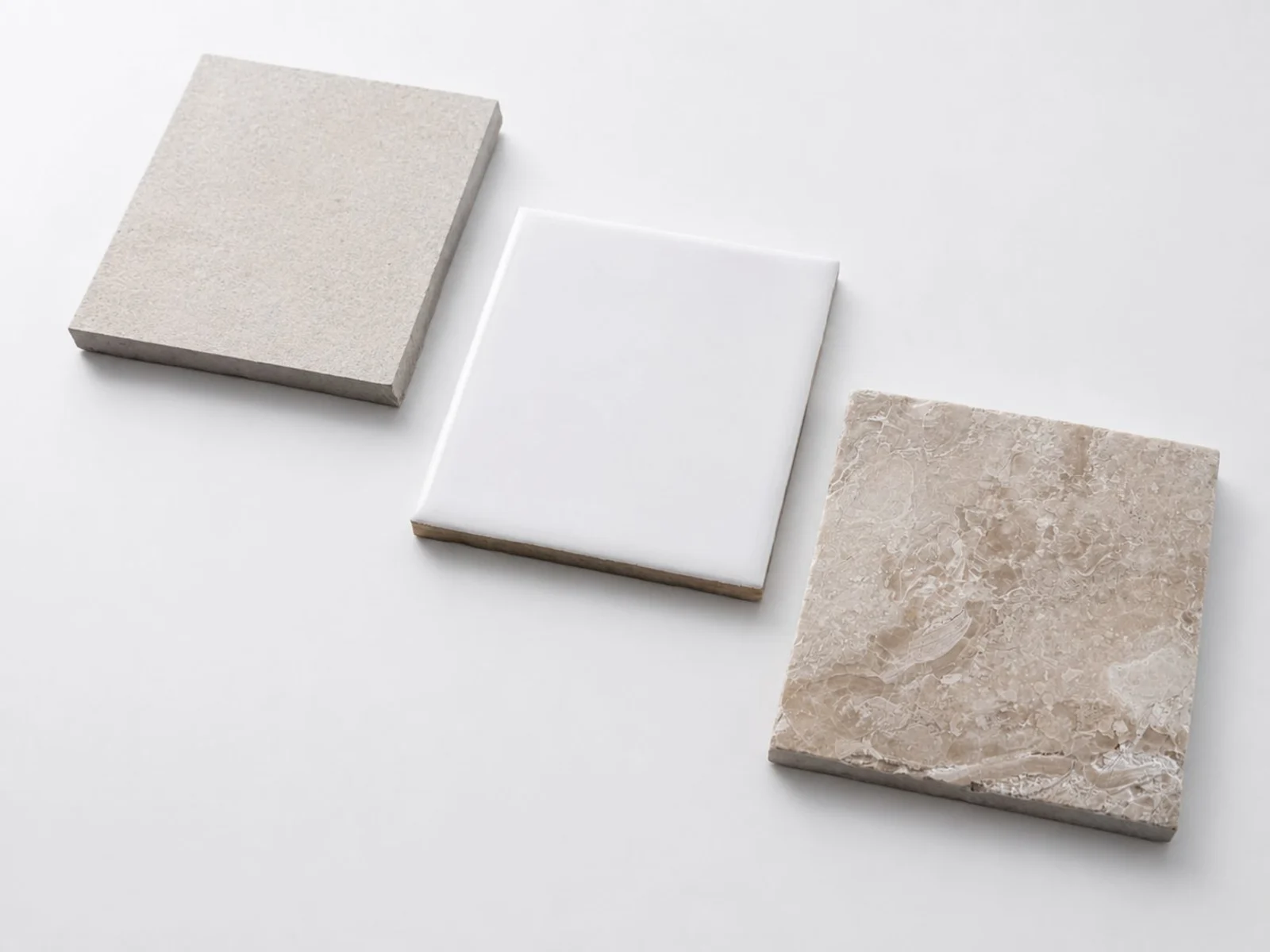
Porcelain vs Ceramic vs Natural Stone: An Honest Guide
Three materials, three very different personalities. Here is how porcelain, ceramic and natural stone actually compare on water, wear, upkeep and cost, and how to pick the right one room by room.
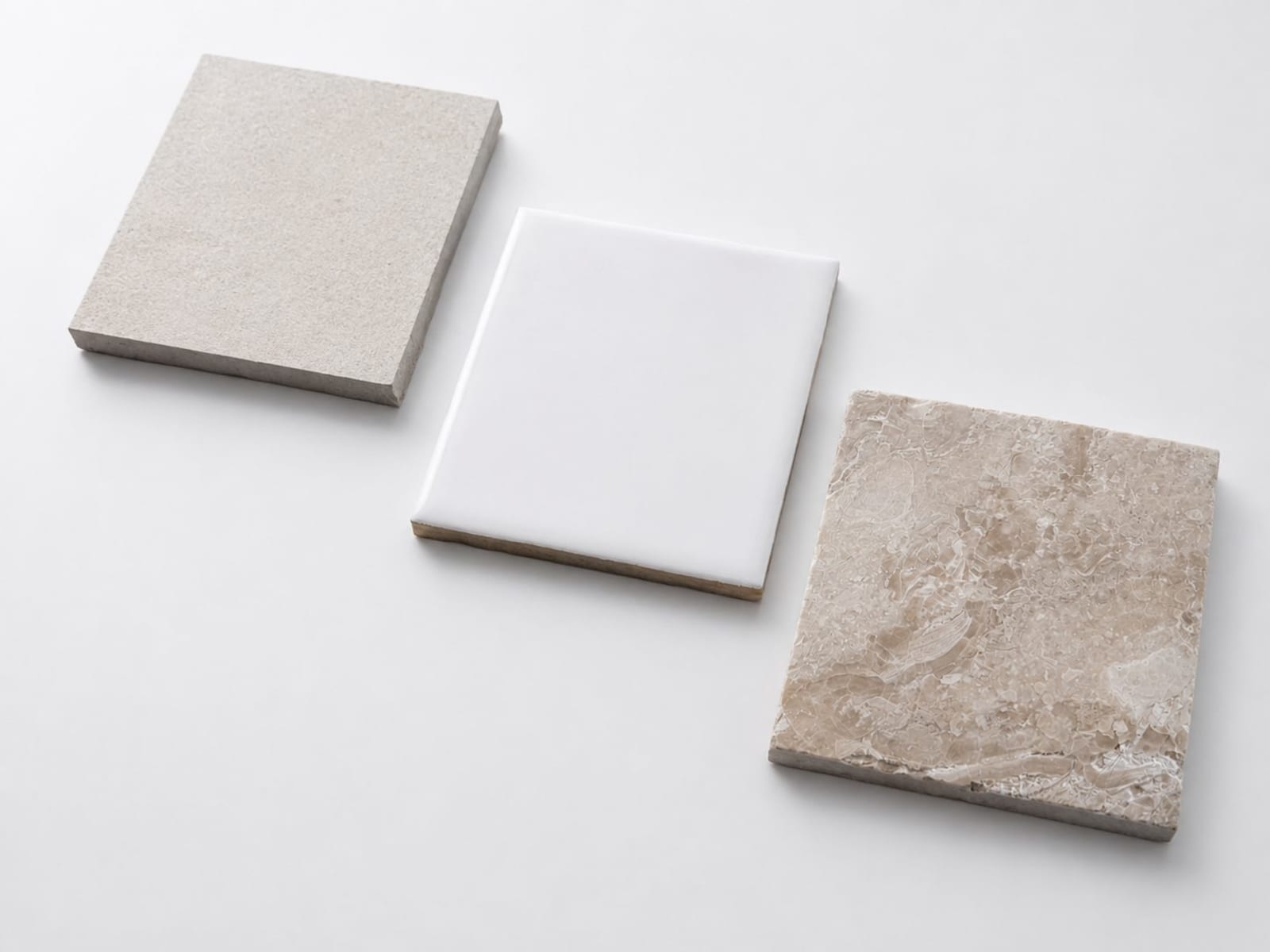
It is the first fork in almost every tile decision: porcelain vs ceramic, and then the question of whether to spend up on natural stone at all. The three look similar in a showroom, yet they behave very differently once they are on your floor and living with your family. This is our honest, plain-English guide to how they compare, and how to choose the right one for each room.
The short answer
Porcelain is the hardest and least porous (water absorption at or below 0.5 percent), needs no sealing, and suits floors, wet areas and outdoors. Ceramic is softer and more absorbent, ideal as an affordable wall tile. Natural stone is the most beautiful and unique, but it is porous, needs sealing and gentle care.
Want the stone look without the upkeep? Stone-look porcelain is usually the sweet spot.
What is the difference between porcelain and ceramic tiles?
Both porcelain and ceramic are made from clay and fired in a kiln, so they are close cousins. The difference is in the clay and the firing. Porcelain uses a finer, denser clay fired at a higher temperature, which produces a tile with a water absorption at or below 0.5 percent. That density is why porcelain is harder, more stain resistant and frost resistant, and why it can go on floors and outdoors. Ceramic is fired at a lower temperature from a more porous clay, so it is softer and absorbs more water. That makes it a beautiful, budget-friendly wall tile, but a less durable choice underfoot.
Porcelain vs ceramic vs natural stone, side by side
The quickest way to see the trade-offs is to line the three up against the things that actually matter in a home.
| Porcelain | Ceramic | Natural stone | |
|---|---|---|---|
| Water absorption | Very low (≤0.5%) | Higher (3-7%+) | Porous, varies by stone |
| Durability | Hardest, floor and outdoor rated | Softer, best on walls | Durable but scratches and etches |
| Sealing | Never needed | Not needed (glazed) | Seal on install and periodically |
| Maintenance | Very low, wipe clean | Low | Higher, gentle cleaners only |
| Best for | Floors, wet areas, outdoors | Walls, splashbacks, feature | Feature floors, benchtops, character |
| Cost | Mid | Most affordable | Premium |
| Character | Consistent, print-driven | Consistent | Unique, real veining |
When should I choose porcelain?
Choose porcelain when the surface has to work hard. Floors, hallways, laundries, bathrooms, alfresco areas and pool surrounds all benefit from its density and low absorption. Because modern porcelain is printed and pressed with convincing realism, you can have a travertine, marble, limestone or concrete look that behaves like porcelain, with no sealing and none of the etching that acids cause on real stone. For most Australian homes, porcelain does the heavy lifting.
When is ceramic the smart choice?
Ceramic earns its place on walls. A glazed ceramic subway, a zellige-look or a gloss feature tile gives you colour, light and texture at a friendly price, in a spot that never has to bear foot traffic. Using ceramic on the walls and porcelain on the floor is a classic way to get a designer bathroom without overspending.
Is natural stone worth it?
Natural stone is the material the others imitate. Real travertine, marble, limestone and granite carry a depth and a one-off veining that a print can approach but never exactly repeat. The trade-off is care: stone is porous, so it must be sealed and cleaned gently, and softer stones can scratch or etch from acids like lemon or wine. If you love genuine material and the room suits the upkeep, stone rewards you. If you want the look with none of the maintenance, stone-look porcelain is the pragmatic answer, and often the one we reach for.
A Design Tiles pick for each material
To make the three materials concrete, here is one tile we love from each family, with where it belongs and how to look after it.
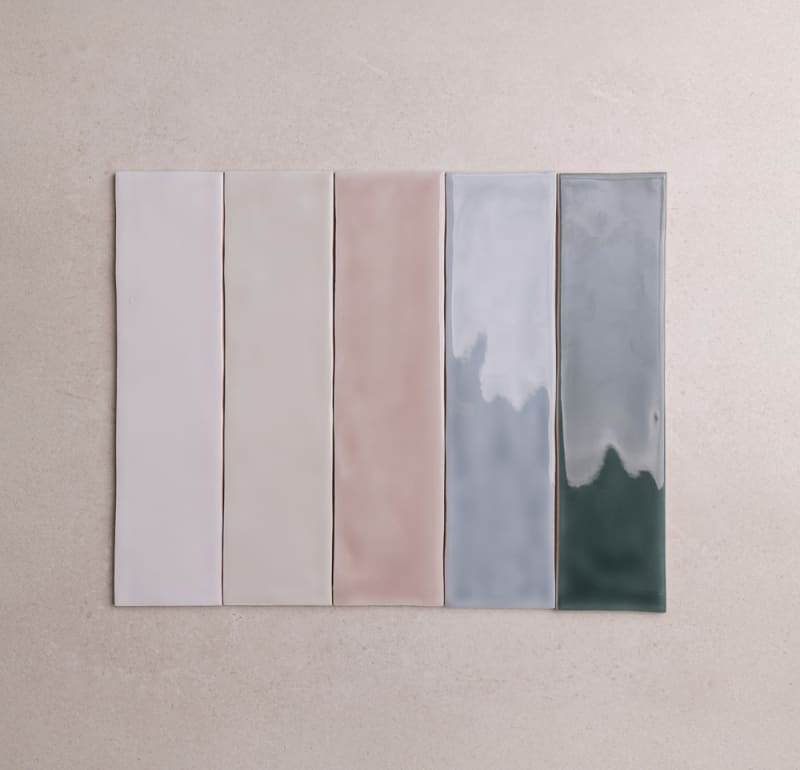
Ceramic
Aura Series Ceramic Wall Tile, 75 x 300mm
A gloss ceramic with a soft ripple edge that catches the light, in ten contemporary colours.
Best for: feature walls, splashbacks and bathroom walls. A wall tile, so keep it off floors.
Care: glazed, so no sealing. Wipe with a mild detergent; the gloss cleans in seconds.
View product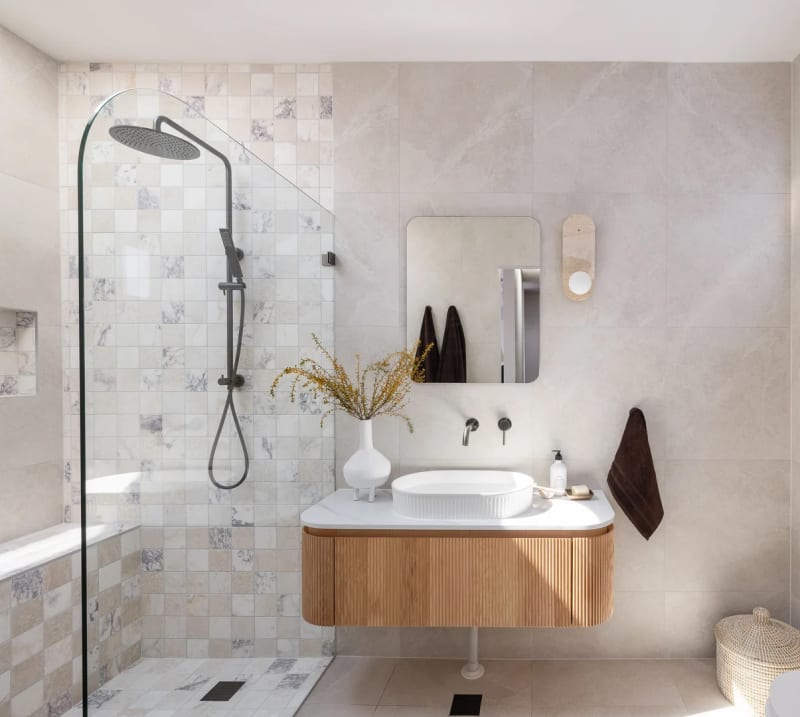
Porcelain
Ivory Stone Look Porcelain, 600 x 600 & 600 x 1200mm
A soft, matt stone-look porcelain, with a P3 interior finish and a P5 external option for indoor-outdoor flow.
Best for: floors, wet areas, and running one look from inside to the alfresco.
Care: non-porous, so no sealing. Just sweep and mop; only the grout needs a sealer.
View product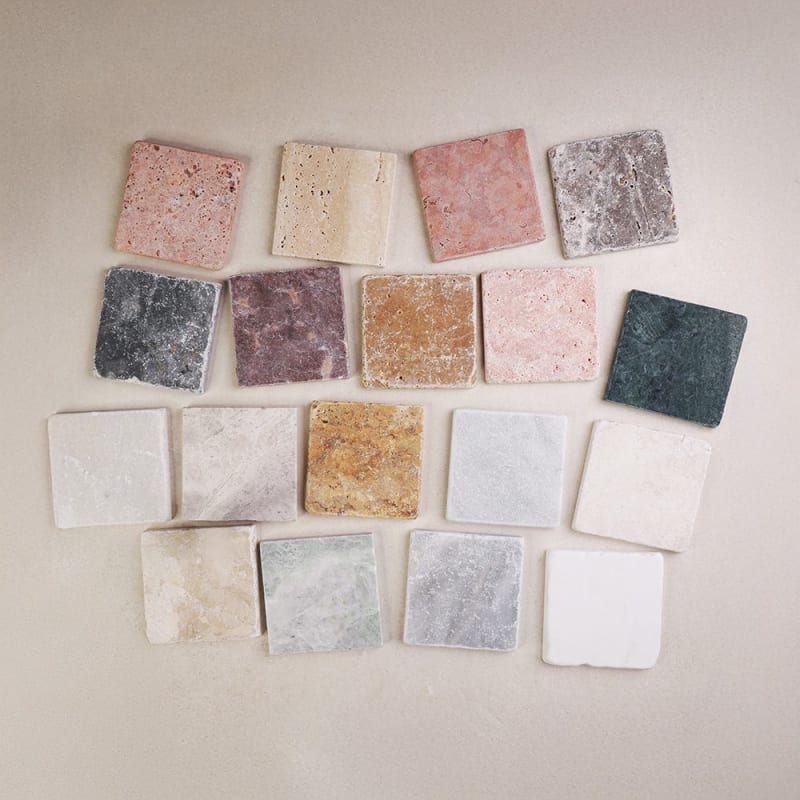
Natural stone
Tumbled Marble Mosaic, 100 x 100mm
Real tumbled marble with soft, worn edges and genuine variation, in a wide range of natural tones.
Best for: feature floors, splashbacks, shower niches and mosaic detailing.
Care: seal on installation and periodically after. Clean with a pH-neutral stone cleaner; avoid acids like lemon and vinegar.
View productSo which tile is best for my renovation?
There is no single winner, only the right material for each surface. A well-planned home often uses all three: porcelain underfoot and outside for durability, ceramic on the walls for colour and value, and a considered piece of natural stone where you want a moment of real luxury. The art is in the mix, and that is exactly where a good showroom conversation pays for itself.
Frequently asked questions
What is the difference between porcelain and ceramic tiles?
Both are fired clay, but porcelain is made from a denser, more refined clay fired at a higher temperature. That gives porcelain a water absorption at or below 0.5 percent, which makes it harder, less porous and suitable for floors, wet areas and outdoors. Ceramic absorbs more water and is softer, which makes it a lovely, cost-effective wall tile but less suited to heavy floors or exterior use.
Is porcelain or natural stone better for a bathroom floor?
For most bathrooms, porcelain is the practical winner. It does not need sealing, resists water and stains, and comes in stone looks that are hard to tell from the real thing. Natural stone is beautiful and unique but is porous, needs sealing and gentle cleaning, and can be slippery when polished. Choose stone when you want genuine material character and are happy to maintain it.
Does porcelain need sealing?
No. Porcelain is effectively non-porous, so it never needs sealing. Only the grout between the tiles benefits from a sealer. Natural stone, by contrast, should be sealed on installation and periodically afterwards.
Is natural stone worth the extra cost?
It depends on the look you want. Natural stone gives you real depth, veining and a one-of-a-kind surface that porcelain imitates but never perfectly repeats. If that authenticity matters to you and the room suits the upkeep, it is worth it. If you want the stone look with none of the maintenance, stone-look porcelain gets you most of the way for less.
Which is the most slip resistant?
Slip resistance comes down to the finish and the rating, not just the material. A textured or matte porcelain with a suitable P or R rating outperforms a polished stone or a glossy ceramic in a wet area. Always check the slip rating for the room rather than assuming from the material alone.
Can I use ceramic tiles on the floor?
Some floor-rated ceramics exist, but as a rule ceramic is best kept to walls and light-traffic areas. For floors, hallways, wet areas and anywhere outdoors, porcelain is the safer, longer-lasting choice.


Skip the designer fee, come straight to the experts
Our in-house experts at Design Tiles give you free, personal design guidance, in our Rockdale showroom or virtually anywhere in Australia. You get designer-level results and keep the budget for the tiles. Order sample packs to any state, or book a free consultation with the team.