Zellige Tiles in Australia: A Sydney Designer's Guide
Few tiles divide a room quite like zellige. The handmade Moroccan original is one of the most beautiful surfaces ever made — and one of the most misunderstood. Here's how to choose between real zellige and the modern look-alikes, and how to use either with quiet confidence.
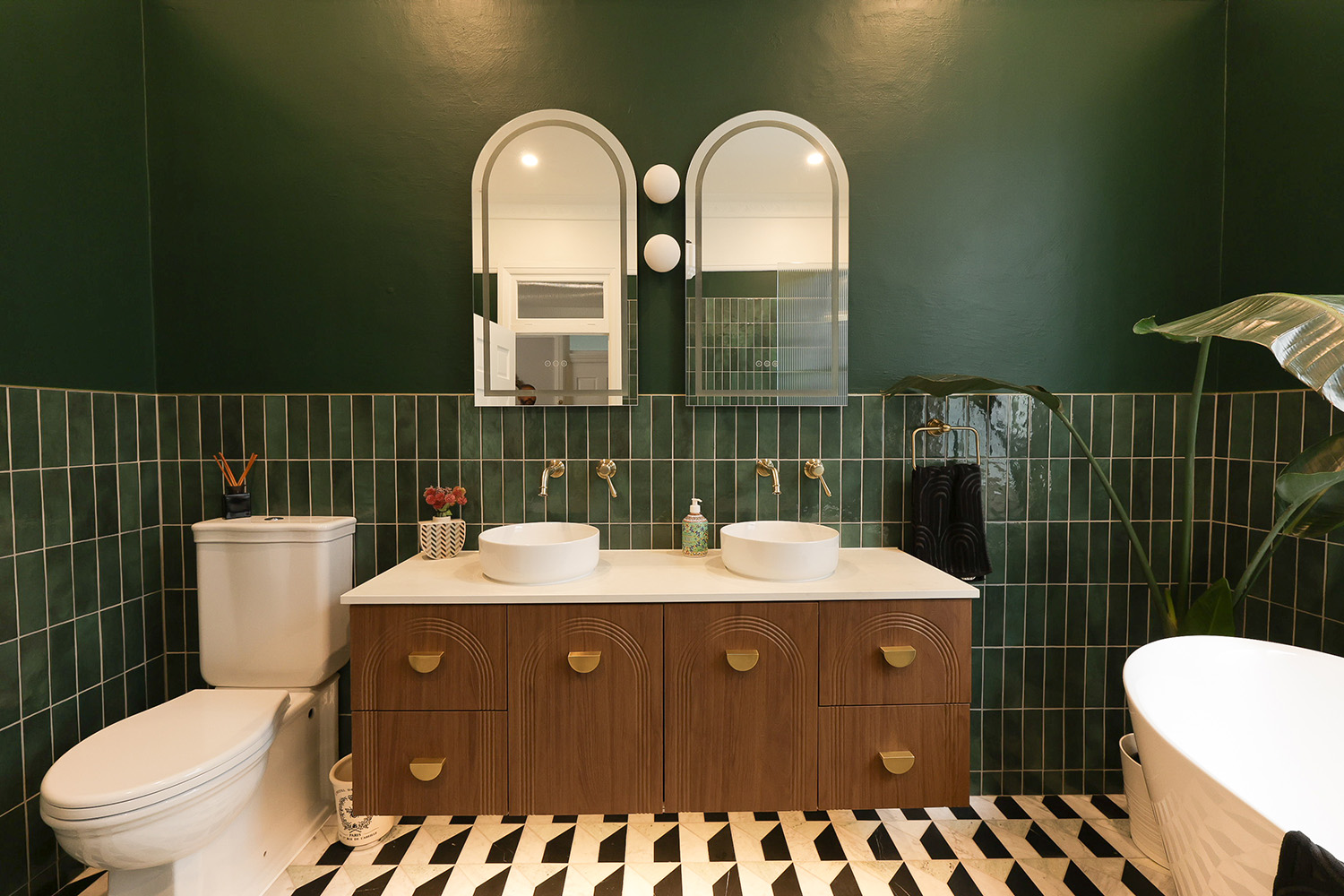
Most clients arrive at our Rockdale showroom asking for zellige before they fully know what they want. The image is clear — a moody green ensuite, a sun-warm kitchen splashback, a powder room that feels like a hidden chapel. The decision underneath is less so. Real Moroccan zellige and the Italian and ceramic look-alikes that now sit alongside it have completely different personalities, prices and installation realities. Choose well and the wall quietly glows for thirty years. Choose blindly and the chipped grout lines become the room's defining feature for the wrong reasons.
This is the conversation we'd actually have with you in person — what zellige is, where it works, where to be careful, and how to read a sample under real showroom light before you commit. Whether you're after the artistry of the original or the bombproof modern interpretation, the decisions you make in the right order are the difference between a feature wall that feels considered and one that feels like a Pinterest screenshot brought home.
Start with the feeling, not the tile
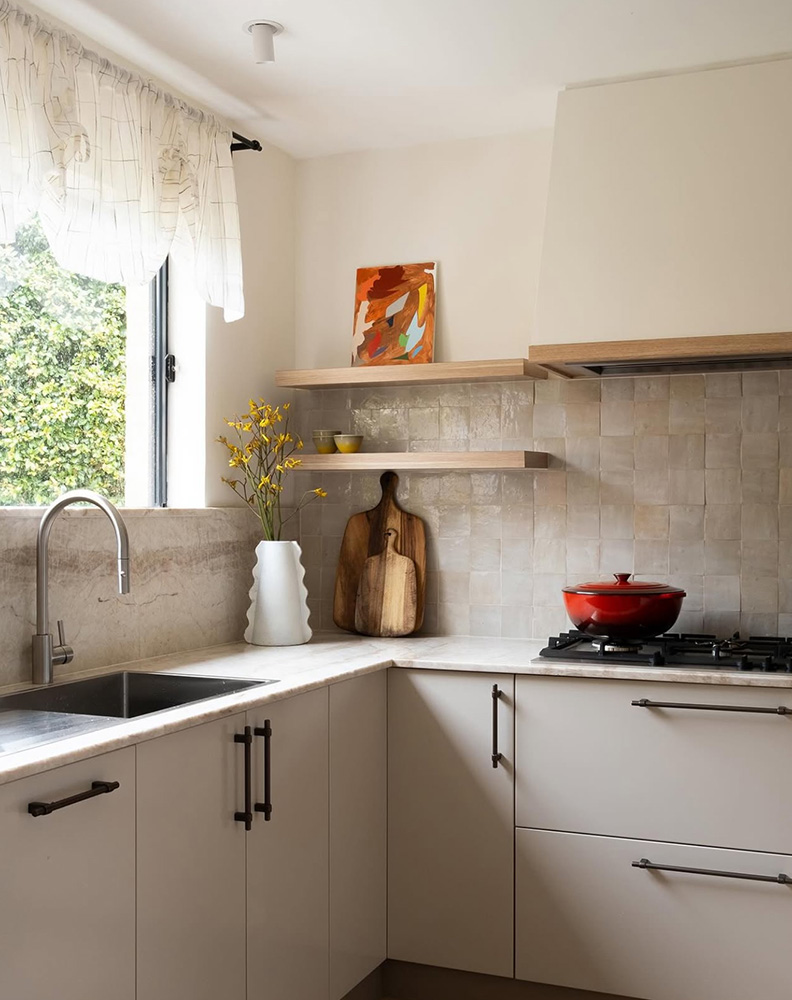
A zellige wall is not really a tile choice — it's a mood choice. Before we open a single sample box, we'll usually ask what you want the room to feel like. Soft and luminous, with the white shimmer of a Mediterranean villa. Moody and grounded, with the deep forest greens that suit a dim ensuite or library. Sun-warmed and earthy, with terracotta and dusty pink layered against limewash walls. Quietly architectural, with bejmat brick in a muted natural tone running horizontally behind a vanity.
Each of those moods lands on a different tile, a different format, a different grout. Start there and the technical choices that follow get easier. Start with the chip and the chip almost always becomes a problem the room has to solve later.
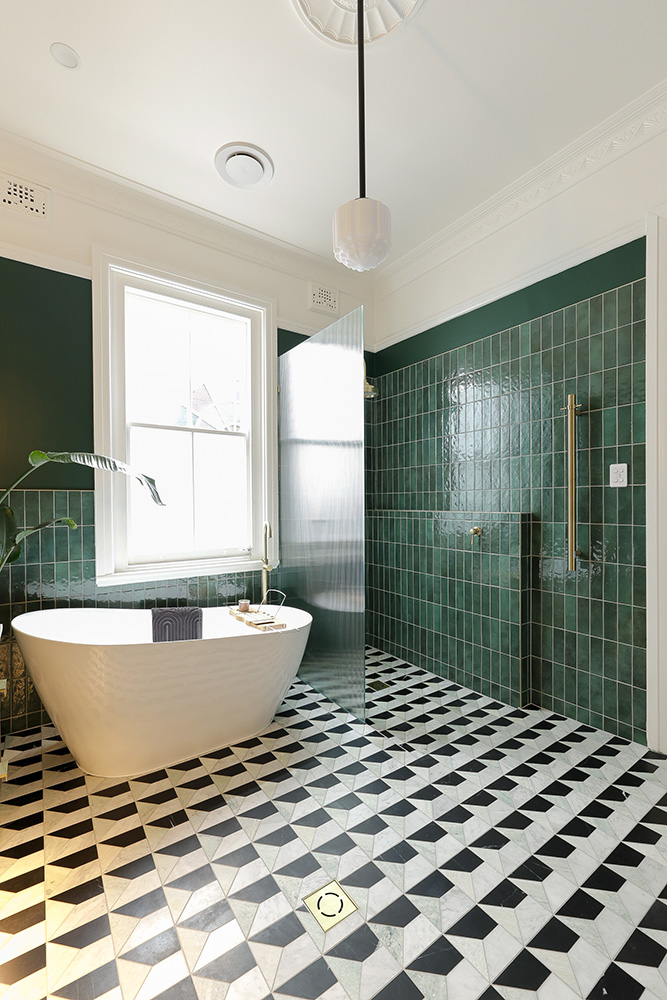
What our design team walks every client through before choosing zellige
There are seven decisions, in roughly the order we'd guide you through them at the showroom. Some are pragmatic — substrate, application, wastage. Some are emotional — colour temperature, palette layering. All of them quietly add up to whether the finished wall reads as artisanal or just uneven. We've watched clients agonise over hundreds of sample chips before any of these questions are asked. The chip you pick almost always becomes the right one once the seven are answered in order.
- Is real zellige or zellige-look the right choice for this project?
- Where will the tile go — wet zone, splashback, fireplace, feature wall?
- What colour and palette suits the room?
- What format — square, bejmat, honeycomb or slim subway?
- What grout colour?
- How much wastage should you order?
- How does this feature wall flow with the rest of your home?
1. Real zellige or zellige-look — an honest comparison
This is the question every client arrives with, whether they know it or not. They've seen a magazine image of an Italian fireplace clad in real handmade Moroccan tile and they want that look in a Sydney ensuite. Sometimes the right answer is to commit to the real thing. Sometimes the room — the substrate, the budget, the family using it — wants the modern porcelain or ceramic look-alike. Neither choice is "better." They're tools that do different jobs in different rooms.
Real Moroccan zellige is hand-cut from non-refined clay, glazed by hand, and fired in traditional kilns in Fez. Every tile is slightly different in tone, in edge, in the thickness of the glaze pool that catches the light. That variation is the point. It's also what makes installation slower, wastage higher (typically 15–20%), and the finished surface less suited to floors or rough hands. Real zellige is an art form. Treat it like one.
Zellige-look ceramic and porcelain tiles — the ones we stock from Italian factories alongside our Moroccan ranges — replicate the handmade aesthetic with a factory-controlled glazed body. They have the soft texture and tonal shift of the original without the fragility, the high wastage, or the sealing requirement. They cost less, install faster, and tolerate a busy kitchen splashback or a child's bathroom without complaint. For most modern Australian homes, they are the more practical happy choice.
We stock both ends honestly. Italian-made zellige-look ceramic from around $99/m² on clearance and around $170–$189/m² for the standard ranges. Authentic handmade Moroccan zellige from $259/m² for bejmat and basic square formats, through to $396/m² for the most labour-intensive honeycomb. We don't push you toward one — we help you choose which is right for the room.

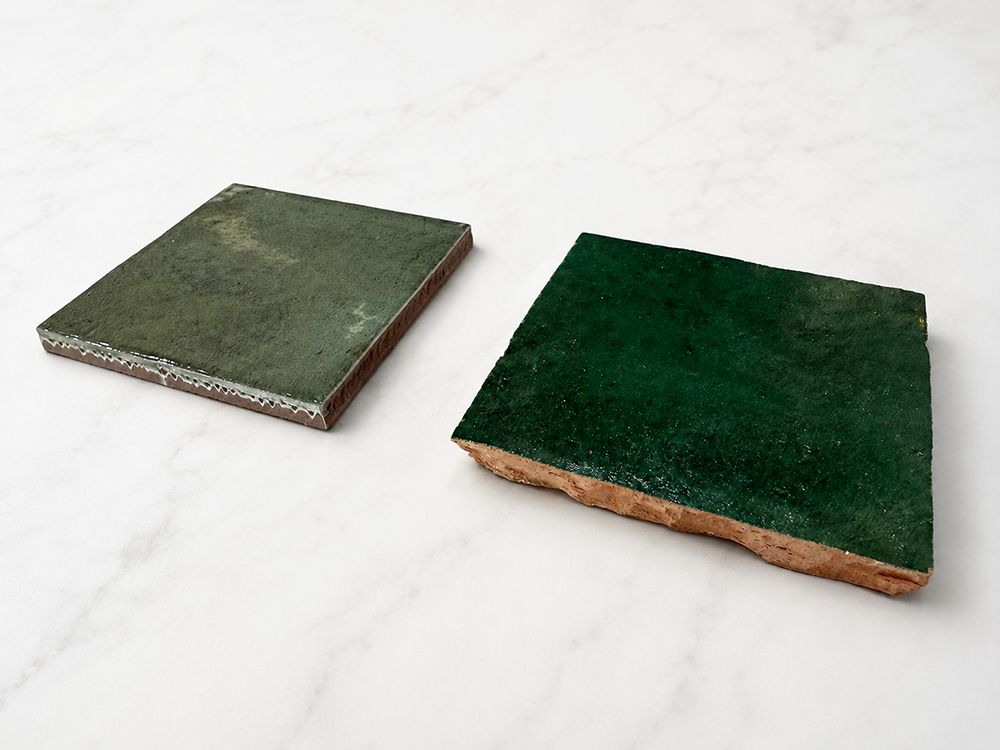
Look-alike · Spanish porcelain · From $137/m²
Majorca Series Spanish Porcelain 100×100mm
A modern, gentle Spanish porcelain wall tile with the shade variation and soft hand-touched glaze of real zellige — at a fraction of the price, with no sealing required, faster installation and porcelain durability. Available in a vintage-leaning palette including the green shown here. The wall tile we reach for first when a client wants the look in a family bathroom, kitchen splashback or laundry.
View Majorca Series 100×100mm →Real handmade · From $278/m²
Zellige Moroccan Tile Handmade Glazed
Authentic Fez-made zellige, hand-cut from non-refined clay, hand-glazed and fired in traditional kilns. Available in verde (the green shown here), blush, sage, snow white and other lifestyle colourways. The real material, with the soft imperfections, raw clay edges and shifting glaze pool no factory tile can imitate. For powder rooms, fireplaces, niches and feature walls where the tile is the moment.
View Moroccan Tile Handmade Glazed →2. Where zellige works (and where to think twice)
Zellige is fundamentally a wall tile. It comes alive on a feature wall, behind a vanity, around a bath niche, framing a kitchen range, climbing a powder room or wrapping a fireplace. In those places the light catches the glazed surface and the small shifts in colour give the wall a soft, hand-touched quality that no flat porcelain can quite imitate.
Where to be careful: shower floors (the chipped edges of real zellige are unkind underfoot, and the absorption rate makes it a sealing commitment); high-traffic floors generally; outdoor walls in direct Sydney summer sun, where some glazes will gradually fade over years; and ultra-minimal palettes, where the texture risks looking accidental rather than intentional. Look-alike porcelain handles most of those constraints — but if you want real zellige in a wet area, talk to us first about format, grout and sealing strategy before you order.
3. Choosing a colour and palette that ages well
Zellige holds a palette unlike any other tile category. Snow white and natural shimmer like cream paint catching morning light — the timeless, room-quieting defaults. Sage and forest green ground a moody ensuite and read as enduringly contemporary. Terracotta, blush and dusty pink layer beautifully against warm timber and limewash walls. Camel and bejmat-tan suit a Mediterranean-style splashback. Deep blues and turquoise are the confident accent moves — small areas, big personality, used sparingly in a niche or behind a single vanity.
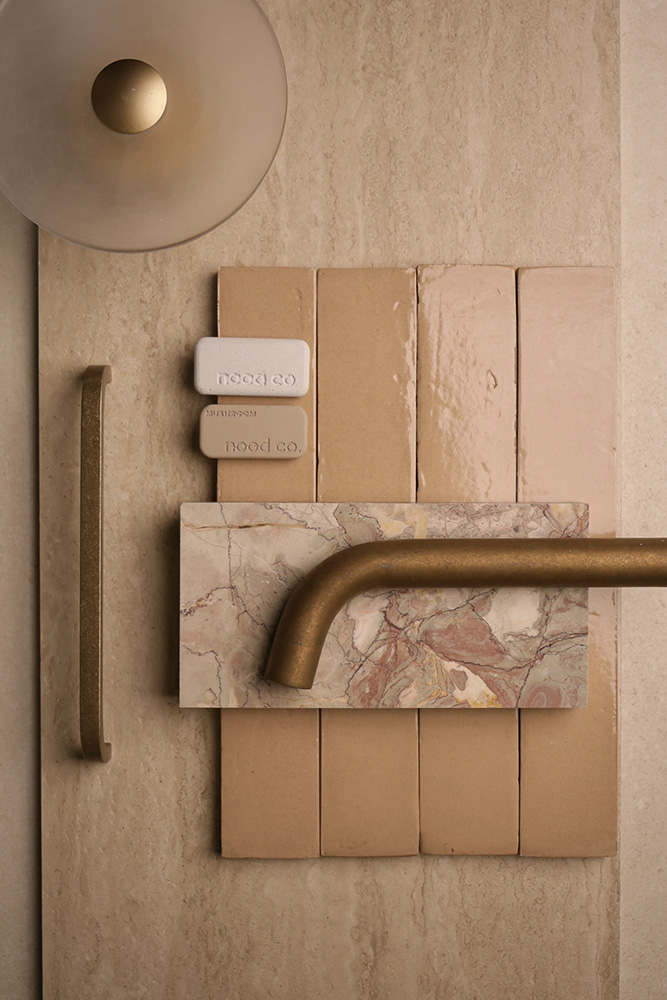
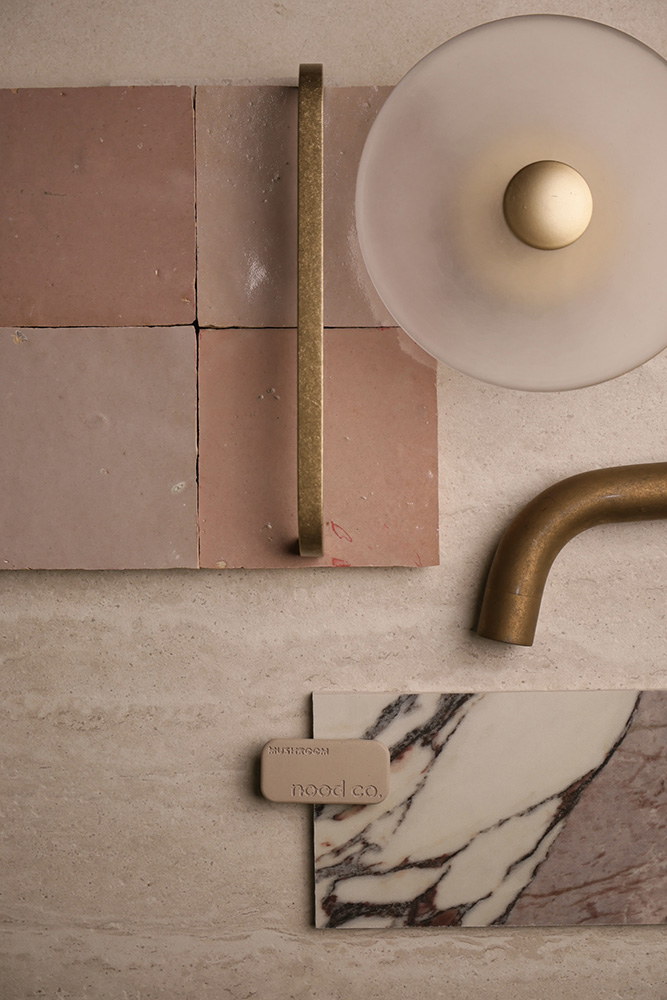
The palette decision is where most of our consultations slow down. The trap is choosing a colour you love on the chip and forgetting to test it against the rest of the room — the floor, the joinery, the tapware, the natural light. We'll usually build a flat lay on the showroom table with stone samples, timber, brass and the tapware finish you're considering, and let the tile sit there for ten minutes before anyone commits. Colour is light. Light is everything.
For whole-home cohesion, we'll often pair zellige with travertine-look porcelain on the floor and main walls. The warm beige base reads as a quiet canvas, the zellige becomes the considered moment, and the room feels layered without competing.
4. What format — square, bejmat, honeycomb or slim subway?
Zellige isn't just one shape. Format choice changes the room as much as colour does.
The 50×50mm or 100×100mm square is the most recognisable zellige format — a grid of small tiles with a faint shimmer, suited to feature walls, niches and powder rooms. Bejmat is the elongated brick (roughly 50×150mm), traditionally laid horizontally for a refined linear look or vertically for height in a small space. Honeycomb is the most architectural and rarest format, used sparingly behind a vanity or as a single statement wall. The Italian-made slim subway look-alikes we stock at 50×150mm and 60×240mm fall somewhere between bejmat and traditional subway — a slim, calm, hand-textured rectangle that suits most contemporary interiors and forgives an imperfect substrate better than the smaller square formats.
5. Grout: the decision that makes or breaks a zellige wall
Grout is the most underestimated decision in a zellige installation. The handmade texture wants to be the lead voice. A high-contrast grout (white tile with charcoal grout) fights it — pulls every grid line into focus and flattens the soft variation that makes the tile worth choosing. A perfectly matched grout can read flat and seamless, which is occasionally what you want, but more often we'll recommend a grout that sits two shades darker than the tile in a warm taupe or soft mushroom tone. The grout recedes, the tile breathes, and the wall reads as deliberate rather than diagrammatic.
For real zellige with its uneven edges, the grout joint itself is part of the aesthetic — typically wider than a porcelain joint (2–4mm rather than 1–2mm), and often softened with a hand-pointed finish. For look-alike ceramic and porcelain with rectified edges, the joint can be tighter and cleaner. Either way, ask for a sealed grout to protect against staining and mould over time.
6. How much wastage should you order?
Wastage matters more with zellige than almost any other tile category. For real handmade Moroccan zellige, we recommend ordering 15–20% extra — partly for the natural variation in the production batch, partly because the irregular edges produce more breakage during cutting, and partly because traditional kilns produce in batches that can be hard to match months later if you need additional pieces. For Italian and ceramic look-alikes, 10% is generally enough.
It sounds like a lot. It's also the difference between a finished wall that looks resolved and a wall with a visible patch of mismatched dye lot in the corner you spend the next ten years pretending not to notice. Order generously the first time.
7. How this feature wall flows with the rest of your home
The last question is the one most people forget to ask. A zellige wall doesn't live in isolation — it sits in a kitchen or bathroom that opens onto the rest of the home, and the materials around it determine whether it reads as a considered moment or a designer accent that doesn't belong. When we plan a renovation in the showroom, we'll look at the floor that runs into the room, the joinery, the stone benchtop, the tapware finish, even the paint colour of the adjacent walls. Zellige is generous — it pairs with travertine, timber, brushed brass, matte black and warm white with equal grace. But it does want a conversation. Specified alone, it can feel slightly stranded.
The mistake we see most often (after 26 years in the showroom)
The most common zellige mistake we see is choosing it from a phone screen. A photograph of a zellige wall — even a great one — flattens the very thing that makes the tile beautiful: the way the glaze pools differently on each piece, the way the light reflects unevenly across the surface, the slight shadow at every uneven edge. On a screen it looks like a flat coloured wall. In real light, it shimmers.
Clients who order zellige they haven't seen often come back surprised — sometimes by how much character it has, sometimes by how irregular the edges actually are. The fix is unromantic but it works: come to the showroom, hold a sample up to natural light, ask to see two or three colours side by side, and look at the wall from the angle you'll actually live with it. Ten minutes of in-person time saves the kind of regret that lives on a wall for fifteen years.
How we help you get it right at our Rockdale showroom
Our showroom is designed for this exact decision. We carry the full Italian and Moroccan zellige range in sample paddles and full-tile size, displayed in real light against neutral palettes so the colour reads honestly. We'll build a flat lay on the consultation table with the stone, timber, tapware and joinery you're already considering, hold the zellige against it, and walk through grout, format and wastage in the same conversation. The result is a curated palette you can take home and live with for a few days before committing.
A consultation with our design team is free, unhurried, and tailored to your project. Bring your plans, bring your inspiration, bring the elements of the room you've already chosen. For clients outside Sydney, we run virtual consultations and post sample paddles — the samples in your hand are the closest substitute to standing in front of the finished wall.
Frequently asked questions
What are zellige tiles made of?
Real Moroccan zellige is handcrafted from non-refined Fez clay, dipped in glaze by hand and fired in traditional wood-burning kilns. Every tile is slightly different in tone, texture and edge. Zellige-look tiles are factory-made from ceramic or porcelain with a glazed surface that replicates the handmade aesthetic. Both have their place — the choice depends on the room, the budget and the maintenance you're comfortable with.
Are zellige tiles waterproof?
Glazed surfaces are water-resistant, but real zellige is naturally porous around the edges and benefits from sealing in wet zones. Ceramic and porcelain look-alikes are denser, less porous and generally fine in wet areas without sealing. For showers, splashbacks and bathroom walls, the specific tile dictates whether sealing or a tighter grouting strategy is needed.
Can I use zellige tiles in a shower?
Yes, particularly on shower walls. Real zellige in a shower needs careful sealing and ongoing maintenance because the hand-cut edges can absorb water. Zellige-look porcelain handles a shower wall easily without sealing. For the shower floor itself, a slip-rated mosaic is usually a better choice than zellige.
Real zellige or zellige-look porcelain — which should I choose?
There's no single right answer. Real zellige offers irreplaceable artistry, soft texture and light play, but demands skilled installation, higher wastage and more careful maintenance. Zellige-look ceramic and porcelain deliver the aesthetic with factory durability, easier installation and lower maintenance, at a lower price point. For a high-traffic family bathroom, the look-alike is often the smarter choice. For a powder room or fireplace where the tile is the moment, the real material rewards the commitment.
How much wastage should I allow for handmade zellige?
For authentic Moroccan handmade zellige, allow 15–20% wastage. The combination of irregular edges, batch variation and increased breakage during cutting means you'll need more than you would for a calibrated porcelain. For Italian and ceramic zellige-look tiles, 10% is usually sufficient.
What grout colour works best with zellige tiles?
A warm taupe or soft mushroom grout — typically two shades darker than the tile — is the safest default. It lets the handmade texture read clearly without outlining each tile. High-contrast grout (white tile with dark grout) is dramatic but rarely flattering to real zellige. Matching grout works well for porcelain look-alikes when you want a seamless feature wall.
Can zellige tiles be used on the floor?
Real zellige is generally not recommended for floors — the hand-cut edges are uneven underfoot and the glaze isn't built for foot traffic. Zellige-look porcelain in floor-rated formats can be used on floors, but the format and slip rating need to suit the room. A short conversation with our design team almost always identifies a better option.
Where can I see zellige tiles in Sydney?
Our Rockdale showroom at 407 Princes Highway carries both Italian-made zellige-look ranges and authentic Moroccan handmade zellige in sample paddles and full-tile size. Samples are displayed under real light against neutral palettes specifically so the colour reads honestly. Consultations are free and bookable online.
How much do zellige tiles cost in Australia?
At Design Tiles, Italian-made zellige-look ceramic ranges start from around $99/m² on clearance and sit around $170–$189/m² for the standard ranges. Authentic handmade Moroccan zellige starts from around $259/m² for bejmat and basic squares, and rises to around $396/m² for the more labour-intensive honeycomb format. Installation and grouting are separate costs.
Do zellige tiles fade, chip or scratch over time?
Real zellige's natural irregularities — small chips, glaze crazing, edge softening — are part of the aesthetic, not defects. The glaze itself is hard-wearing once installed but the edges remain delicate, which is why floor use is discouraged. Zellige-look porcelain is significantly more chip-resistant and shouldn't visibly age in residential use.
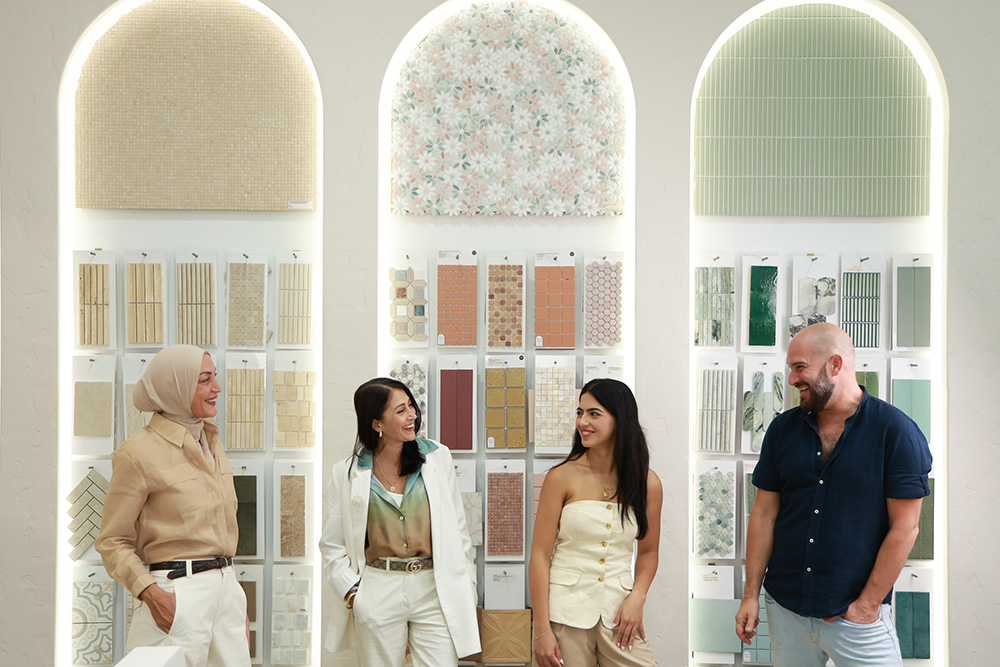

See zellige under real light
Book a free consultation with our design team, or visit our Rockdale showroom to hold real zellige samples in real light. No pressure, no obligation — just thoughtful guidance from the team that has been helping Sydney homes since 1999.