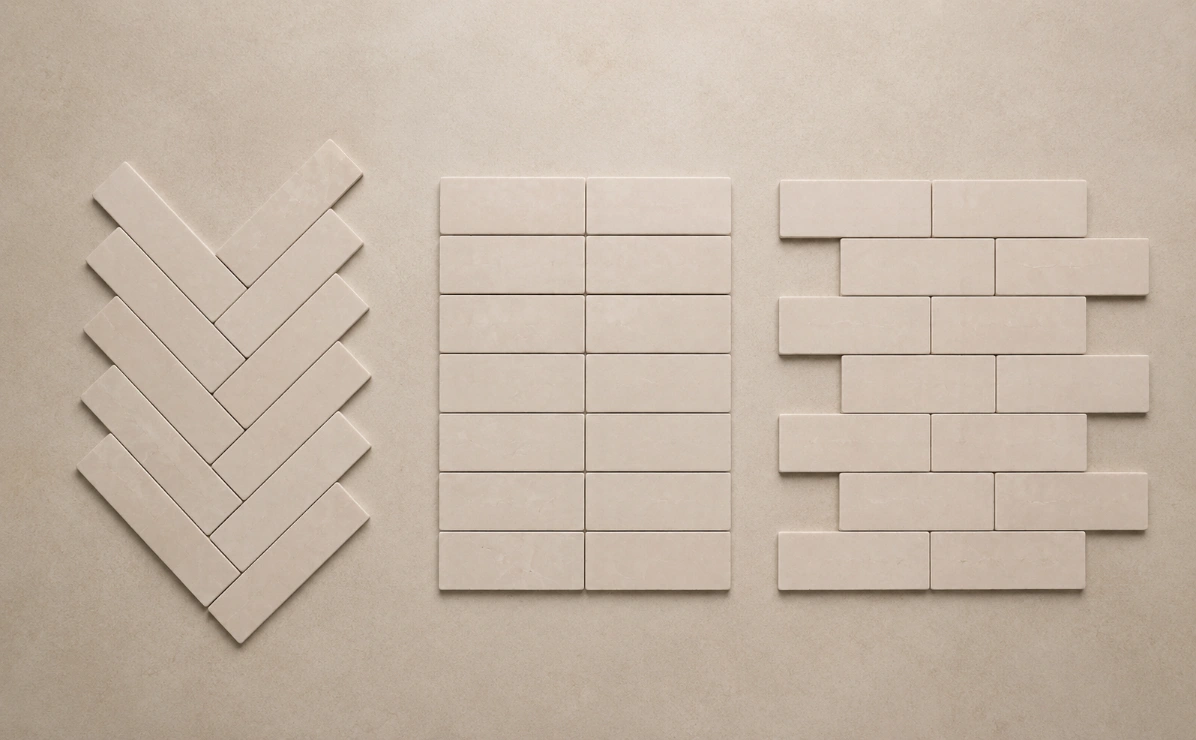
Tile Laying Patterns: A Visual Guide
The pattern you choose changes everything: the sense of space, the mood, even the cost. Here are the layouts worth knowing, from herringbone and chevron to French pattern and crazy paving.
Two people can buy the exact same tile and end up with two completely different rooms, and the difference is the laying pattern. The layout sets the rhythm of a space: calm and modern, classic and textural, or rich and old-world. This is the Design Tiles visual guide to the patterns worth knowing, what each one suits, and the wastage to budget for.
The short version
For calm and modern, use a straight or stack bond. For relaxed and classic, use a brick or running bond. For texture and character, use herringbone; for a sharper, contemporary V, use chevron. For old-world stone floors, use the French pattern; for organic outdoor areas, crazy paving. Add roughly 10 percent wastage for straight layouts and 15 percent for angled ones.
What is a tile laying pattern, and why does it matter?
A laying pattern is simply the arrangement in which tiles are set. It matters for three reasons: it changes how big and how calm a room feels, it sets the style (a herringbone floor and a stacked grid send very different signals), and it affects cost, because angled and modular patterns create more offcuts and take longer to lay. Choosing the pattern is as much a design decision as choosing the tile itself.
The main tile laying patterns
Here are the layouts we reach for most, at a glance, then a closer look at the ones worth understanding.
Straight / stack bond
Wastage ~10%
Brick / running bond
Wastage ~10%
Herringbone
Wastage ~15%
Chevron
Wastage ~15%
Basketweave
Wastage ~12%
French / Versailles
Wastage ~15%
Vertical stack
Wastage ~10%
Crazy paving
Wastage varies
Straight and brick bond
The two everyday workhorses. A straight or stack bond lines tiles up in a grid for a crisp, contemporary floor, and it is the safest choice for large format tiles. A brick or running bond offsets each row, traditionally by half a tile, for a softer, timeless feel that also hides minor size variation. A one-third offset is the modern middle ground, and the recommended stagger for big tiles.
Herringbone and chevron
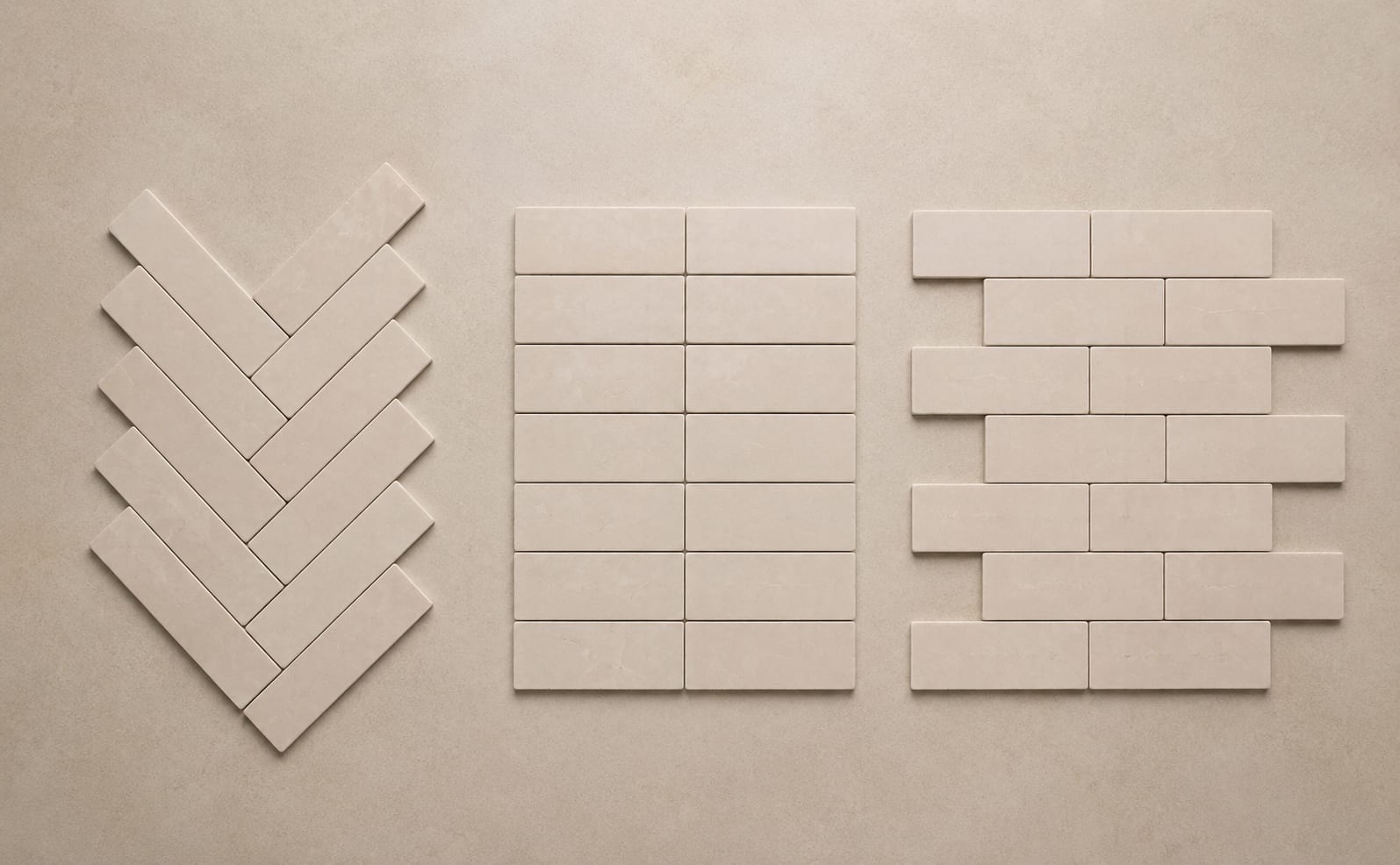
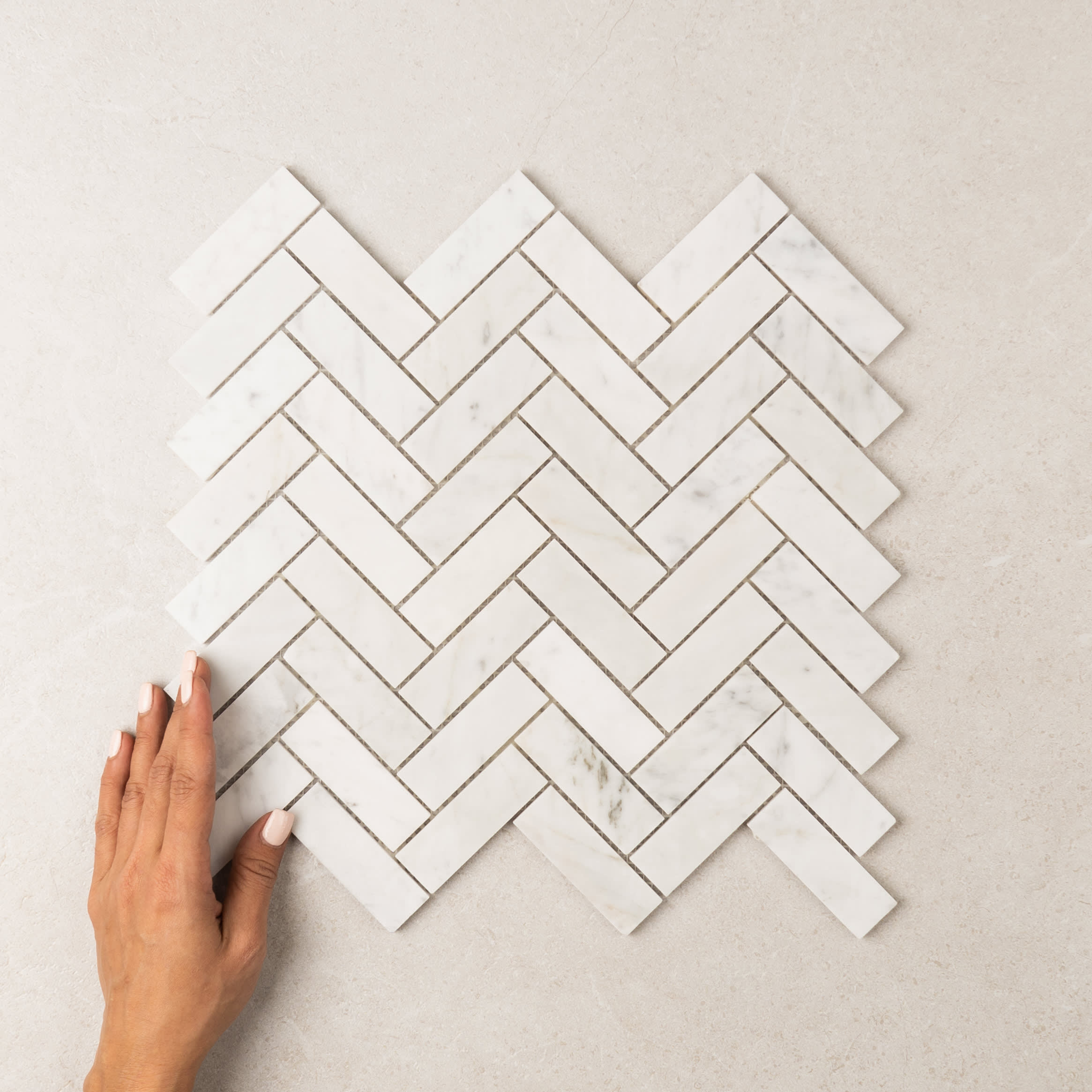
Both add movement, in different ways. Herringbone lays rectangles at 90 degrees so they interlock in a broken zig-zag, a classic that brings texture to floors, splashbacks and entries. Chevron cuts the tile ends at an angle so they meet in a clean, continuous V, which feels sharper and more modern. The trade-off is cost: chevron needs angled, pre-cut tiles, so it usually costs a little more.
French pattern and crazy paving
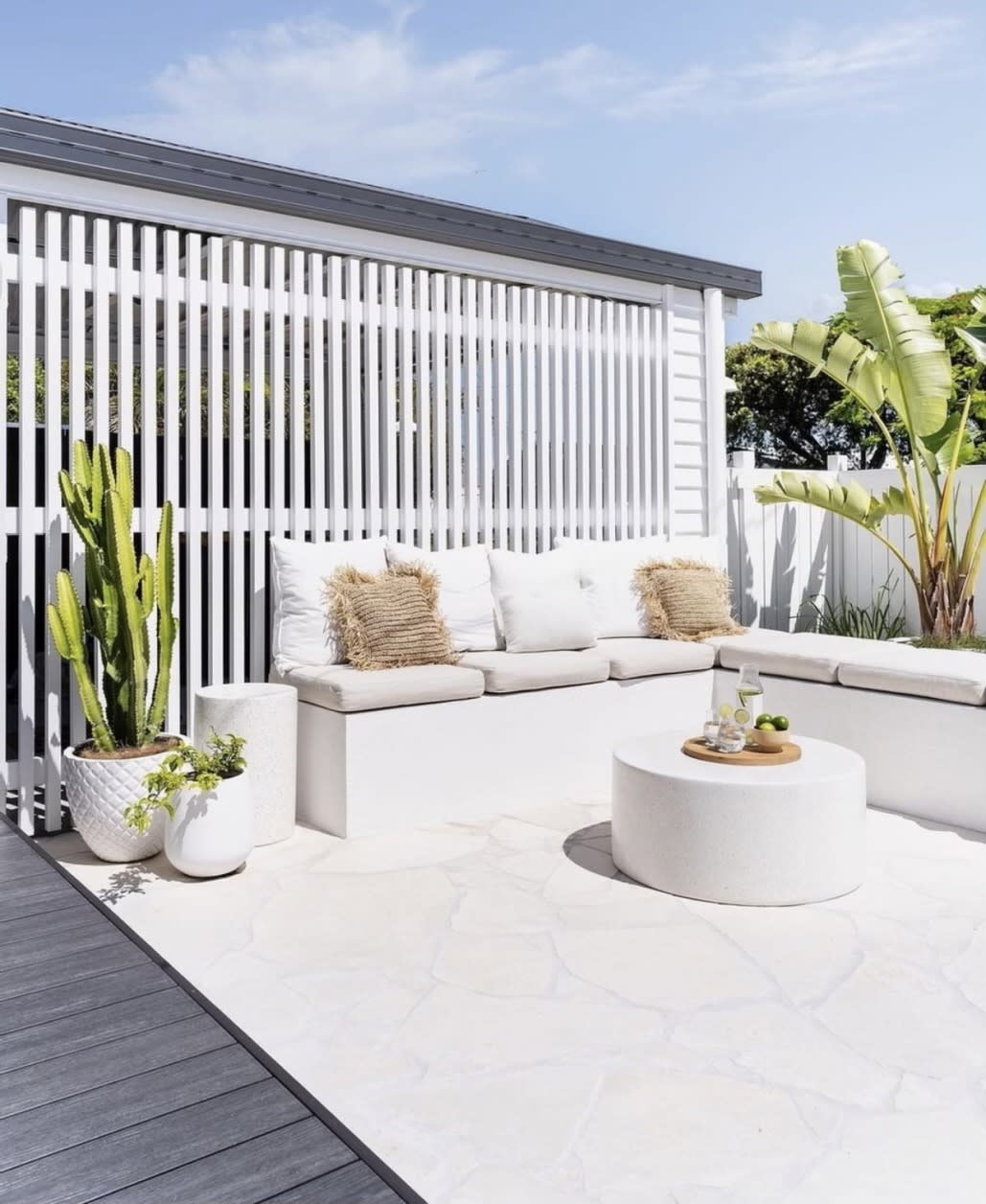
For a natural, old-world floor, the French pattern combines four tile sizes in a repeating set, classic in tumbled travertine and lovely across open floors, alfresco and pool surrounds. For something more organic still, crazy paving fits irregular stone pieces together like a jigsaw, a rustic outdoor favourite in travertine, limestone and bluestone. Both reward a warm grout and an unhurried install.
Herringbone vs chevron: what is the difference?
This is the question we hear most, because the two look similar in a thumbnail. The simplest test: look at the join. In herringbone, the flat end of one tile meets the long side of the next, so the zig-zag is broken and stepped. In chevron, the angled ends meet point to point, so the V is continuous and the lines run unbroken. Herringbone reads classic and crafted; chevron reads crisp and contemporary. Chevron costs a little more because of the angled cuts.
How much extra wastage does a pattern add?
Wastage is the extra tile you buy to cover cuts and the odd breakage. For a straight or brick-bond layout, add around 10 percent. For herringbone, chevron, diagonal and French patterns, add about 15 percent, since the angled cuts create more offcuts. Always round up to full boxes, and keep a few spares from the same batch, as future replacements rarely match an old dye lot exactly.
Which pattern suits a small room?
Keep it calm. Large format tiles in a straight or stack bond minimise grout lines and make a small floor feel more open. Running a rectangular tile along the length of a narrow room stretches it, and a vertical stack on a wall lifts a low ceiling. Save the busy, high-contrast patterns for a single feature so a compact space does not feel cluttered. For more on one classic option, see our guide to subway tile patterns and layouts.
Tiles that suit these patterns
A couple of the ranges we reach for when the layout is doing the talking. Confirm sizes and current pricing with our team.
Brick bond & herringbone
Chelsea Brick
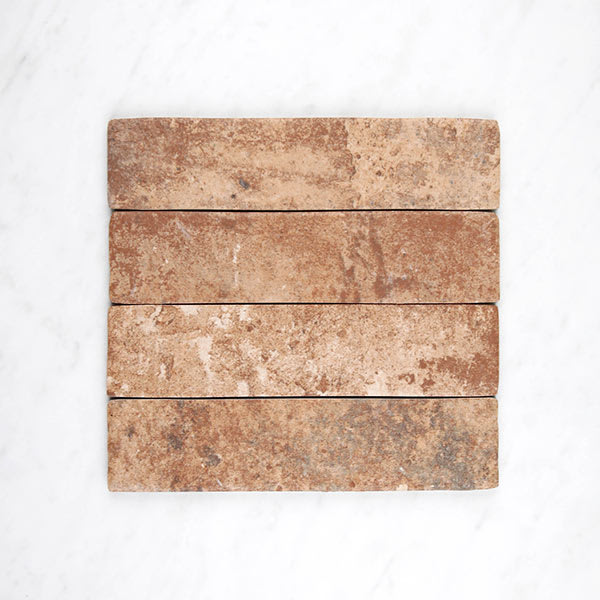
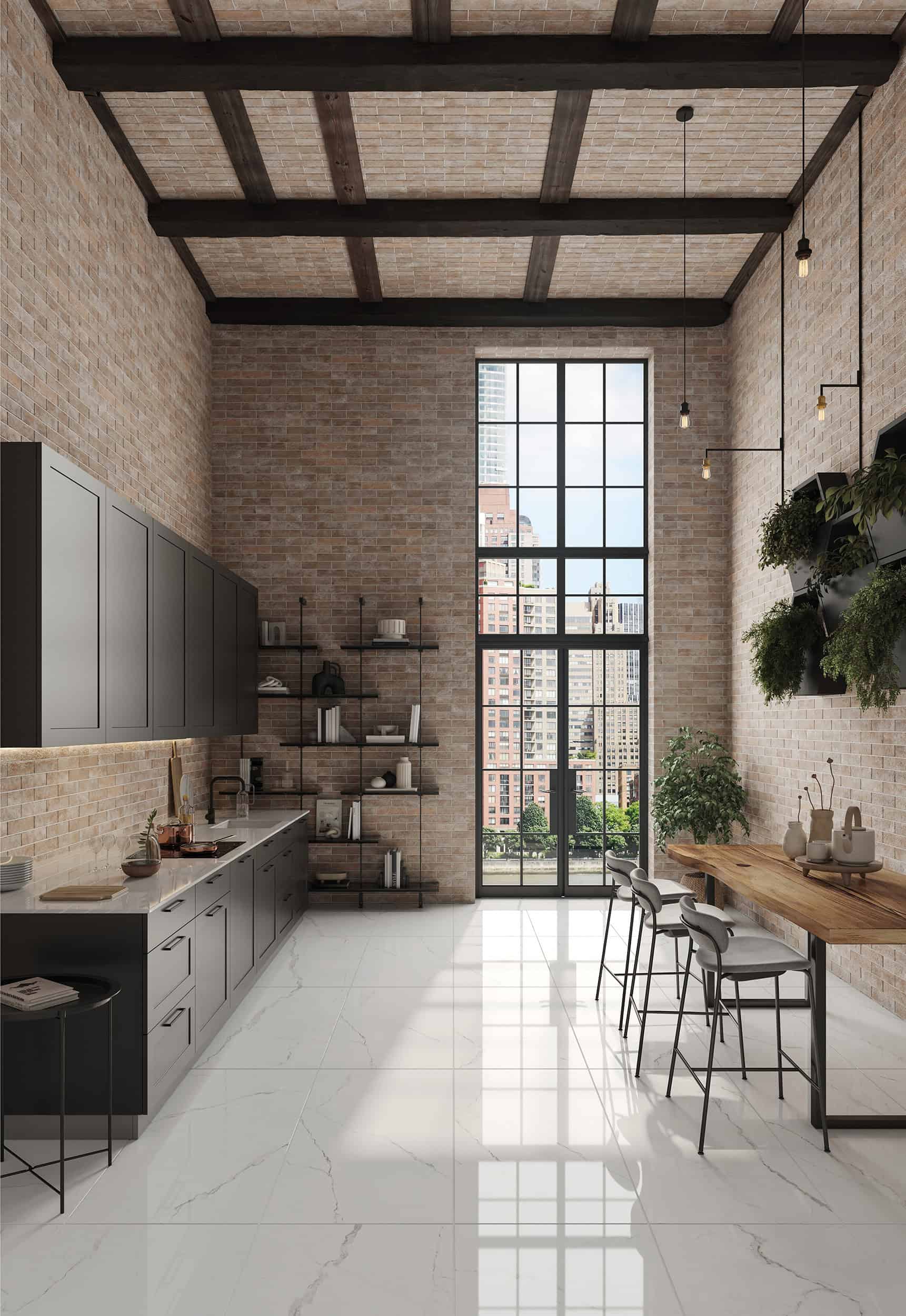
A 60 by 250mm brick-format porcelain with high V4 variation, ideal for a brick-bond or herringbone splashback or feature wall. Indoor and outdoor.
View Chelsea →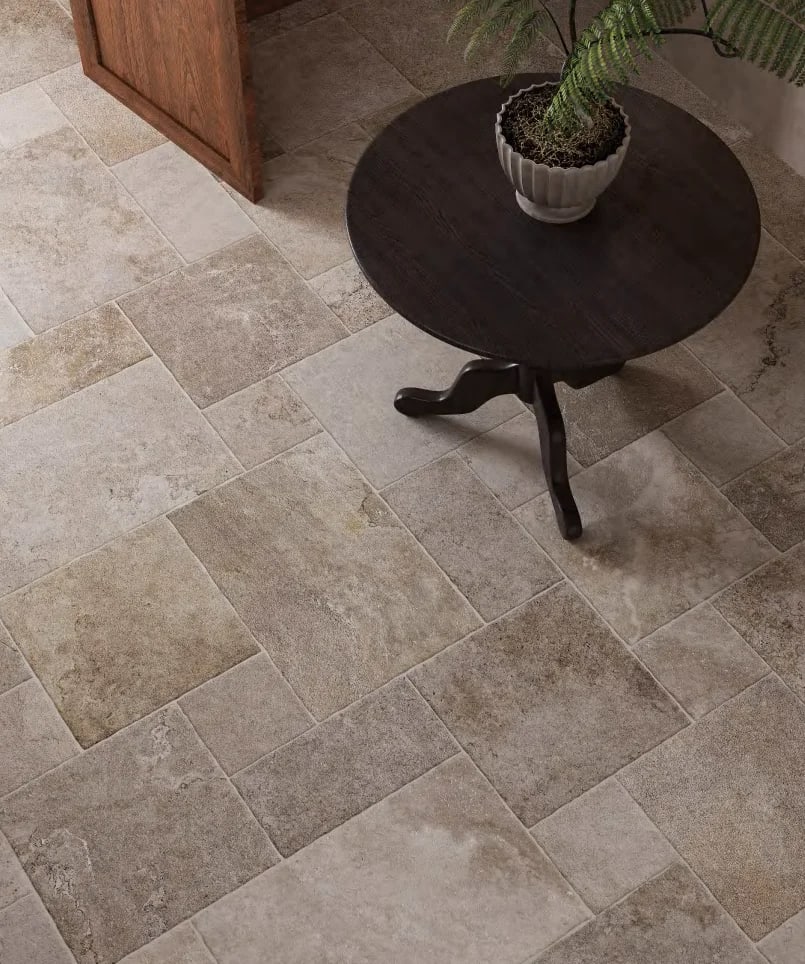
French pattern
Concord French Pattern
A modular stone-look porcelain supplied as a French pattern pack of four sizes, for an old-world travertine-style floor, alfresco or pool surround. Sand and Earth.
View Concord French Pattern →Frequently asked questions
What is the difference between herringbone and chevron?
In a herringbone pattern, rectangular tiles are laid at 90 degrees so the end of one tile meets the side of the next, creating a broken, zig-zag interlock. In a chevron pattern, the tiles are cut at an angle (usually 45 degrees) so their ends meet to form a continuous, unbroken V that runs in clean lines. Herringbone feels classic and textural; chevron feels sharper and more contemporary. Chevron needs pre-cut, angled tiles, so it is usually a little more expensive.
What are the main tile laying patterns?
The most common are straight or stack bond (a clean grid), brick or running bond (each row offset by half), herringbone, chevron, basketweave, the French or Versailles pattern (four tile sizes in a repeating set, classic in travertine), vertical stack (tiles run upright to add height), and crazy paving (irregular stone fitted like a jigsaw). Each changes the feel of a room and, in some cases, the amount of tile you need.
Which tile pattern makes a small room look bigger?
A few tricks help. Large format tiles in a straight or stack bond keep grout lines minimal and the floor calm, which reads as more space. Running a plank or rectangular tile in the direction you want the eye to travel stretches the room, and a vertical stack on a wall draws the eye up to lift a low ceiling. Busy patterns can overwhelm a small space, so keep them for a feature rather than the whole room.
How much extra wastage should I add for a herringbone or diagonal layout?
For a standard straight or brick-bond layout, add around 10 percent for cuts and breakages. For herringbone, chevron, diagonal and French patterns, add more, usually 15 percent, because angled cuts create more offcuts. Always round up to full boxes and keep a few spare tiles from the same batch for future repairs.
What is a French pattern (Versailles) layout?
The French pattern, also called the Roman or Versailles pattern, is a modular layout that combines four different tile sizes in a repeating unit. It is most often used in tumbled travertine and creates a rich, old-world, non-linear stone surface that suits floors, alfresco areas and pool surrounds. One set repeats roughly every 1.5 square metres.
What is crazy paving?
Crazy paving is a paving technique that uses irregular, randomly shaped stone pieces fitted together like a jigsaw with mortared joints, for an organic, rustic finish. It is popular in Australia for courtyards, patios, pool surrounds and increasingly indoor floors, and is usually supplied in stones like travertine, limestone and bluestone.
What is the difference between brick bond and stack bond?
In a stack bond, tiles line up in a straight grid with all four corners meeting, for a crisp, modern look. In a brick bond (also called running bond), each row is offset, traditionally by half a tile, exactly like a brick wall, which feels more relaxed and hides small size variations well. A one-third offset is a softer, contemporary take on brick bond.
Which laying pattern is best for large format tiles?
Large format tiles usually look best in a straight or stack bond, or a gentle one-third offset, which keeps grout lines minimal and lets the scale of the tile do the work. Big tiles can bow slightly, so a full 50 percent brick-bond offset is generally not recommended for them; a one-third offset is the safer choice if you want some stagger.


Skip the designer fee, come straight to the experts
Our in-house experts at Design Tiles give you free, personal design guidance, in our Rockdale showroom or virtually anywhere in Australia. You get designer-level results and keep the budget for the tiles. Order sample packs to any state, or book a free consultation with the team.