Large Format Tiles and Mega Slabs: A Designer's Guide
Fewer grout lines, a calmer surface, and the drama of a book-matched feature wall. Here is what counts as large format, the pros and cons worth weighing, and where these tiles and mega slabs shine.
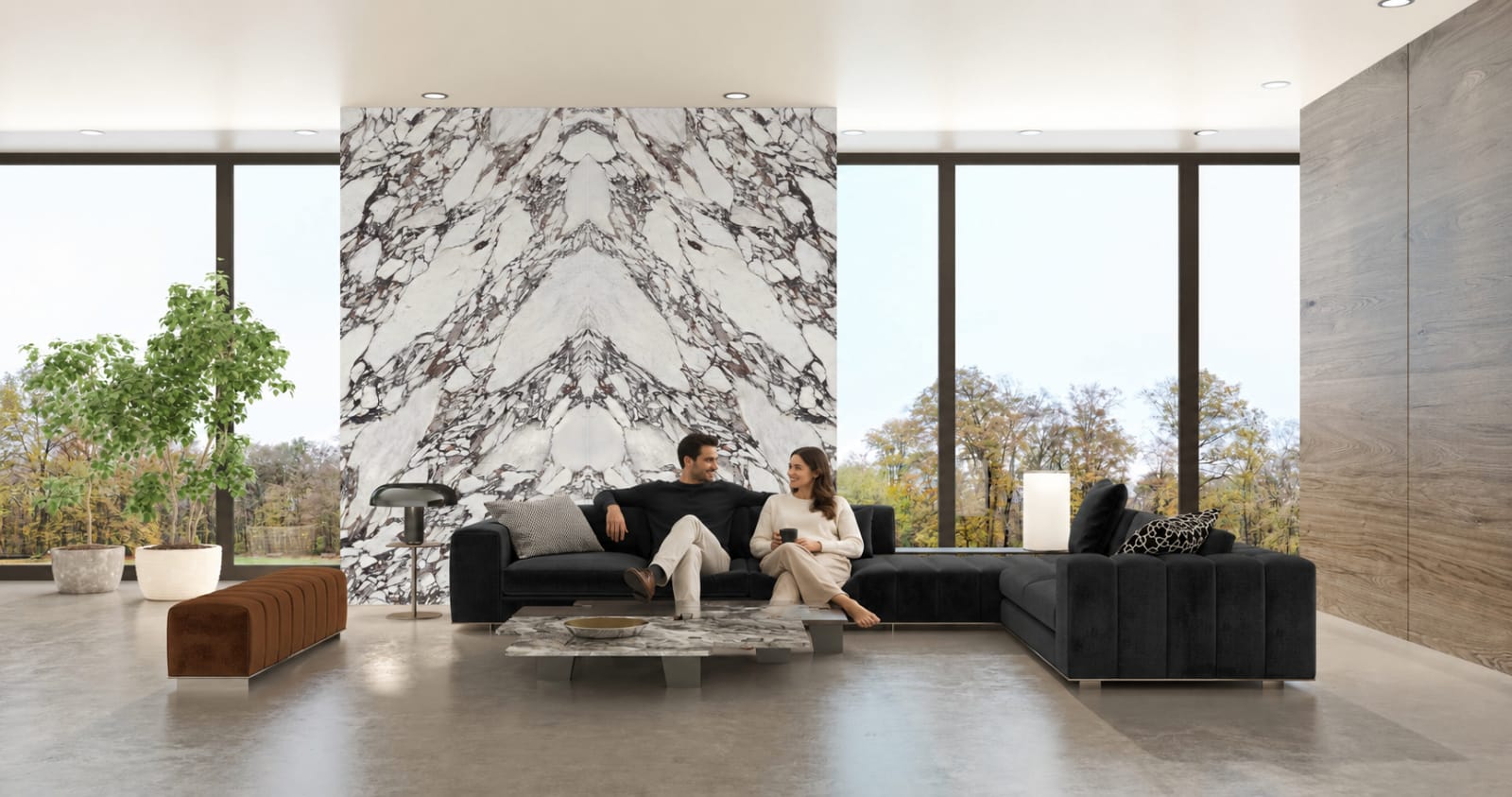
There is a reason large format tiles have become the defining look of the calm, contemporary Australian home. By trading a grid of small tiles for a few generous ones, they quiet a space down, stretch it out, and let the material, a marble, a travertine, a soft concrete, do the talking. At the far end sit the mega slabs, the panels that make a single, book-matched feature wall the heart of a room. This is our designer's guide to getting large format right.
The short version
Large format tiles are generally any tile with a side of 600mm or more, up to mega slabs around 1600 by 3200mm. They mean fewer grout lines, a calmer and more seamless surface, and a room that feels larger. The trade-offs are a flatter substrate, a skilled install and a higher cost. Used well, on floors, feature walls and book-matched slabs, they are the most accessible way to a luxury, low-maintenance finish.
What counts as a large format tile?
There is no single legal definition, but in practice a large format tile is any tile with at least one side of 600mm or more. From there the scale climbs, from generous everyday formats to the mega slabs and gauged porcelain panels that are only a few millimetres thick yet over three metres long. The bigger the piece, the fewer the grout lines, and the more the surface reads as one continuous plane.
| Format | Example sizes | Where it shines |
|---|---|---|
| Large format | 600 x 600, 600 x 1200mm | Everyday floors, walls and wet areas |
| Extra large | 800 x 800, 1200 x 1200mm | Calm, open-plan living floors |
| Mega slab / panel | Up to around 1600 x 3200mm | Feature walls, benchtops, book-matching |
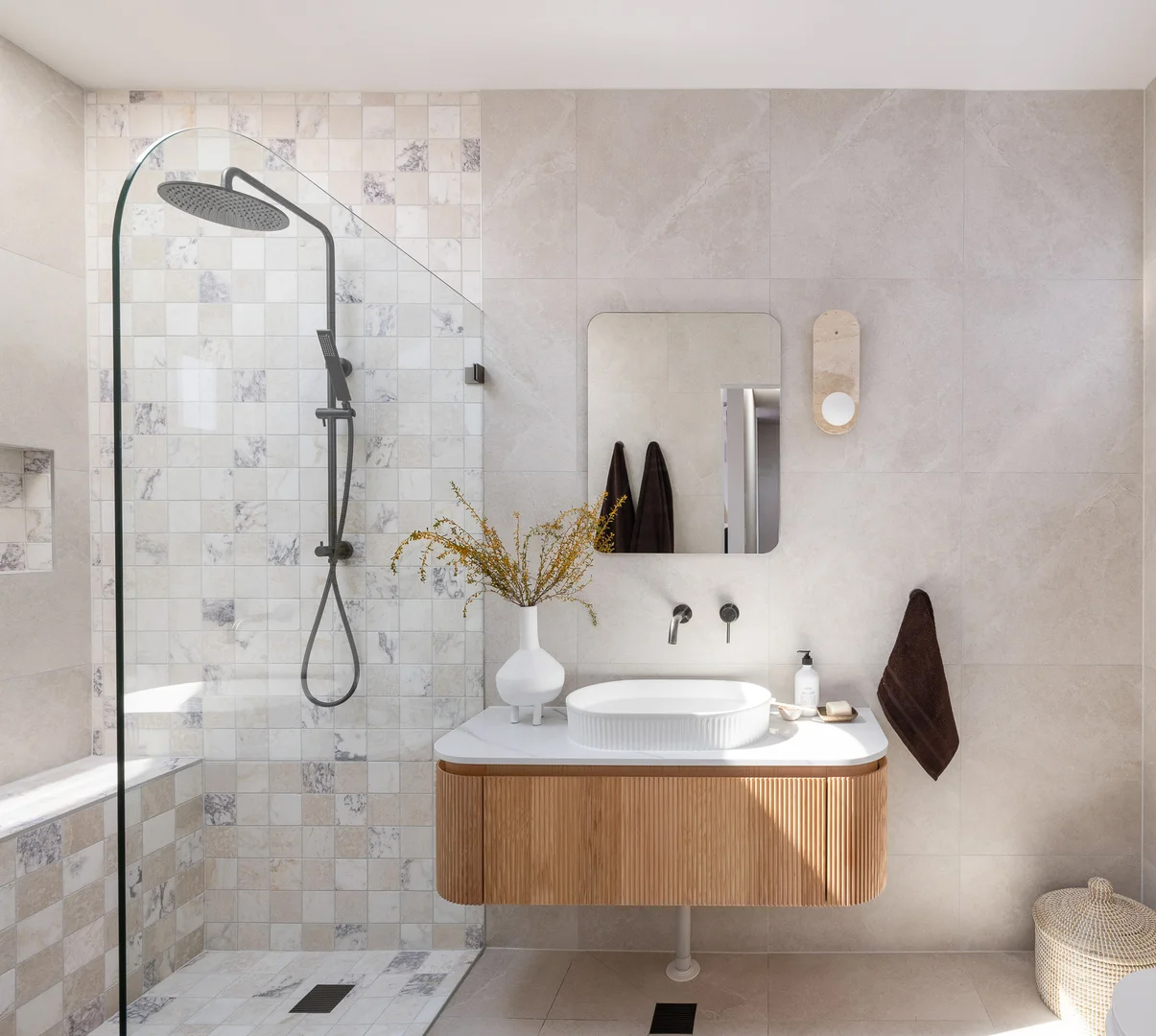
Two large format looks we return to again and again, one an accessible everyday stone, the other a premium Italian limestone. Both come in a generous 600 by 1200mm.
Accessible everyday stone
Ivory Stone Look Porcelain
A calm, minimalist ivory stone look with soft movement, at home on floors and walls. A large format 600 by 1200mm, and beautifully accessible. From $60/m2.
View Ivory Stone →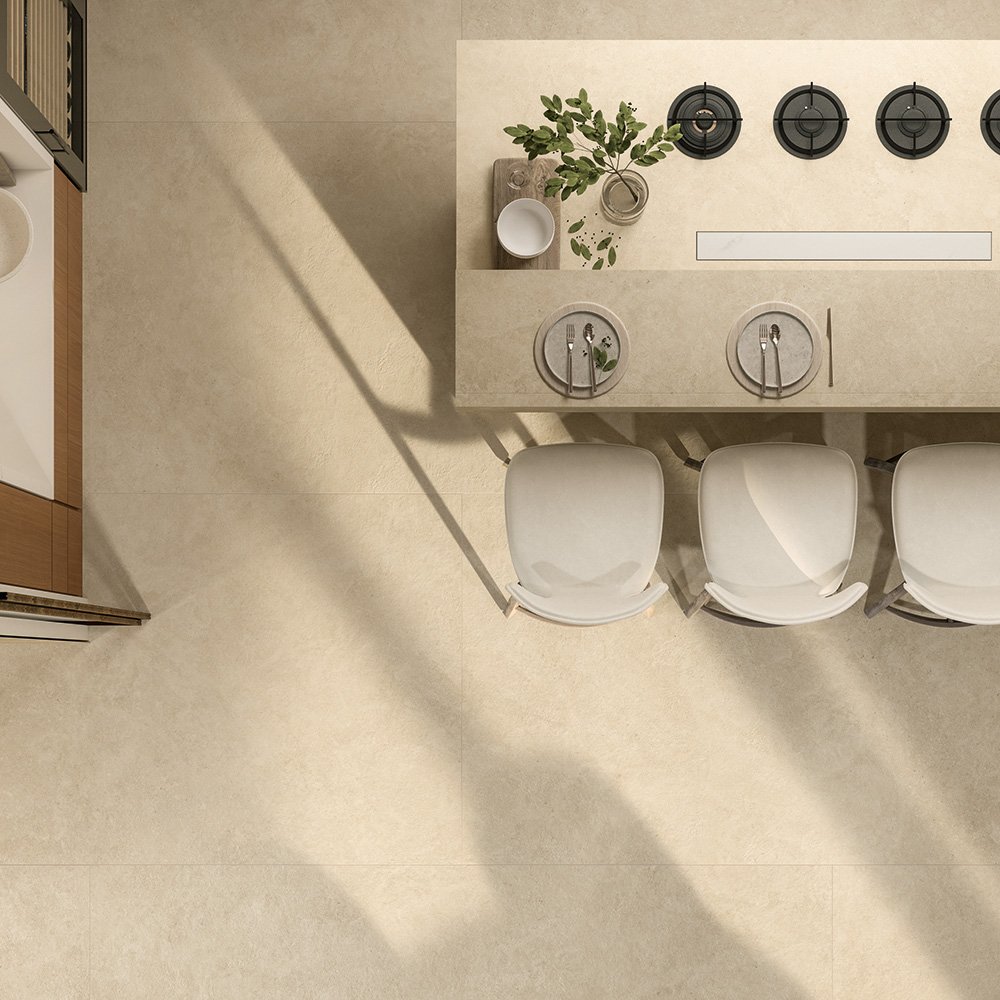
Premium Italian limestone look
Boost Icor
Atlas Concorde's refined matt limestone look, with soft tonal movement in Bone and Dune. A premium large format in 600 by 1200mm. From $125/m2.
View Boost Icor →The pros and cons of large format tiles
Large format is a beautiful choice, but it is not automatically the right one for every job. Here is the honest picture, so you can weigh it against your space and budget.
| Why designers love it | What to plan for |
|---|---|
| Fewer grout lines, a calm and seamless surface | Needs a very flat substrate, so more floor or wall prep |
| Makes a room feel larger and more open | Heavy and awkward, a job for an experienced tiler |
| One look can flow across floor, wall and outdoors | Higher cost per square metre and to install |
| Fewer joints to clean, so more hygienic | Cutting large pieces can create more offcuts |
| Book-matched veining for a statement wall | Delivery and site access need planning for big slabs |
What is a book-matched feature wall?
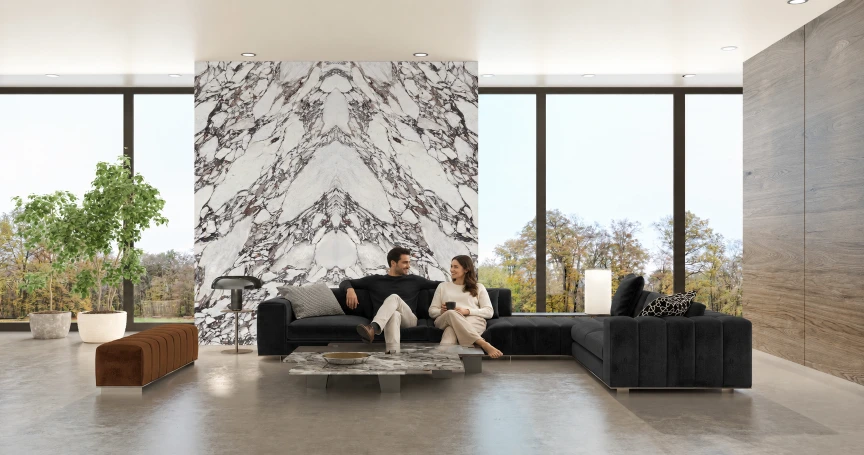
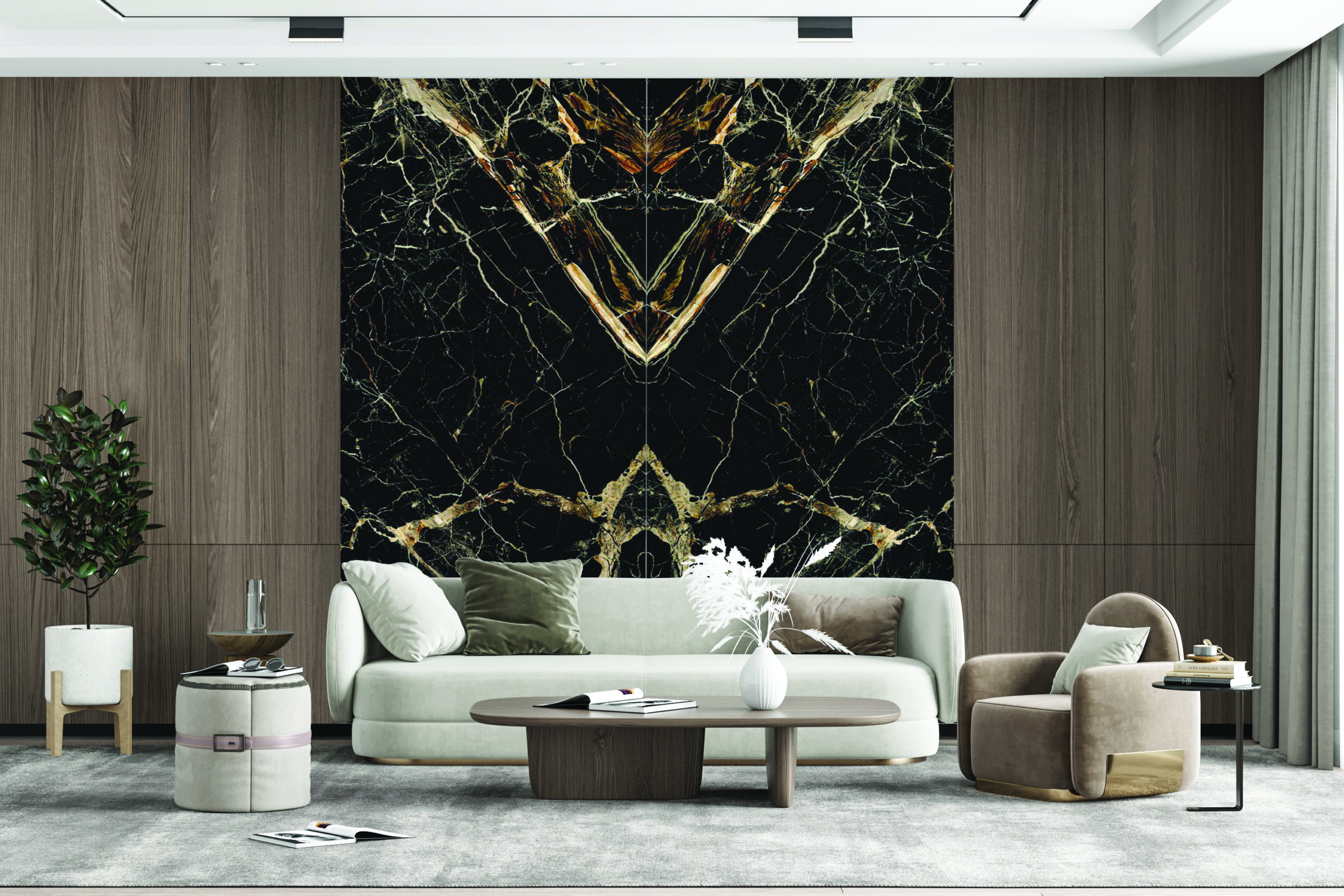
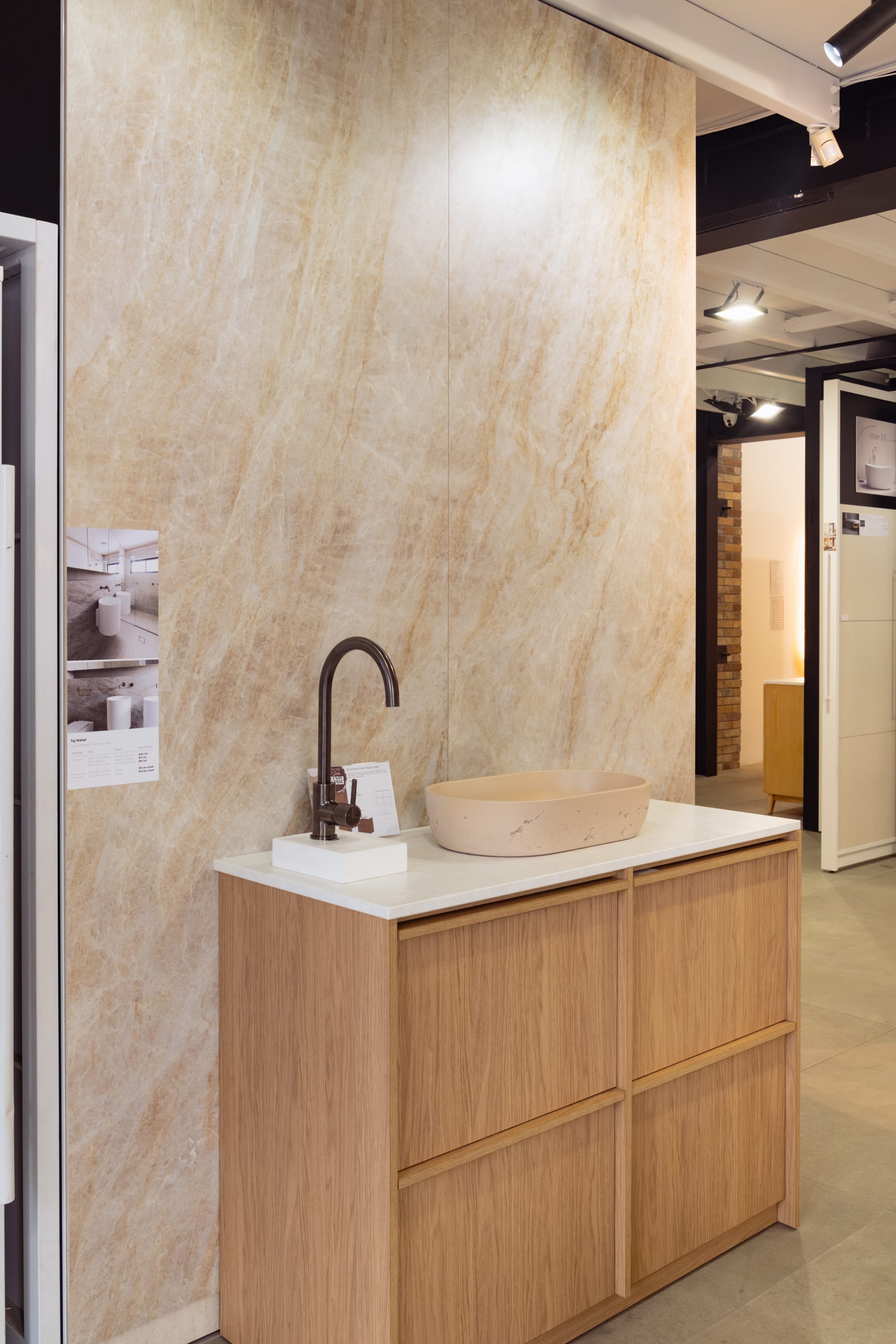
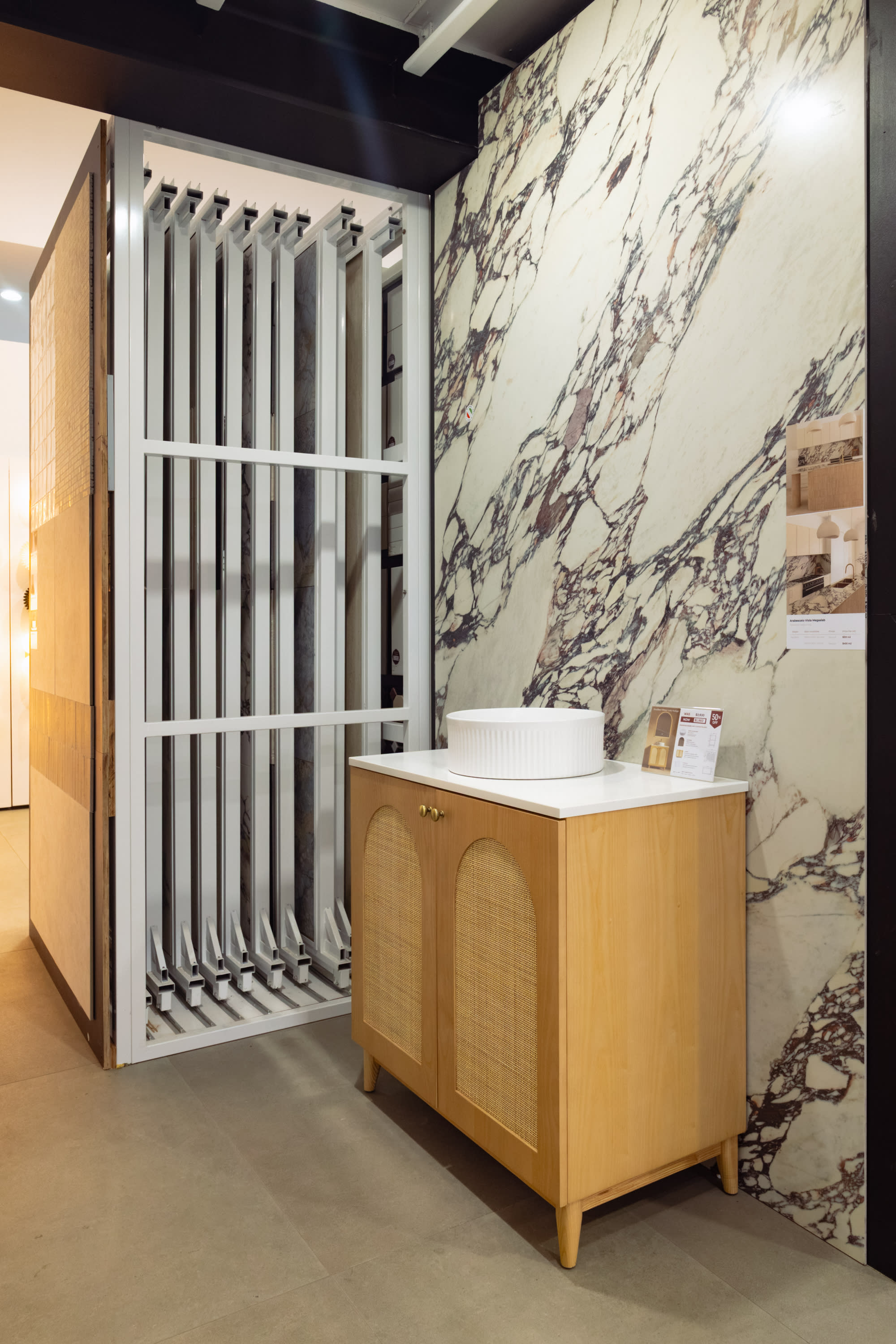
This is where large format becomes truly special. Book-matching is the technique of laying two or more slabs so their veining mirrors across the join, exactly like opening a book, so a marble or stone pattern flows symmetrically across the whole surface. On a feature wall, a fireplace surround or a vanity, a book-matched mega slab turns the veining itself into the hero of the room, with almost no grout lines to interrupt it. It is the look behind so many of the boutique-hotel bathrooms and living rooms people save to their inspiration folders.
Where large format tiles work best
Almost anywhere you want calm and continuity. On floors, large format keeps grout lines to a minimum for a serene, open-plan feel, and it is the safest layout for the size when set in a straight or gentle one-third offset (more on that in our tile laying patterns guide). On walls and wet areas, fewer joints mean an easier surface to clean and waterproof around. As a feature wall or benchtop, mega slabs deliver that book-matched, near-seamless drama. And because many ranges include matching outdoor pavers, one look can run from the living room straight out to the alfresco.
Large format ranges we reach for
A curated selection of our favourite large format and mega-slab ranges, most from the great Italian houses. Tap any range for sizes, finishes and current pricing, or ask us to post a sample pack anywhere in Australia. For a deeper look at the Italian mega-slab specialist, see our spotlight on Atlas Concorde.
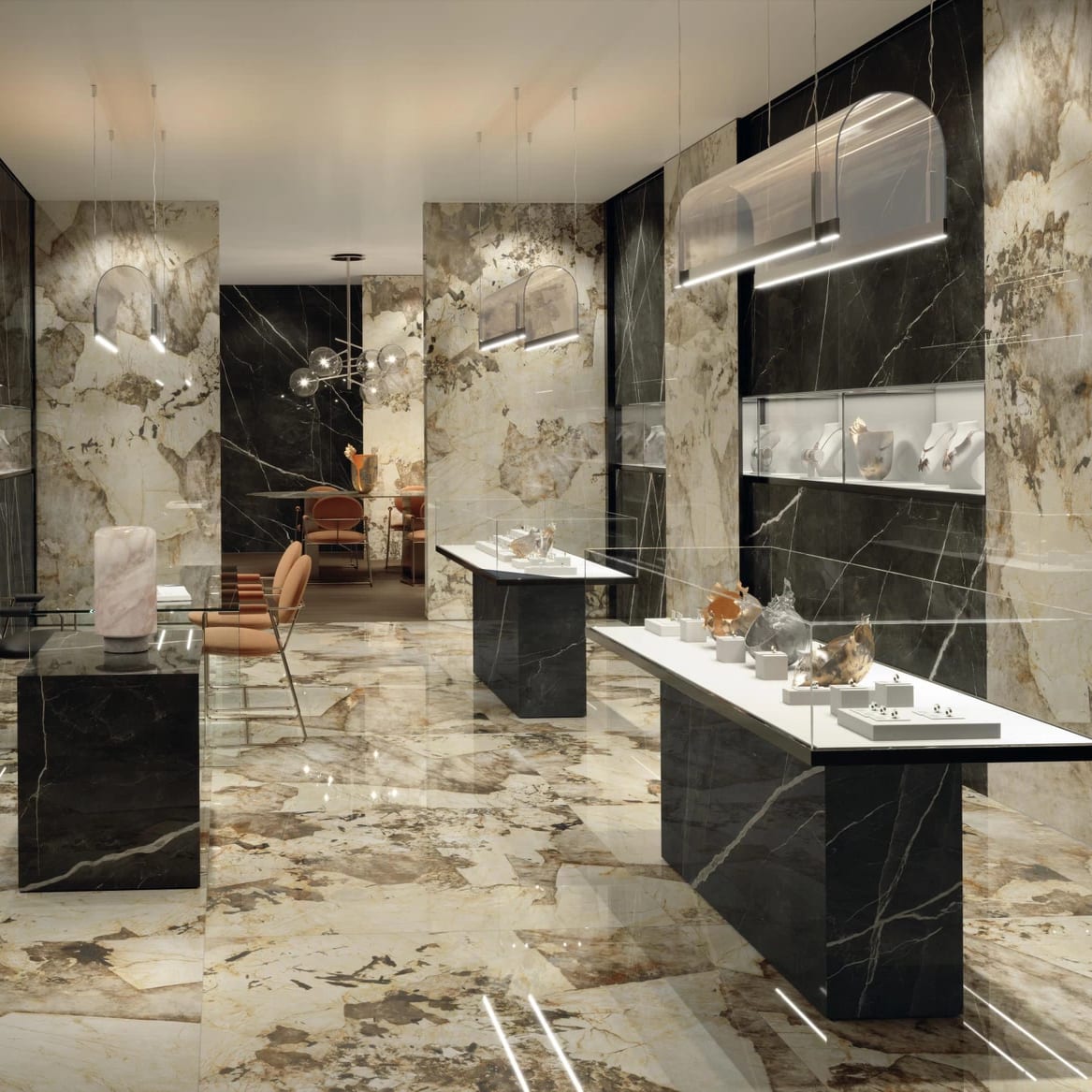
Marvel Gala
View range →
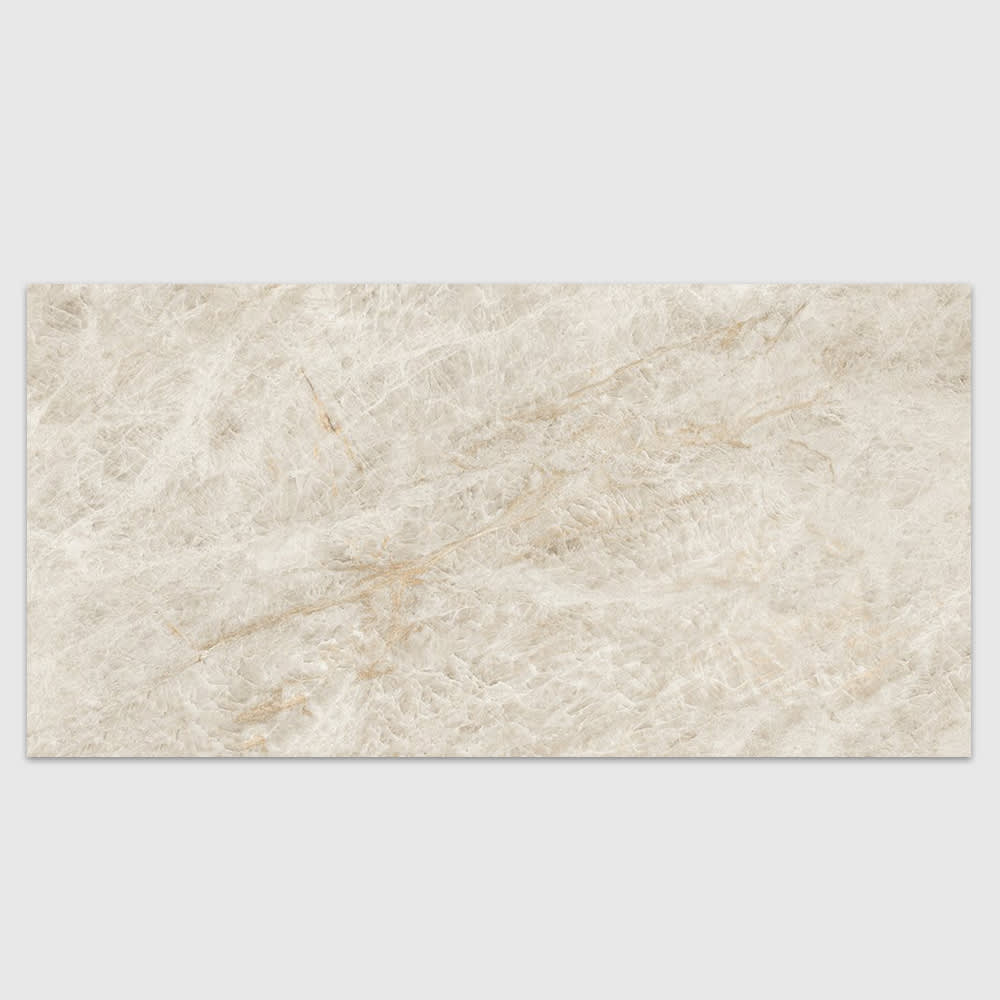
Marvel Diva, Taj Mahal
View range →
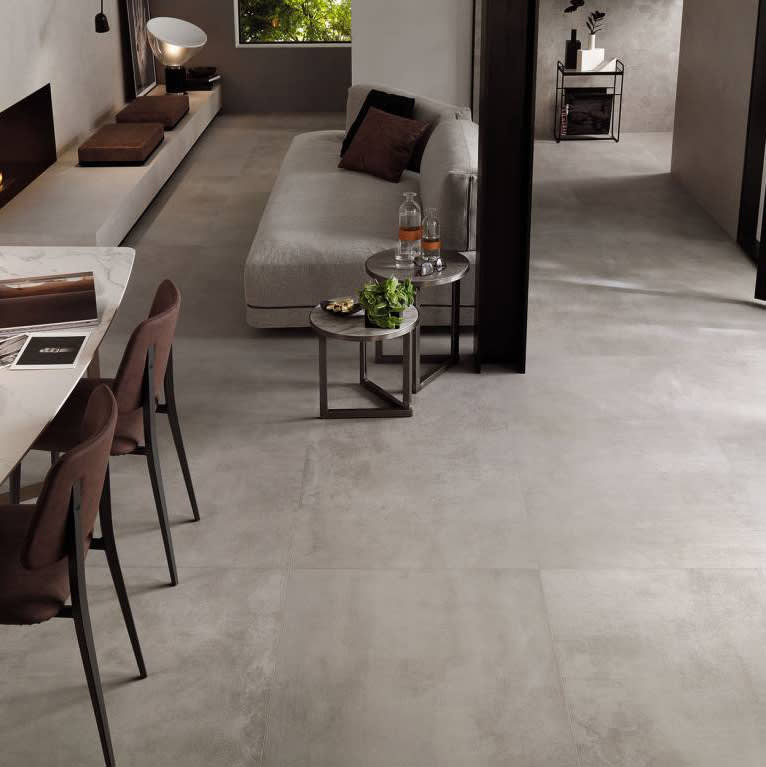
Boost Series
View range →
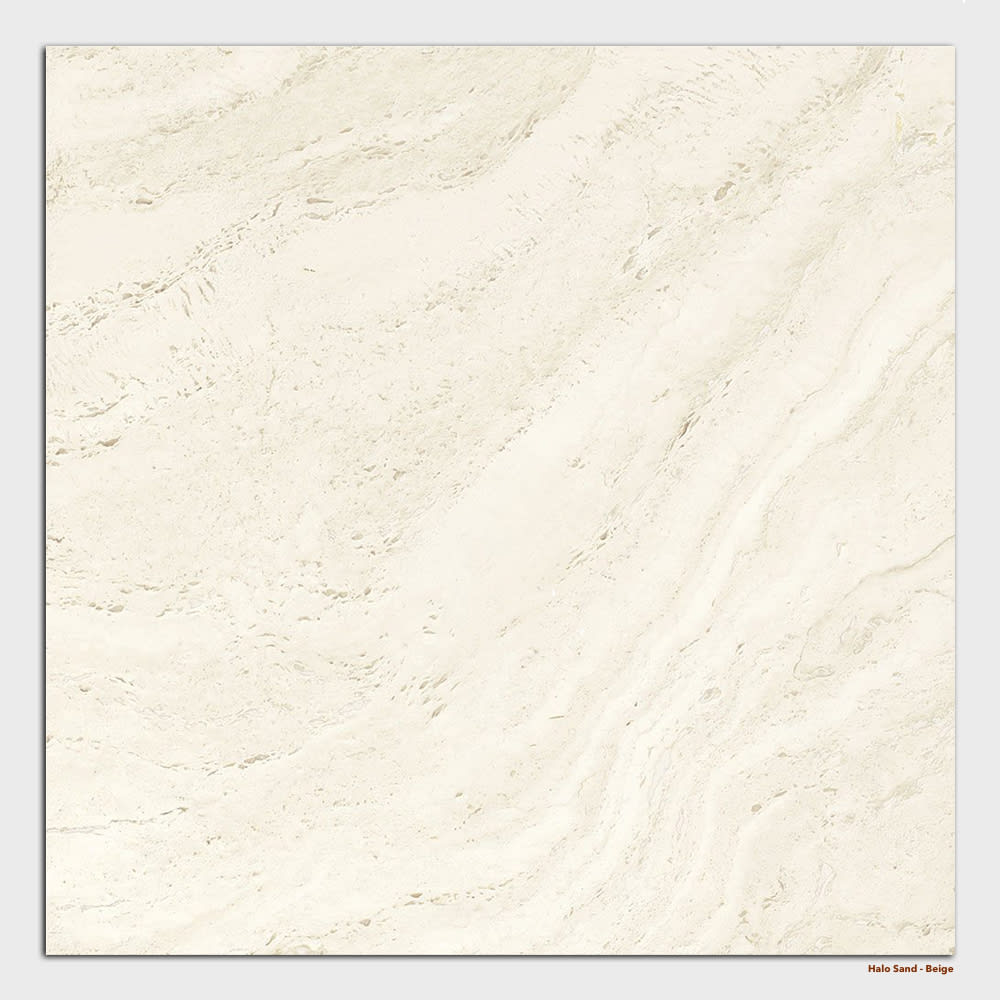
Marvel T
View range →
Installation: the part that earns the look
Large format rewards a considered install, and this is where the right tiler earns their fee. The substrate has to be genuinely flat, because any hollow or hump telegraphs through a big tile as lippage, the little step between edges. Tiles are usually set with a levelling clip system and back-buttered so the adhesive fully supports the piece, and rectified, calibrated edges let the joints stay tight and even. None of it is exotic, but it takes skill, the right tools and a bit of extra time. Remember to add a little more for wastage on cuts, too; our guide to how many tiles you need covers the maths.
Bring us your space, and think big
Large format and mega slabs are exactly the kind of decision that is easier with the tile in front of you and an experienced eye alongside. Bring your plans and inspiration into the Rockdale showroom, or send them through online, and we will help you choose the right size for the room, plan a book-matched feature if you want one, and pair it with the finishes to match. It is the same free, unhurried design guidance we give with every project, wherever you are in Australia. For more on why the format has taken over, our earlier piece on the benefits of large format tiles is a good next read.
Better still, come and stand in front of one. Here are two book-matched feature walls on display in our Rockdale showroom right now.
Frequently asked questions
What is considered a large format tile?
As a general rule, a large format tile is any tile with at least one side measuring 600mm or more. That covers popular sizes like 600 by 600mm and 600 by 1200mm, extra-large formats such as 800 by 800 and 1200 by 1200mm, and mega slabs or gauged porcelain panels that run up to around 1600 by 3200mm. The larger the tile, the fewer the grout lines and the more seamless the finished surface.
What is the largest tile size available?
The largest are mega slabs, also called gauged porcelain panels, which reach sizes around 1600 by 3200mm and are only a few millimetres thick. They are used for dramatic feature walls, benchtops and book-matched surfaces where a near-seamless look is the goal. Design Tiles stocks large format ranges up to mega-slab scale and can advise on the right size for your space.
What are the disadvantages of large format tiles?
Large format tiles need a very flat, well-prepared substrate, because their size shows up any unevenness in the floor or wall. They are heavier and more awkward to handle and cut, so they are best installed by an experienced tiler, often with levelling systems and back-buttering. They also cost more per square metre and in labour, and cutting large pieces can create more waste. The payoff is a calmer, more seamless and more hygienic surface.
Are large format tiles good for small bathrooms?
Yes, often more than people expect. Because large format tiles have far fewer grout lines, they make a small bathroom read as one continuous, calm surface, which makes the space feel larger and is easier to keep clean. The trick is to keep the tile in proportion to the room and to plan the layout so cuts fall in sensible places. Our team can help you scale it correctly.
What is a book-matched feature wall?
Book-matching is where two or more slabs are laid so their veining mirrors across the join, like opening a book, creating a large, symmetrical pattern that flows across the wall. It is most striking in marble-look mega slabs on a feature wall, a fireplace or a vanity, where the mirrored veining becomes the hero of the room. It is one of the main reasons people choose large slabs.
Do large format tiles need special installation?
They need extra care rather than anything exotic. The substrate must be flat and properly prepared, the tiles are usually set with a levelling clip system to keep the surface even and lippage-free, and they are often back-buttered to ensure full adhesive coverage. Because the pieces are large and heavy, an experienced tiler and the right tools make all the difference, which is worth factoring into your budget.
Are large format tiles more expensive?
Generally yes, both per square metre and to install, because the manufacturing, handling and fitting are more involved. That said, the gap is smaller than many expect, and premium large format porcelain remains an accessible way to get a luxury, low-maintenance stone or marble look. Fewer grout lines and easier cleaning also add value over the life of the surface.
Can large format tiles be used on both floors and walls?
Yes. Large format porcelain is made for floors, walls and, in many ranges, matching outdoor pavers, so one look can flow through a whole home. Thinner mega slabs and panels are ideal for walls, feature walls and benchtops, while calibrated large format tiles suit floors. Always confirm the specific tile is rated for your intended use, which our team can check for you.


Skip the designer fee, come straight to the experts
Our in-house experts at Design Tiles give you free, personal design guidance, in our Rockdale showroom or virtually anywhere in Australia. You get designer-level results and keep the budget for the tiles. Order sample packs to any state, or book a free consultation with the team.