Outdoor Porcelain & 20mm Pavers: A Complete Guide
The alfresco, pool and patio surface that has quietly replaced concrete and natural stone. Here is how 20mm porcelain works, how it is laid, and how to carry one floor from inside to out.
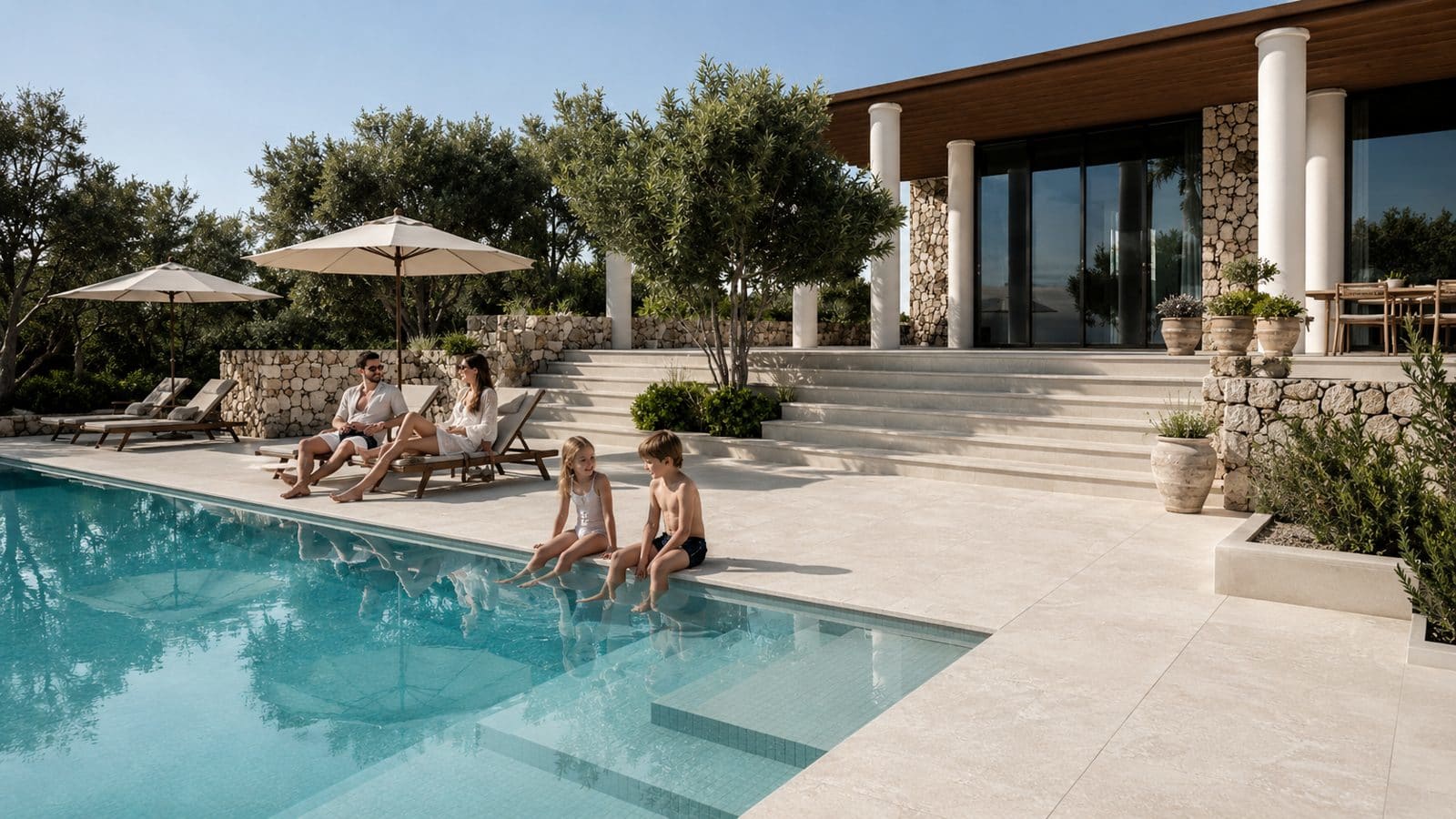
For years the choice for an alfresco or pool surround came down to poured concrete or natural stone, each with a catch: concrete cracks and stains, stone needs sealing and can bake in the sun. Outdoor porcelain pavers have quietly become the answer to both. If you are weighing up outdoor porcelain pavers in Australia for a patio, alfresco or pool, here is everything that matters, in plain terms.
The short answer
20mm porcelain pavers are double-thick outdoor tiles that resist water, fading, frost and stains, need no sealing, and can be laid on mortar, on pedestals or dry on gravel. Choose a P4 to P5 (or R11 to R12) slip rating for external and poolside zones.
Match a 20mm exterior paver to its interior twin and you can run one floor from inside to out.
What are 20mm porcelain pavers?
A standard interior tile is around 9 to 10mm thick. An outdoor porcelain paver is made 20mm thick, roughly double, and that strength is what lets it live outside. The extra body carries load, survives frost and temperature swings, and can be installed in ways a thin tile never could. You keep what people love about porcelain, its low maintenance, realistic stone and timber looks and fade resistance, in a format built for the weather.
Why porcelain outperforms concrete and stone outdoors
Porcelain is effectively non-porous, so it does not soak up water, and its colour is fired through the body, so Australian UV will not bleach it. It resists oil, leaf tannin and food stains, shrugs off salt and pool chemicals, and never needs sealing. Compared with coloured concrete that can crack and fade, or natural stone that needs regular sealing and can get very hot, a well-chosen porcelain paver is the lower-maintenance, longer-lasting surface.
Slip ratings for outdoor and poolside
Outdoors, slip resistance is not optional. In Australia it is measured under AS 4586, most commonly with the wet pendulum test that gives a P rating from P0 to P5. For external paths, alfresco floors and especially pool surrounds, look for a P4 or P5 pendulum rating (equivalent to about R11 to R12 on the ramp scale). A textured or grip finish gives you that security without feeling harsh underfoot. Because a covered alfresco, an open patio and a pool coping each face different amounts of water, we match the finish to the specific zone rather than using one rating everywhere.
Featured · 20mm paver · P5
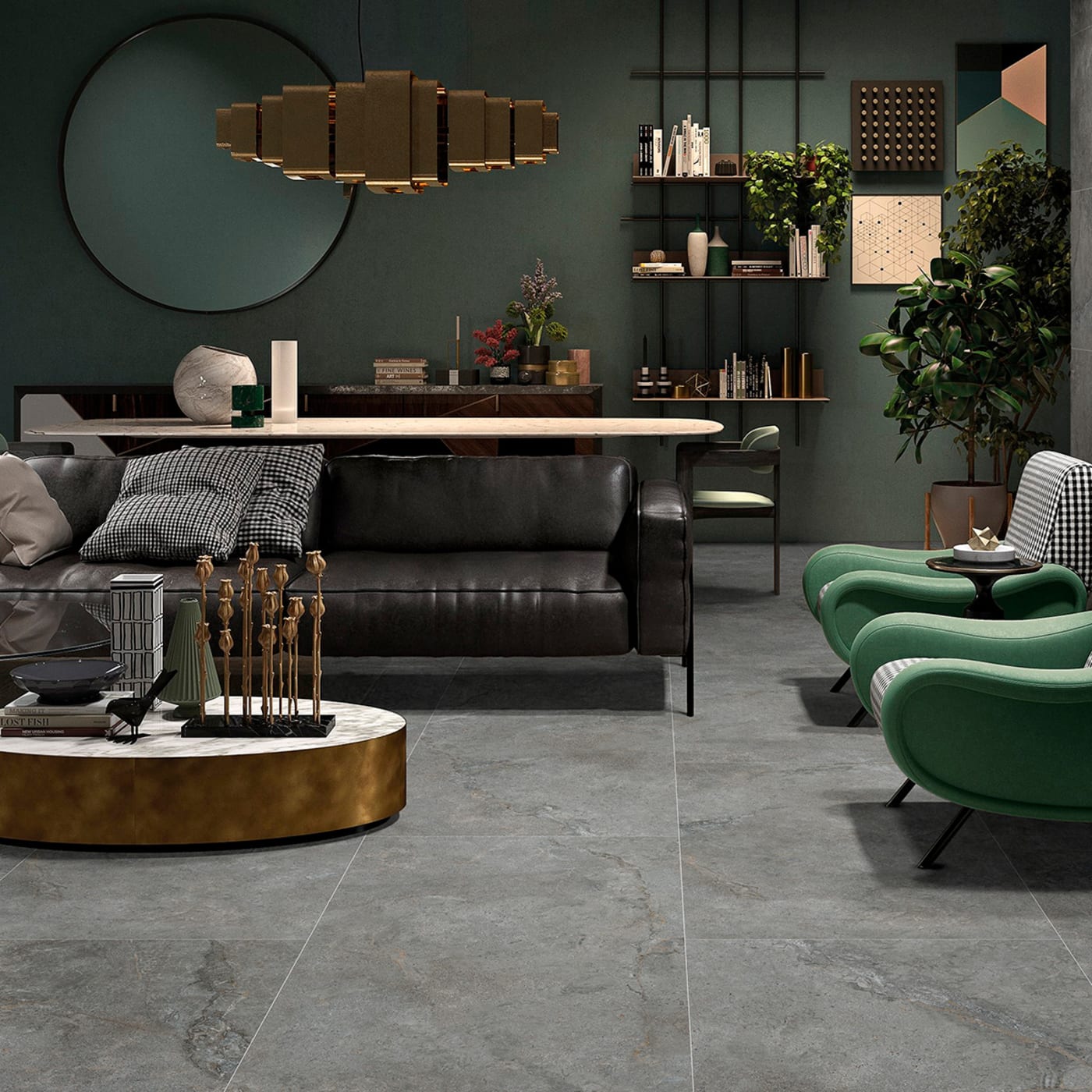
Andes Paver, 600 x 600 x 20mm
A textured stone look in Warm White, Almond Beige, Grey and Charcoal, rated for both residential and commercial use.
Best for: alfresco, courtyards, driveways and higher-traffic or commercial outdoor floors.
Care: no sealing. Sweep and hose down; a durable, fade-proof surface for years outdoors.
View productHow are they laid?
One of the quiet advantages of 20mm pavers is flexibility of installation. The three most common methods each suit a different situation, shown in cross-section below.
Glued to a compacted, well-drained base for a permanent, fully fixed floor.
Sat on adjustable supports over decks, membranes and rooftops for a level floor with drainage beneath.
Placed on a compacted gravel or sand base for paths, stepping zones and garden areas.
The seamless indoor-outdoor floor
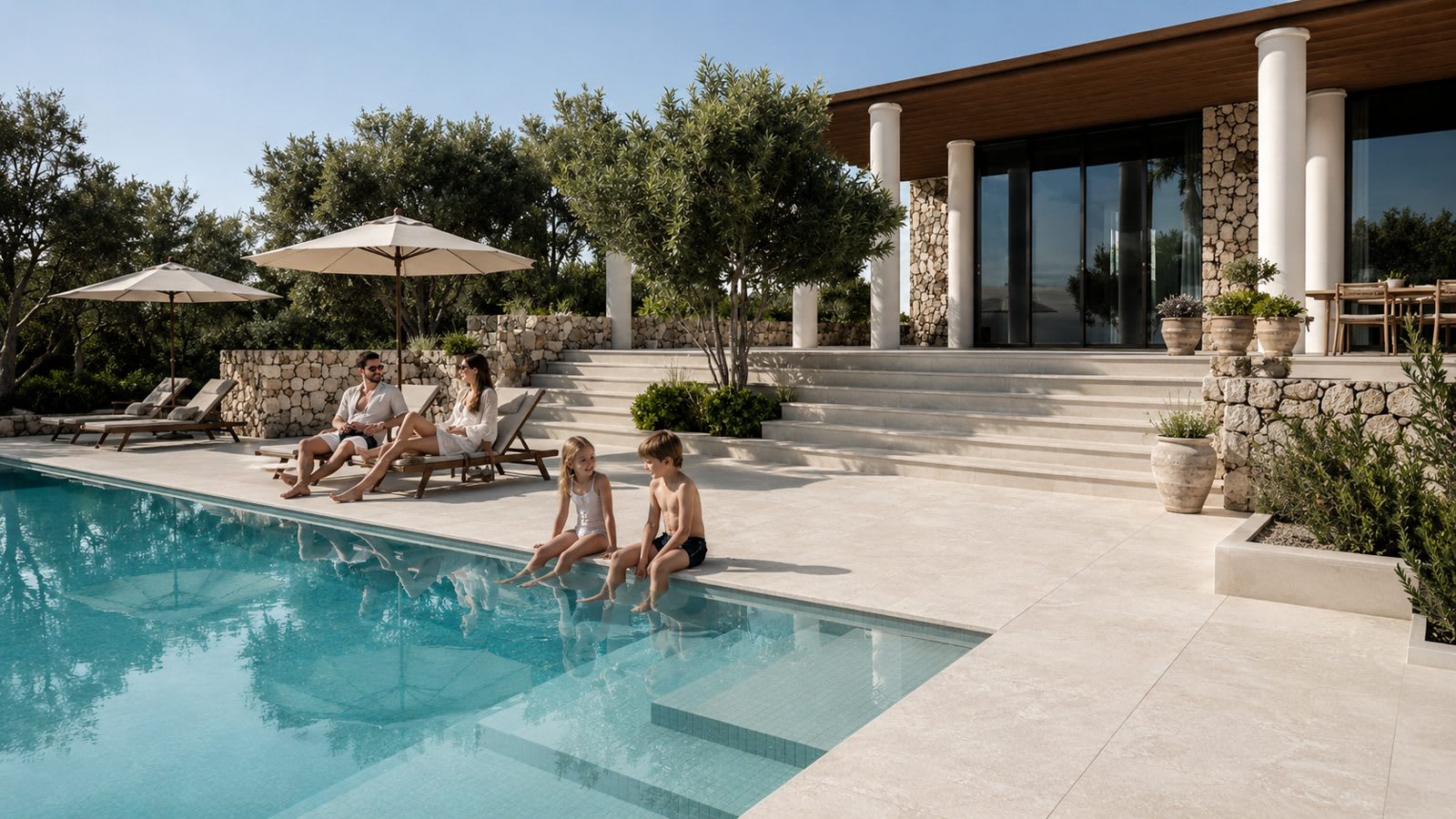
Here is the design move that makes the biggest difference: many porcelain ranges are produced in a standard interior thickness and a matching 20mm exterior paver, in the same colour and finish. Lay the interior tile inside and its 20mm twin on the alfresco, align the joints across the threshold, and the two spaces read as one. The eye keeps travelling, the room feels larger, and the connection to the garden or pool feels effortless. It is the single most requested detail in the calm, contemporary Australian homes we help design.
Our pick for a seamless floor
For an indoor-outdoor floor we reach for Tufa X-Cut. Its crosscut-travertine look comes as a standard interior tile and a matching 20mm, P5 grip paver, so the same warm stone runs from your living room to the alfresco and pool, with the slip resistance stepped up exactly where it needs to be outside.
The Tufa X-Cut pair for a seamless pool and alfresco
Both are 20mm porcelain with a P5 grip finish, made to be installed to Australian Standards (AS 3958 and AS 3727). Together, the paver and its matching bullnose finish a pool surround cleanly.
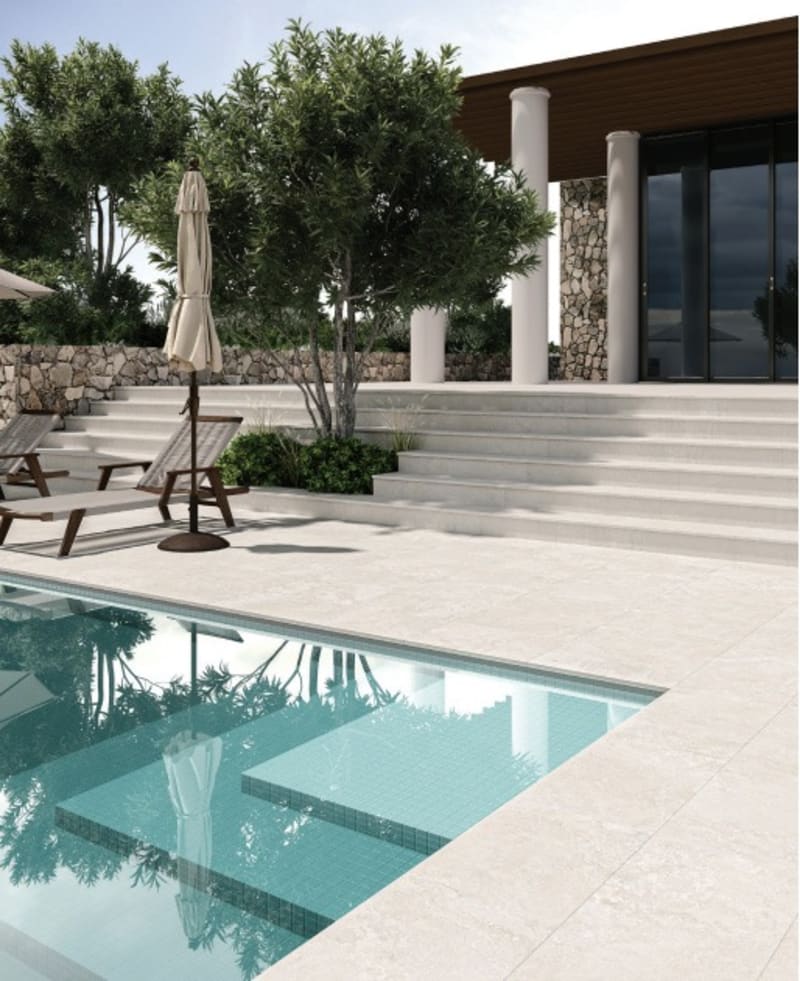
20mm paver · P5
Tufa X-Cut Paver, 600 x 600 x 20mm
A crosscut-travertine look in Off-White, Ivory and Grey, water-submersible with a V2 natural variation.
Best for: alfresco, patios and pool surrounds, and pairing with the interior Tufa tile for one seamless floor.
Care: no sealing. Sweep and hose down; install to AS 3958 and AS 3727 on a drained base.
View product
20mm bullnose · P5
Tufa X-Cut Bullnose, 400 x 600 x 20mm
The matching rounded-edge coping for the Tufa X-Cut paver, in the same Off-White, Ivory and Grey.
Best for: pool coping, step treads and finishing a paver edge cleanly and safely.
Care: no sealing. Wipe or hose clean; pair it with the Tufa paver for a resolved pool surround.
View productChoosing the right paver for your project
Pool, patio, alfresco and driveway each ask slightly different questions of a paver: slip rating, load, the laying method and the edge and coping details. That is where a quick conversation saves costly guesswork. Tell us the area and how it will be used, and we will spec the paver, the finish and the quantity, and match it to an interior tile if you want the floor to flow.
Frequently asked questions
What are 20mm porcelain pavers?
They are outdoor porcelain tiles made 20mm thick, roughly double a standard interior tile. That extra thickness gives them the strength to be laid outdoors in several ways, including on a traditional mortar bed, on adjustable pedestals over a deck or roof, and even dry-laid on gravel or grass, while keeping porcelain's low maintenance and fade resistance.
Are porcelain pavers good for pool surrounds?
Yes, they are one of the best options. Porcelain does not absorb water, will not fade in UV, stays cooler underfoot than many dark stones, and resists salt and pool chemicals. Paired with a suitable slip rating, a matching bullnose or coping edge finishes the pool cleanly.
Which slip rating do I need for outdoor tiles?
For outdoor and poolside areas you want a higher slip resistance. Look for a P4 or P5 pendulum rating, or an R11 to R12 ramp rating, on external and wet zones. We match the finish to the exact area, since a covered alfresco and a pool coping have different needs. See our slip ratings guide for the full explanation.
Can I get the same tile inside and outside?
Very often, yes. Many porcelain ranges are made in a standard interior thickness and a matching 20mm exterior paver in the same colour and finish. That lets you run one continuous look from your living room straight out to the alfresco, which makes a home feel larger and more considered.
How are 20mm porcelain pavers laid?
Three common methods: bonded onto a compacted, drained mortar bed for a permanent finish; raised on adjustable pedestals over membranes, decks or rooftops for a level floating floor; or dry-laid on a gravel or sand base for paths and garden areas. The right method depends on the substrate and the use.
Do outdoor porcelain pavers fade or stain?
No. The colour in porcelain is fired through the surface, so it will not fade in Australian sun the way some coloured concrete and sealed stones can. Porcelain also does not need sealing and resists oil, leaf and food stains, which makes it easy to keep looking new.


Skip the designer fee, come straight to the experts
Our in-house experts at Design Tiles give you free, personal design guidance, in our Rockdale showroom or virtually anywhere in Australia. You get designer-level results and keep the budget for the tiles. Order sample packs to any state, or book a free consultation with the team.