Tile Slip Ratings Explained: P-Ratings and R-Ratings
The safety decision most renovators skip. Here is what P and R slip ratings mean, and exactly which rating to choose for a bathroom, wet area, pool surround and alfresco.
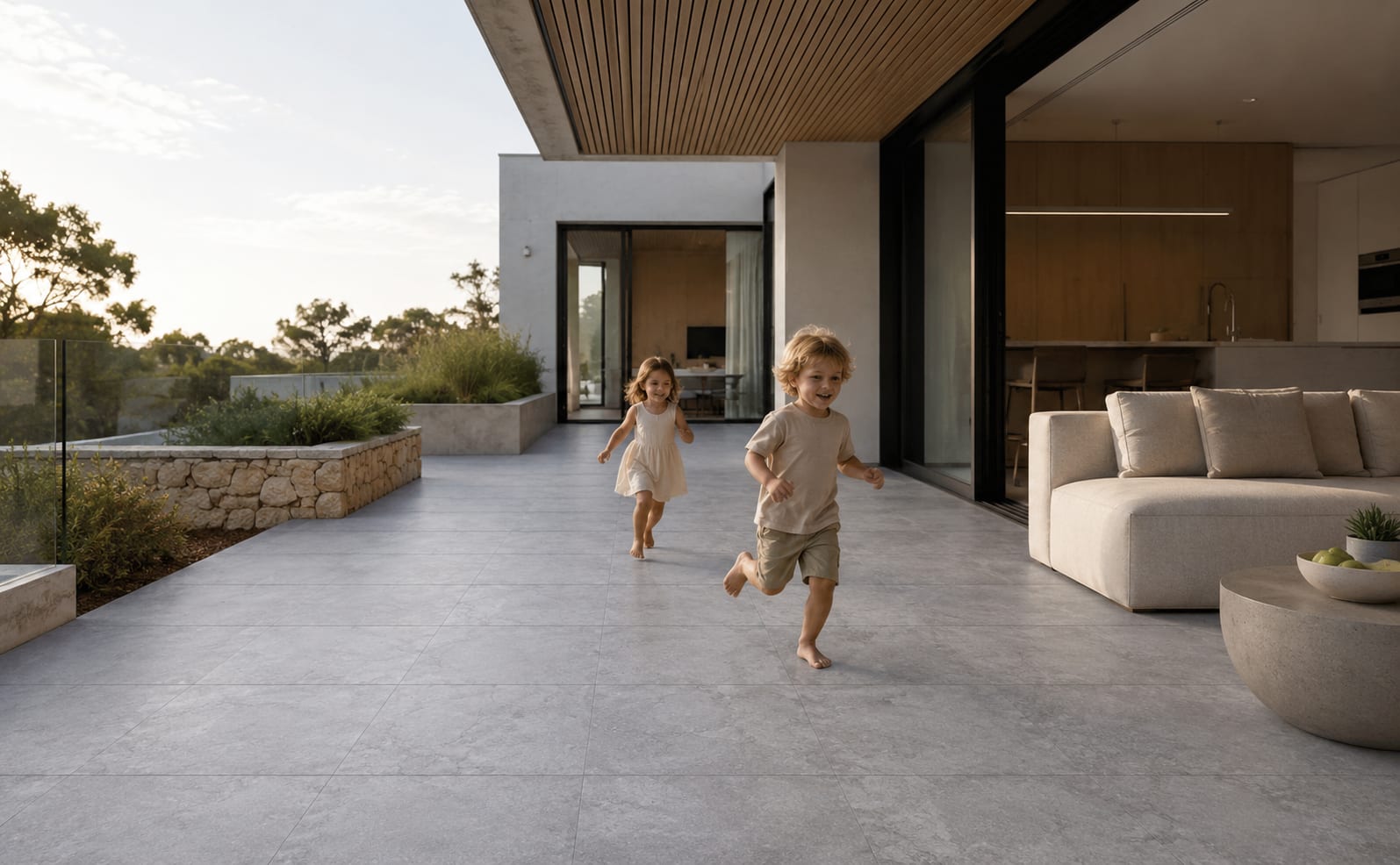
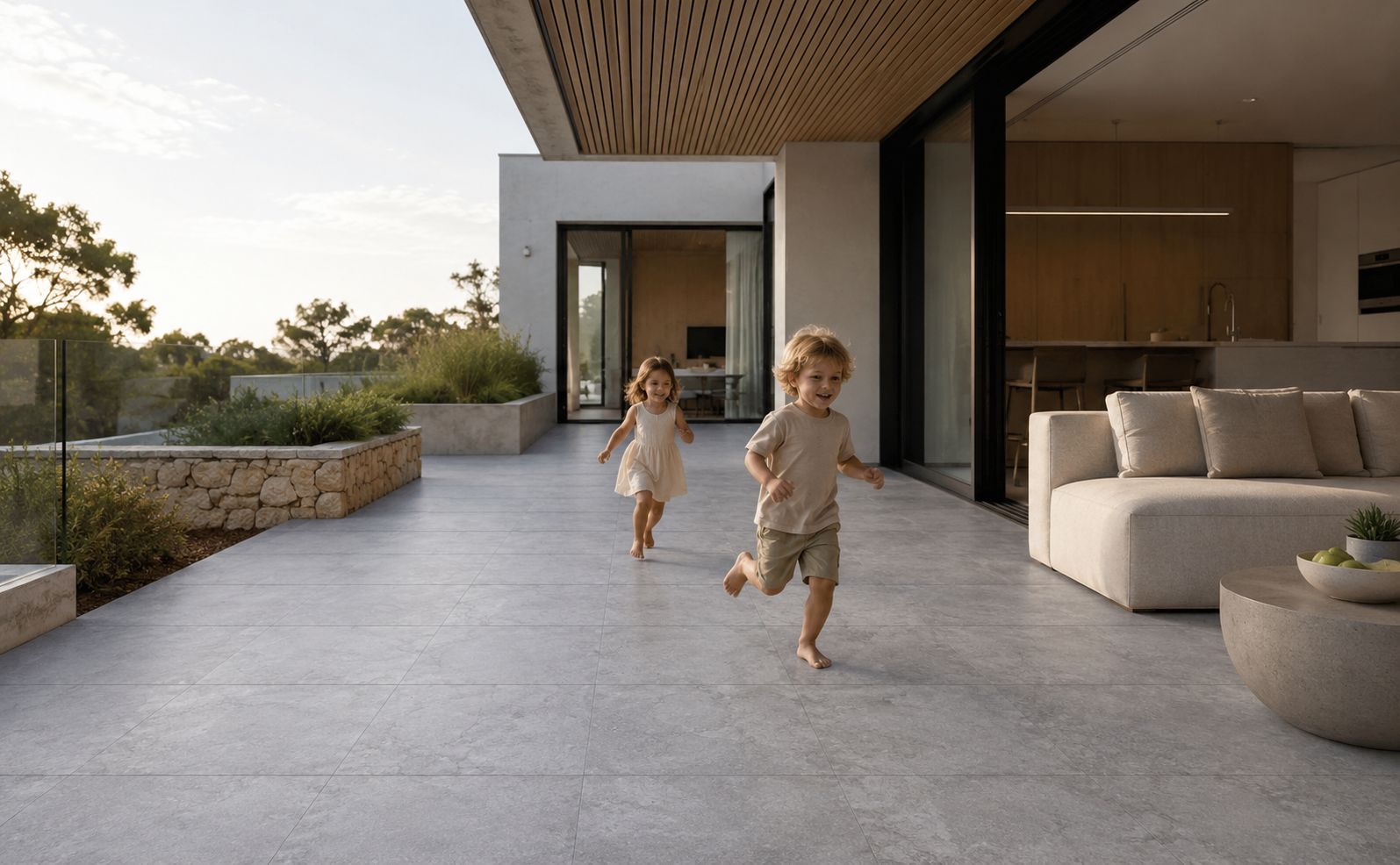
A tile slip rating tells you how much grip a floor tile has when it is wet, and choosing the right one is the difference between a floor that feels safe and one that does not. In Australia there are two systems you will see: the P rating (P0 to P5) and the R rating (R9 to R13). This Design Tiles guide explains both, then gives you the rating to look for in each area of the home.
The short answer
Use the P rating as your main guide in Australia because it comes from the AS 4586 pendulum test. As a rough map: dry living areas P1 to P2, internal bathroom floors around P3, shower floors and wet areas P4, and external, alfresco and pool areas P4 to P5. The R rating from R9 to R13 is a useful European cross-reference. Always confirm the requirement for your specific project.
What is a tile slip rating?
A slip rating is a measured value for how much friction a tile surface provides, tested wet because that is when floors are most slippery. The higher the number, the more grip. It is not about how a tile looks or feels in your hand: two tiles in the same colour can carry very different ratings depending on their surface finish, from a smooth polished face to a lightly textured matt to a heavily structured outdoor grip.
Getting this right matters most in the places water collects: bathrooms, laundries, entries, alfresco floors and around the pool. Match the rating to the area and the floor stays safe without feeling like sandpaper underfoot.
The two systems: P-ratings and R-ratings
Australia references the P rating, from the pendulum test in AS 4586, running from P0 with the least grip to P5 with the most grip. Many European tiles also carry an R rating from R9 to R13 from a ramp test, and wet barefoot areas like pool edges use a barefoot scale from Class A to C.
P rating
Pendulum test. The figure Australian projects are specified against. P0 to P5.
R rating
Walked in boots. A useful European cross-reference. R9 to R13.
The tests do not convert exactly, so use the P value as your guide and R as a cross-reference. This table shows how they broadly line up.
| Grip level | P rating (AS 4586) | R rating (ramp) | Typical use |
|---|---|---|---|
| Low | P0 to P1 | R9 | Dry internal areas and walls only where suitable |
| Moderate | P2 to P3 | R10 | Internal living areas, entries and many bathroom floors |
| High | P4 | R11 | Showers, laundries, wet areas and many external floors |
| Very high | P5 | R12 to R13 | Pool surrounds, exposed outdoor areas and commercial zones |
What slip rating do you need for each area?
The correct rating depends on whether the area is indoors or outdoors, whether shoes or bare feet are expected, and how often the floor will be wet. Use the following as a practical starting point, then confirm the final specification for your project.
Living areas
Dry internal floors with low exposure to water.
Bathroom
General internal bathroom and ensuite floors.
Shower floor
Wet barefoot area where extra grip is valuable.
Laundry
Choose stronger grip where water may spill.
Alfresco
External surfaces exposed to rain and weather.
Pool surround
Wet barefoot areas may also require Class B or C.
Bathroom and shower-floor slip ratings
For an internal bathroom floor, P3 is a common practical starting point. It gives useful wet grip without the aggressively textured surface of an outdoor tile. For a shower floor, accessible bathroom or a zone that stays wet, P4 is often preferred.
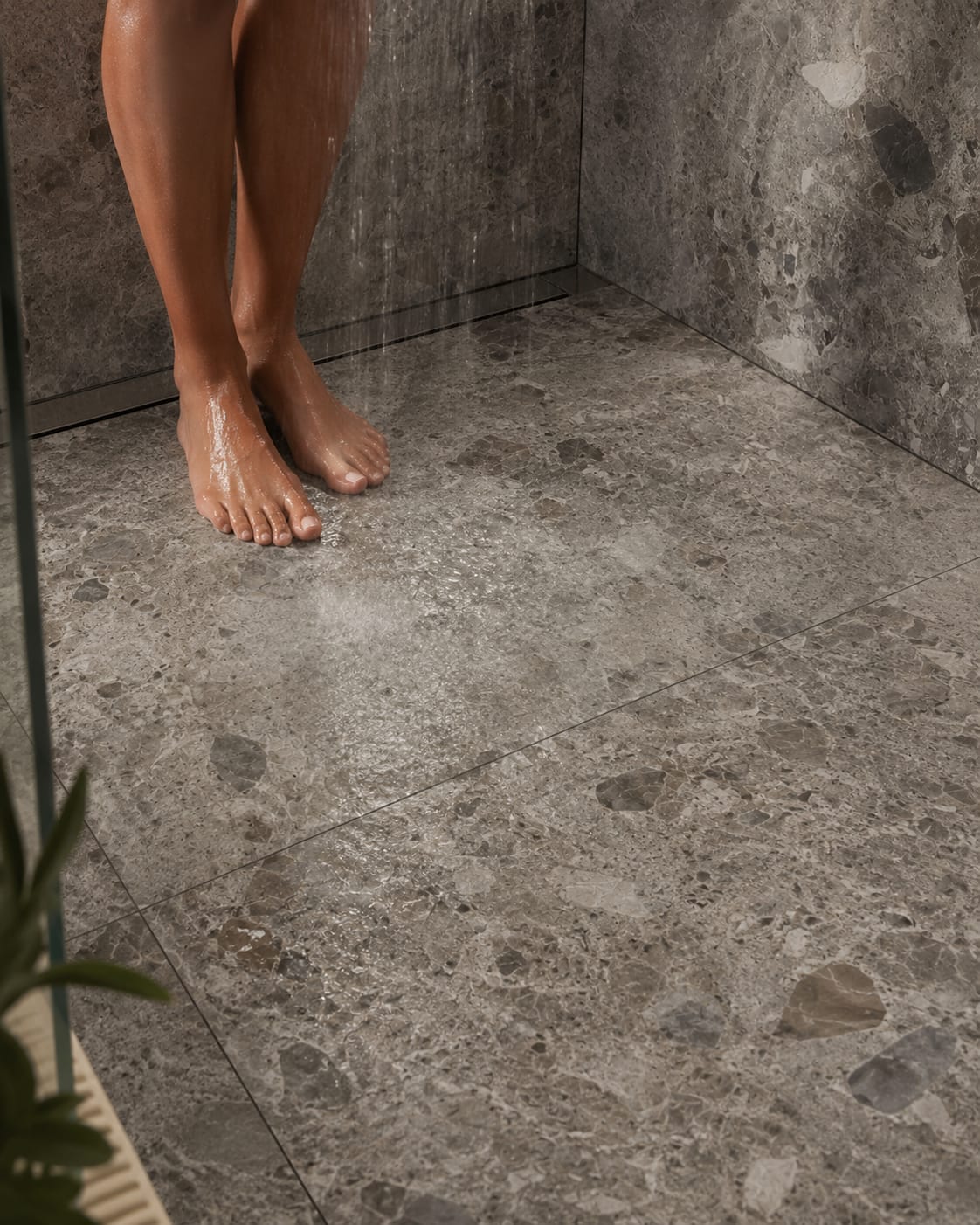
Tile size also matters. Small tiles and mosaics add more grout joints, which create extra traction and make it easier to form the fall toward the drain. That is why mosaics are such a reliable choice for shower bases, even when the matching larger-format floor tile is used through the rest of the bathroom.
Example bathroom specification
Outdoor and pool-area slip ratings
Outdoor tiles face rain, dust, leaves and changing weather, so they need more grip than most internal floors. A P4 surface is a strong general choice for covered alfresco areas and patios. Fully exposed areas, pool surrounds and steeper paths may call for P5.
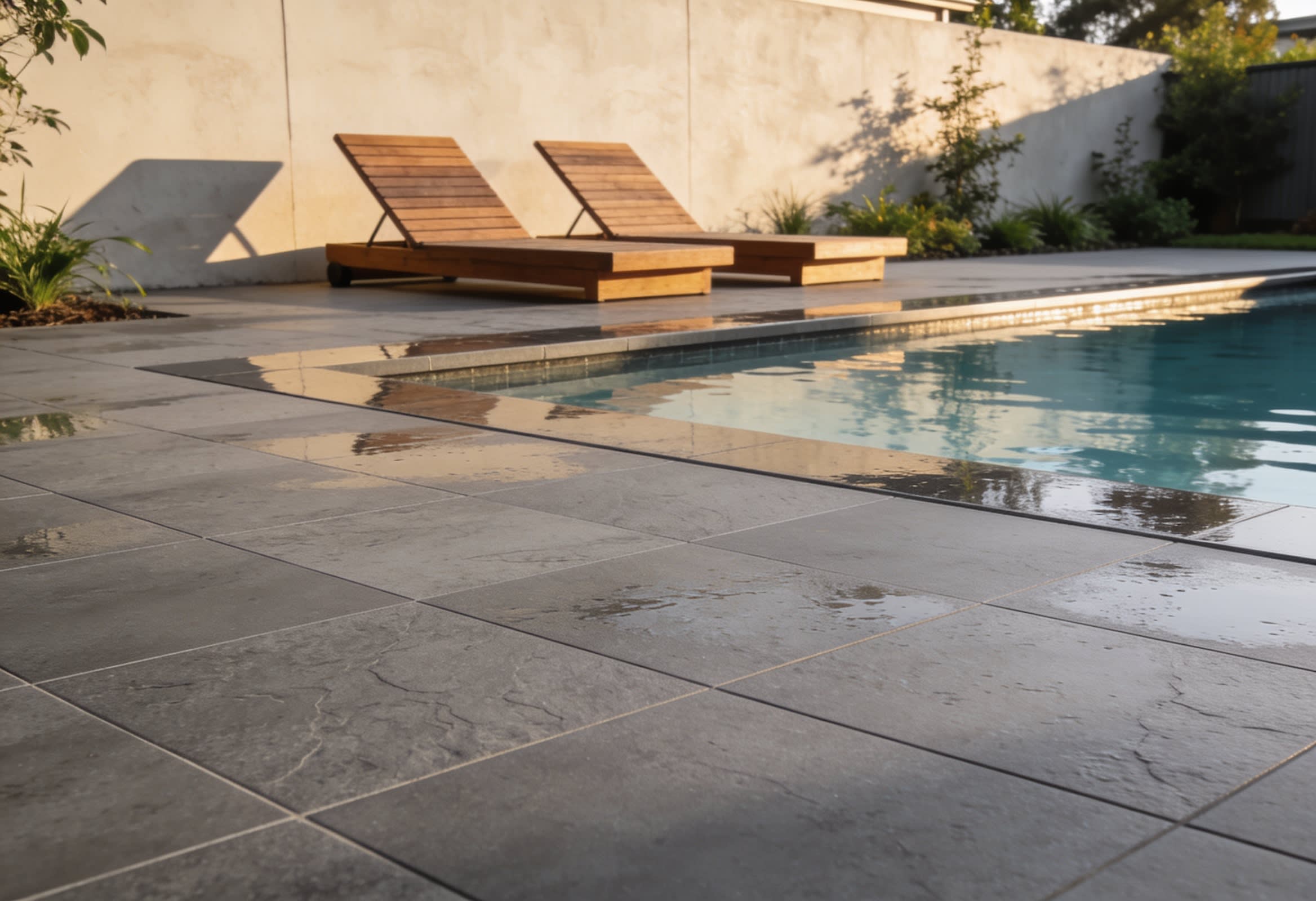
Outdoor and pool areas
Higher grip finish
A structured porcelain surface provides stronger wet grip for exposed patios, pool edges and other areas regularly affected by water.
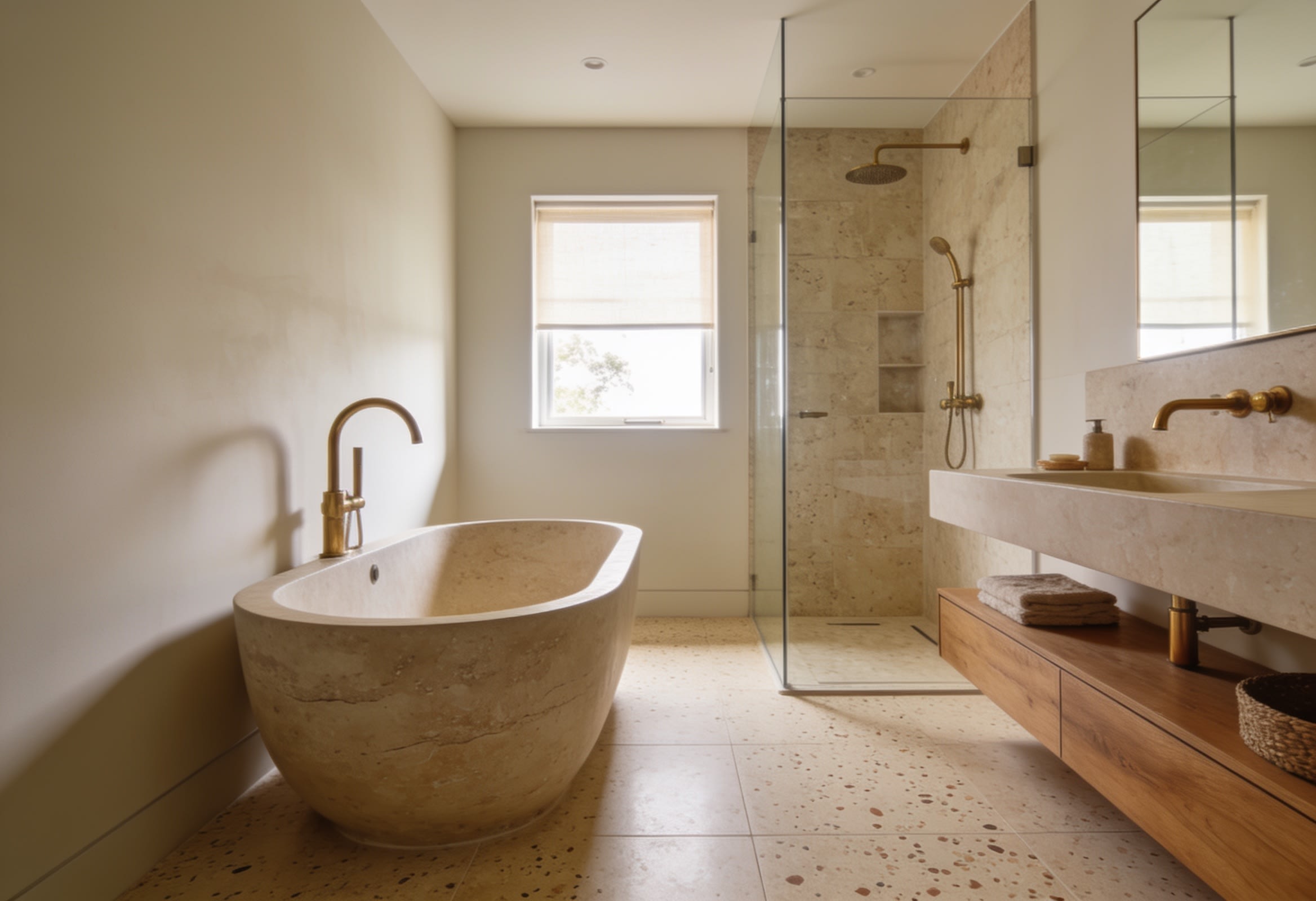
Internal wet areas
Refined matt grip
A smoother matt surface balances practical wet grip with easier cleaning and comfortable everyday use inside the home.
Pool areas also need to feel comfortable under bare feet. In addition to the P or R rating, look for a barefoot classification such as Class B or Class C where the specification calls for it.
Does a higher rating make tiles harder to clean?
Usually, yes, but only slightly. A heavily structured P5 surface has more texture for dirt to settle into than a smooth internal tile. That does not make it unsuitable; it simply means the finish should be used where the extra grip is genuinely needed.
Avoid choosing the highest rating for every room. A P5 tile may be ideal around a pool but unnecessary in a dry living room. Matching the finish to the zone gives you the safest and most practical result.
How to read a tile specification
On a product page or technical sheet, look for terms such as:
- P rating: P0, P1, P2, P3, P4 or P5.
- R rating: R9, R10, R11, R12 or R13.
- Barefoot classification: Class A, B or C.
- Finish: polished, honed, matt, grip, structured or external.
- Application: wall, internal floor, wet area, external floor or pool surround.
Do not assume that every colour or size in the same tile collection has the same rating. A range may have a smooth internal finish and a separate external grip finish, sometimes with different thicknesses and test results.
Common slip-rating mistakes
Choosing by touch alone
A tile that feels textured in your hand may not have the tested rating required for the floor. Always check the technical specification.
Assuming R and P ratings convert exactly
They use different test methods, so there is no perfect one-to-one conversion. Use the Australian P rating as the main guide for Australian projects.
Using an outdoor tile everywhere
Extra grip can mean extra cleaning. Use structured surfaces in wet and exposed areas, and smoother finishes where the slip risk is lower.
Forgetting grout joints
Small tiles and mosaics can provide additional grip through their grout lines, which is especially useful on shower floors and sloped wet areas.
Checking the rating after ordering
Confirm the required rating before you buy, particularly for pools, external areas, accessible bathrooms and commercial projects.
The Design Tiles approach
Match the finish to the exact zone
Start with the room, how wet it gets, whether it is indoors or exposed to weather, and whether people will walk there barefoot. Then choose the tile finish and rating that meet those conditions without making the surface unnecessarily difficult to maintain.
- Dry internal floor: refined matt or suitable low-to-moderate grip finish
- Bathroom floor: commonly around P3
- Shower floor: often P4 with mosaics or smaller formats
- Alfresco and pool: generally P4 to P5, subject to the project
Frequently asked questions
What do tile slip ratings mean?
A tile slip rating measures how much grip a tile surface offers, especially when wet. In Australia the two common systems are the P rating from P0 to P5 and the R rating from R9 to R13. A higher number means more slip resistance.
What is the difference between P ratings and R ratings?
They are two different tests. The P rating comes from the pendulum test used in Australian Standard AS 4586. The R rating comes from a European ramp test. Use the P rating as your primary guide in Australia and treat R as a useful cross-reference.
What slip rating do I need for a bathroom floor?
As a general guide, an internal bathroom or ensuite floor is usually specified around P3, with P4 preferred for the shower floor, accessible bathrooms or wherever extra grip is needed. Confirm the requirement for your specific project.
What slip rating do I need around a pool or outdoors?
External wet areas such as alfresco floors, patios and pool surrounds are typically specified at P4 or P5. Pool areas may also need a Class B or C barefoot classification. Confirm the exact rating for the zone before ordering.
Are high-slip-rating tiles harder to clean?
A little. More surface texture means more grip but also more places for grime to sit. Match the rating to the area instead of automatically choosing the highest rating for every floor.
Do wall tiles need a slip rating?
No. Slip ratings apply to floors and other walking surfaces. Wall tiles, splashbacks and feature walls are not walked on, so they do not carry a slip requirement.
What is AS 4586?
AS 4586 is the Australian Standard for slip resistance of new pedestrian surfaces. It defines the pendulum test that produces the P0 to P5 ratings. A related standard, AS 4663, covers testing surfaces that are already installed.
Where can I check a tile's slip rating?
The rating is listed on the product page or technical specification sheet, usually as a P value and sometimes an R value. Design Tiles can confirm the rating for wet-area and outdoor tiles before you order.


Skip the designer fee, come straight to the experts
Our in-house experts give you free, personal design guidance in our Rockdale showroom or virtually anywhere in Australia. Order sample packs to any state or book a free consultation with the team.