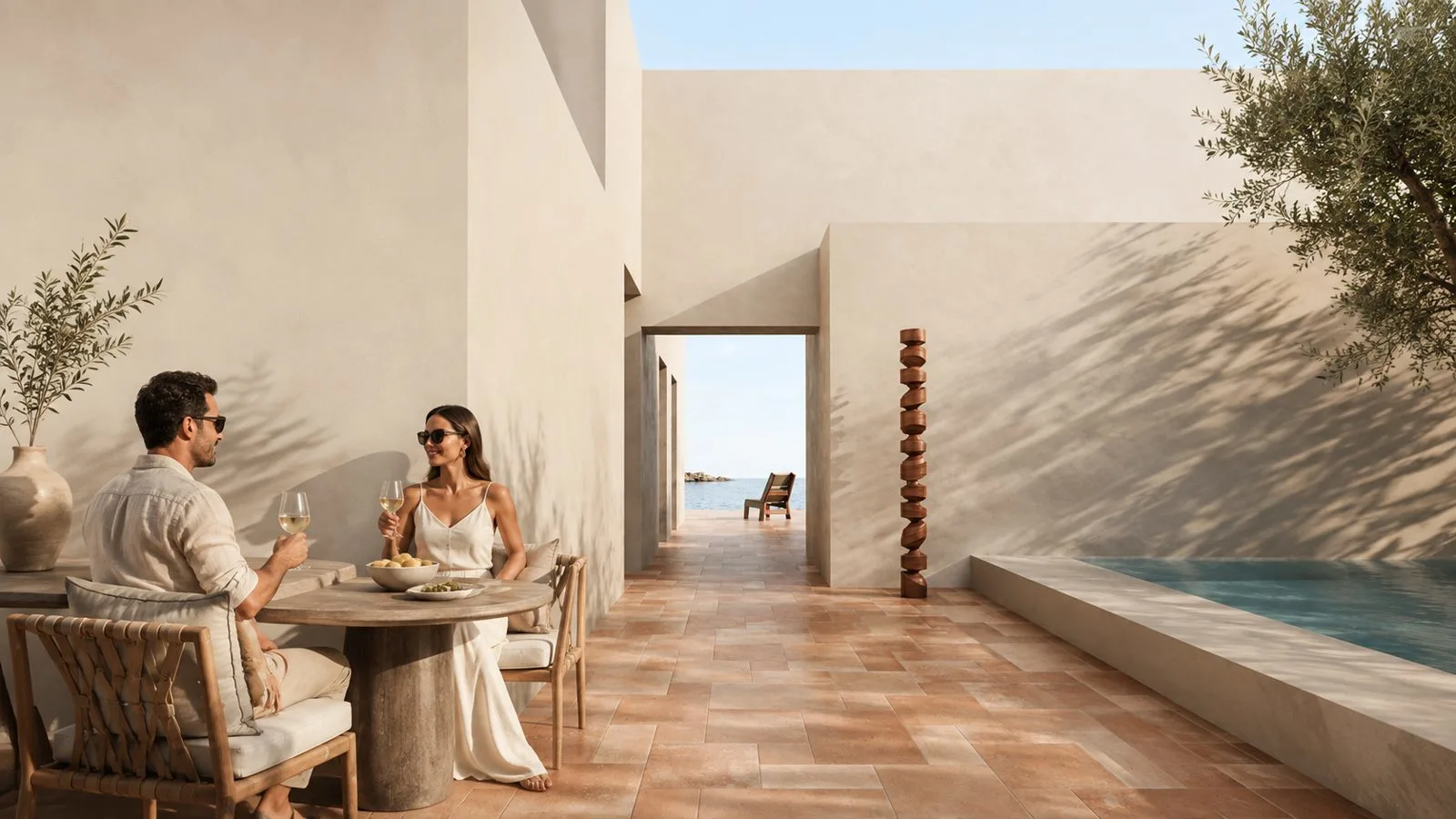
The French Pattern Explained: Travertine's Classic Layout
A four-piece set that has dressed courtyards and villas for centuries. Here is how the French pattern works, the sizes in the set, the repeat, and where it looks its best.
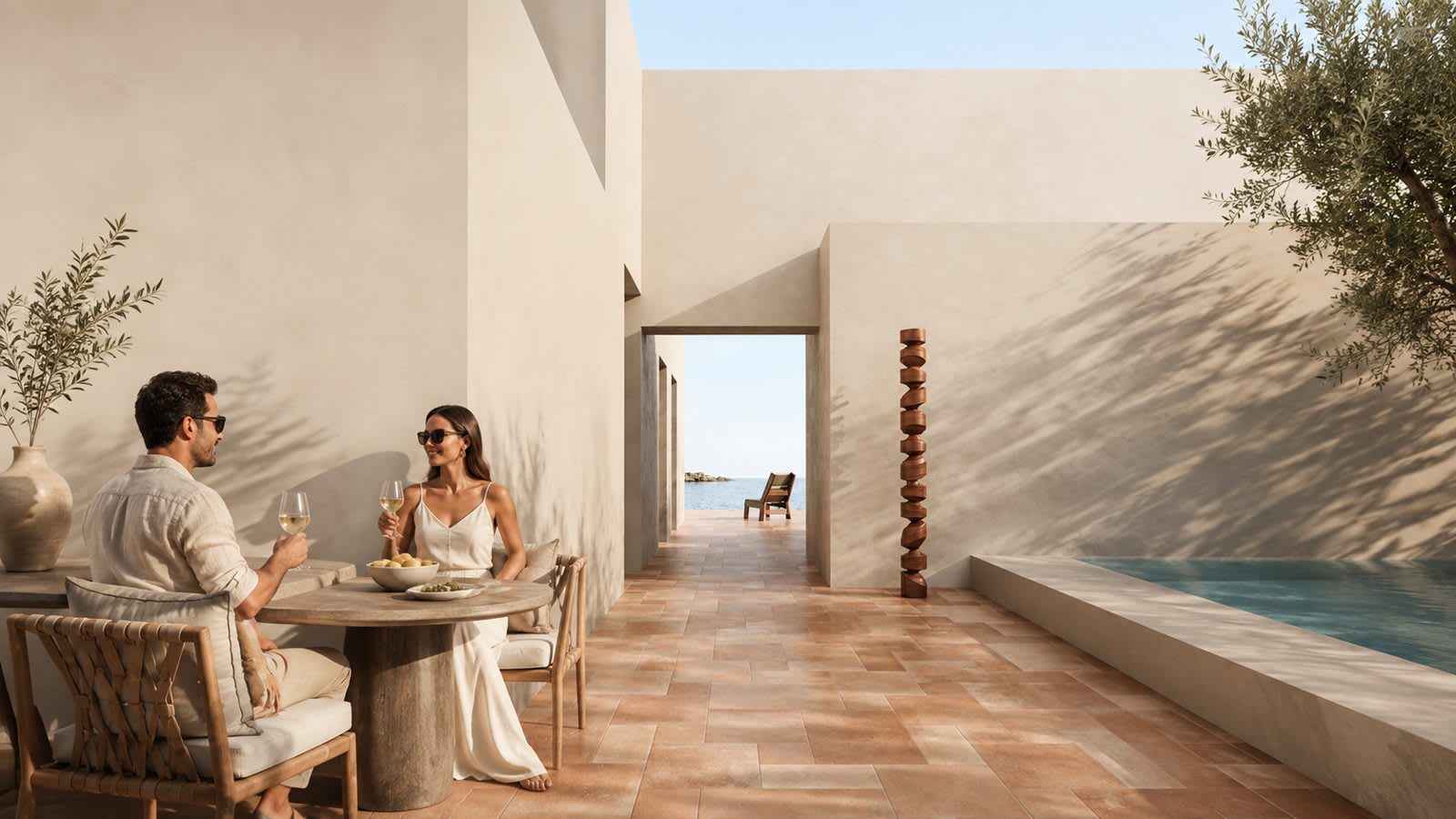
Some patterns feel busy. The French pattern feels calm, even though it is made of four different tile sizes at once. That is its quiet genius. If you are drawn to a travertine floor with a relaxed, timeless, faintly European feel, the French pattern (you will also see it called the Versailles or Roman pattern) is almost certainly the layout you are picturing. Here is how it actually works.
The short answer
The French pattern is a four-piece tile layout: four different sizes interlock and repeat over roughly 1.2 to 1.5 square metres, giving a relaxed, multi-directional surface with no rigid grid. It is the classic layout for travertine and stone-look floors.
You order by area, not by piece, and add about 15 percent wastage.
What is the French pattern?
The French pattern is a modular layout built from four tile sizes that fit together like a gentle puzzle. Instead of a single tile marching in a straight grid, the four modules combine so their joints run in several directions, filling the floor with an easy, organic rhythm. It has dressed the floors of French chateaux and Roman courtyards for centuries, which is why it carries such a settled, heritage feeling.
The four sizes in the set
A French pattern is supplied as a coordinated set of four sizes, made in the right proportions so the pattern repeats without gaps. The sizes are 203 x 203, 203 x 406, 406 x 406 and 406 x 610mm (the classic 8, 16 and 24 inch set), and they interlock so the finished floor has a staggered edge rather than a square one, as shown below.
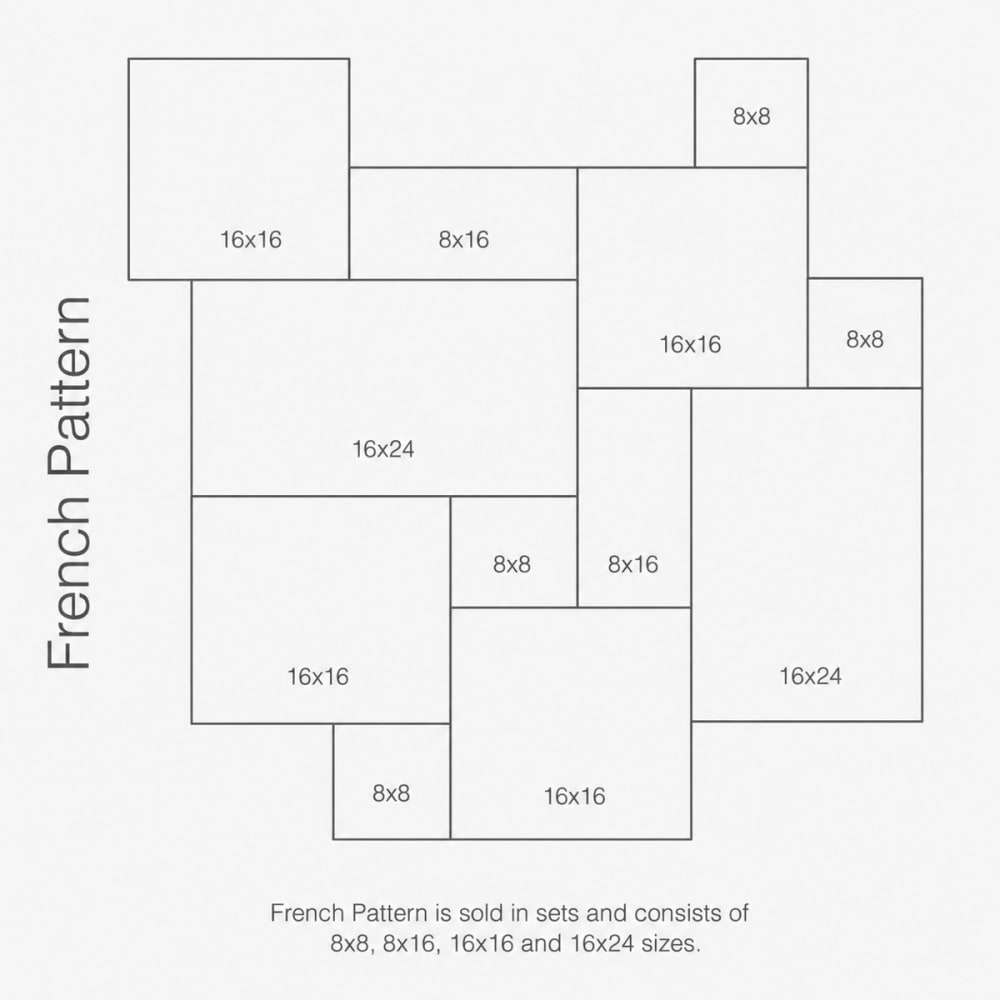
Exact dimensions vary a little by range, but the principle is always the same: four sizes, supplied in the correct ratio, repeating over a set area. That is why you buy a French pattern by the square metre rather than counting individual tiles.
How the repeat works
Lay the pieces in their intended arrangement and you complete one set. A single pack (one 406x610, two 406x406, one 203x406 and two 203x203 tiles) covers about 0.72 square metres, and from there the same sequence simply tiles across the floor. Because the pieces come pre-proportioned, ordering is refreshingly simple: take your area, add wastage, and the packs do the rest. For the multi-size cutting at the edges, add about 15 percent rather than the 10 percent you might use for a straight lay.
Where the French pattern looks best
Give it room. The pattern is at its most beautiful across larger, open areas where the repeat can breathe: living floors, entry halls, courtyards, alfresco terraces and pool surrounds. Its multi-directional joints are also forgiving, disguising minor cuts and transitions, which is part of why it has always been a favourite outdoors and in period and Hamptons-style homes. In a small, boxy room the repeat can feel cramped, so there a simpler layout often reads better.
Travertine, or travertine-look porcelain?
Traditionally the French pattern is cut in real travertine, and the warmth and variation of the stone suit the organic layout perfectly. If you love the look but would rather skip the sealing and the upkeep, the same four-size set is available in travertine-look and limestone-look porcelain, giving you the identical pattern with porcelain's easy maintenance. Which way to go depends on whether you want genuine stone or genuine convenience, and that is a conversation we have most weeks.
Two French pattern tiles we recommend
Both come pre-proportioned as a modular set, so you order by the square metre and the pattern repeats cleanly.
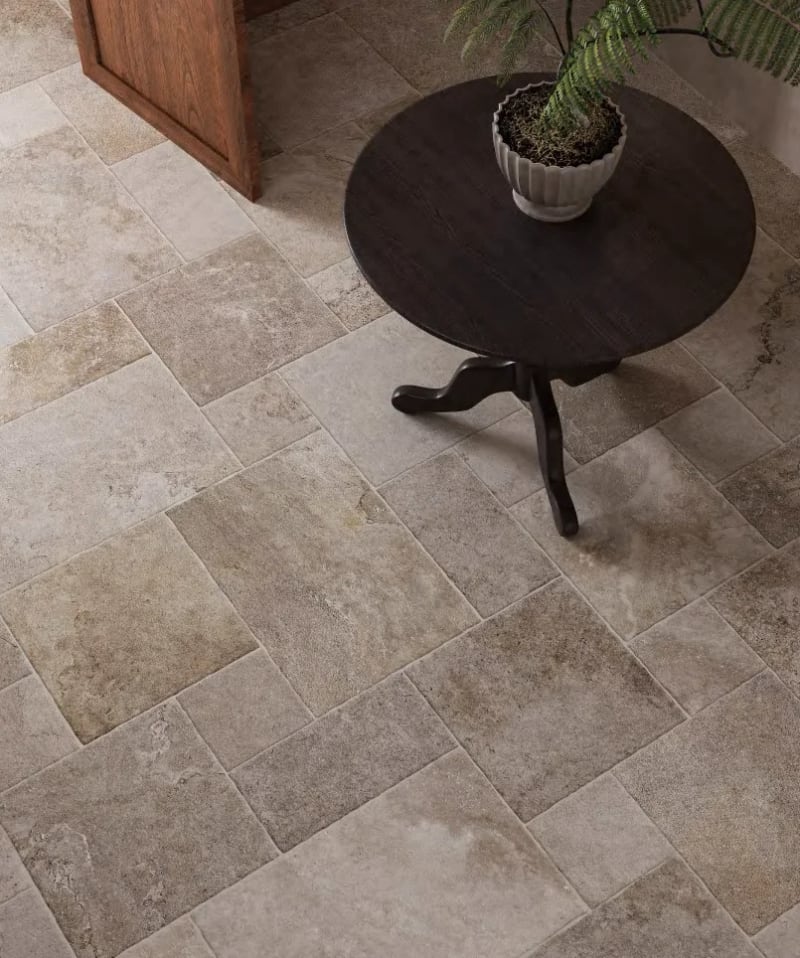
Porcelain · indoor & outdoor
Concord French Pattern
A stone-look modular porcelain in Sand and Earth, made for both internal floors and external paving.
Best for: a French pattern that runs from an indoor living floor out to a courtyard or alfresco.
Care: porcelain, so no sealing. Order by the m2 and add about 15 percent for the multi-size cuts.
View product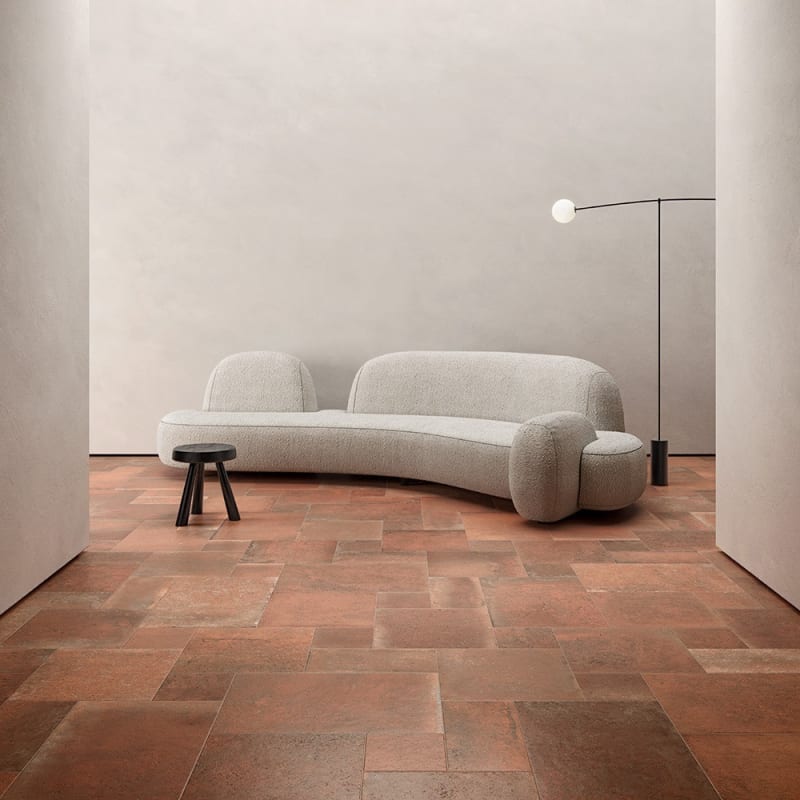
Italian porcelain · matt / grip
Terra French Pattern (Italian)
An Italian porcelain in Bruciata, Dolce and Salina, supplied as the classic four-size French pattern set in 0.723m2 packs.
Best for: warm, characterful living floors and alfresco areas that want genuine Italian quality.
Care: porcelain, so no sealing. The matt grip finish suits wet and outdoor zones; add about 15 percent wastage.
View productFrequently asked questions
What is the French pattern?
The French pattern, also called the Versailles pattern or Roman pattern, is a classic tile layout made from four different tile sizes that interlock to fill an area without a rigid grid. The four modules repeat over a set area, usually around 1.5 square metres, creating a relaxed, organic surface with joints running in several directions.
What are the four tile sizes in a French pattern?
A French pattern uses four sizes that fit together and repeat: 203x203mm, 203x406mm, 406x406mm and 406x610mm (the classic 8, 16 and 24 inch set). They are supplied in the right proportions, a typical pack being one 406x610, two 406x406, one 203x406 and two 203x203 tiles, so the pattern repeats cleanly.
How big is a French pattern repeat?
A single pack of the six tiles covers about 0.72 square metres, and the pattern simply continues from there. Because the pieces are sold in the correct ratio, you order by total area rather than counting individual sizes, and add the usual wastage on top.
Is the French pattern only for travertine?
It is most associated with travertine and other natural stone looks, because the organic layout suits the material's warmth and variation. But you can buy the same four-size set in porcelain, including travertine-look and limestone-look porcelain, if you want the pattern with lower maintenance.
Where does the French pattern look best?
It suits larger, open areas where the repeat can breathe: living floors, entries, courtyards, alfresco areas and pool surrounds. The multi-directional joints hide minor cuts and level changes well, which is part of why it has always been popular outdoors and in period-style homes.
How much wastage should I add for a French pattern?
Because the layout involves several sizes and perimeter cuts, add around 15 percent wastage rather than the 10 percent you might use for a simple straight lay. For odd-shaped rooms, a little more is sensible. We are happy to check your setting out before you order.


Skip the designer fee, come straight to the experts
Our in-house experts at Design Tiles give you free, personal design guidance, in our Rockdale showroom or virtually anywhere in Australia. You get designer-level results and keep the budget for the tiles. Order sample packs to any state, or book a free consultation with the team.