The Complete Grout Guide: Epoxy vs Cement Grout, Colour and Sealing
Grout is the smallest line in a tile job and one of the most important. Here is how epoxy and cement grout compare, when you need to seal, and how to choose a colour that lifts your tiles rather than fighting them.
Choosing the tile is the exciting part. Choosing the grout feels like an afterthought, and yet it quietly decides how your tiles wear, how easy they are to clean, and how the finished surface actually looks. The first question is almost always the same: epoxy vs cement grout, which one do I need? This is our complete, plain-English guide to the answer, plus sanded versus unsanded, sealing, and getting the colour right.
The short version
In the choice of epoxy vs cement grout, cement grout is cheaper, easier to apply and comes in more colours, but it is porous and needs sealing. Epoxy grout costs more and is harder to install, but it is waterproof, stain-resistant and never needs sealing. Use epoxy for showers, splashbacks, wet areas and pools, and a well-sealed cement grout for most general walls and floors.
Epoxy vs cement grout: what is the difference?
Both fill the joints between your tiles, but they are made very differently. Cement grout is a cement-based powder mixed with water and pigment, and sometimes fine sand. It is porous, which means it absorbs water and staining unless it is sealed. Epoxy grout is made from an epoxy resin and a hardener that cure into a dense, non-porous joint. That single difference, porous versus non-porous, drives almost everything else: water resistance, staining, maintenance and cost. Here is how they compare.
| Cement grout | Epoxy grout | |
|---|---|---|
| What it is | Cement, water and pigment, sometimes with fine sand | Epoxy resin and a hardener, with a fine filler |
| Water & stain resistance | Porous, needs sealing to resist water and stains | Non-porous, highly water and stain resistant |
| Durability | Good, but can crack, shrink or discolour over time | Excellent, hard-wearing and chemical resistant |
| Sealing | Should be sealed, then resealed periodically | None needed, ever |
| Installation | Forgiving, easy to apply and to repair | Sets fast and is harder to work, best left to a pro |
| Colour range | Very wide, easy to match or contrast | Growing but more limited, can look slightly glossy |
| Cost | Lower | Higher, in both material and labour |
| Best for | General walls and floors, heritage and natural looks | Wet areas, splashbacks, pools, high-stain and commercial |
Cement grout: the reliable all-rounder
Cement grout is what most tiles are set with, and for good reason. It is affordable, comes in a wide palette of colours so it is easy to match or contrast your tile, and it is forgiving to apply and to patch later. The trade-off is that it is porous. Left unsealed, it will gradually absorb water, soap and spills, which is how grout ends up looking grubby or discoloured, particularly in a shower or behind a stove. Seal it properly and maintain it, and cement grout stays looking good for years. If your grout has already dulled, our guide to fixing discoloured grout walks through reviving it.
Epoxy grout: the tough, waterproof upgrade
Epoxy grout is the premium option, and in the right place it is worth every cent. Because it cures non-porous, it shrugs off water, stains and most household chemicals, and it never needs sealing. That makes it superb in showers, around basins and baths, on kitchen splashbacks, in pools and in busy commercial spaces where hygiene and stain resistance matter. The catch is that it is dearer, it sets quickly and it takes skill to apply cleanly, so it is a job for an experienced tiler. The colour range is narrower than cement, and some epoxies carry a faint sheen rather than a fully matte look.
Sanded vs unsanded: which cement grout do I need?
If you go with cement grout, there is a second choice: sanded or unsanded. It comes down to your joint width and your tile finish.
| Type | Joint width | Best for | Watch out |
|---|---|---|---|
| Unsanded | Narrow joints, under 3mm | Walls, and polished stone, glass and delicate tiles | Not ideal for wide floor joints, can slump |
| Sanded | Wider joints, 3mm and above | Most floors and wider joints, resists cracking | Can scratch polished or soft tiles, test first |
As a rule of thumb, walls and narrow joints take unsanded grout, floors and wider joints take sanded. If your tile is a polished marble, a glass mosaic or a soft natural stone, tell your tiler, as sanded grout can scratch those surfaces and unsanded or a fine epoxy is the safer choice.
Do I need to seal my grout?
If it is cement, yes. Once cement grout has cured, usually after two to three days, it should be sealed with a penetrating grout sealer, and resealed every year or two depending on wear and the area. Sealing is what keeps water, spills and mould out of that porous surface. If it is epoxy, no: it is already non-porous and maintenance-free. The same sealing logic applies to porous tiles themselves, such as natural stone; for outdoor stone our guide to sealing outdoor tiles covers the method.
One important point for Australian bathrooms: grout is not waterproofing. The waterproof membrane installed behind your tiles is what protects the structure, to standard AS 3740, and it must be done correctly regardless of which grout you choose. The grout finishes and protects the joints; the membrane keeps the water out.
How do I choose a grout colour?
Colour is where grout stops being technical and starts being design. There are three broad approaches. Match the grout to the tile for a calm, seamless surface that lets a large format or a stone look read as one continuous plane. Blend a shade or two off the tile for a soft, forgiving finish that hides everyday marks, which is our most-requested approach for floors. Or contrast deliberately, like a warm off-white grout with a green zellige or a charcoal grout with white subways, to celebrate the pattern and the hand-made character. For a deeper look at getting the shade right, see our tips on colour-matching grout.
The grout we recommend: Mapei
When people ask which grout to actually buy, our answer is almost always Mapei, and we keep it in stock in the showroom. Mapei is one of the world's most trusted names in tile adhesives and grouts, and its cement grouts have quietly closed much of the gap with epoxy. Better still, we keep the full Mapei colour charts on hand, so our team can hold a colour against your actual tile and match the grout that flatters it, whether you want it to disappear into the surface or to frame the pattern. It is part of the free guidance we give with every tile selection.

In stock at Design Tiles · Colour-matched to your tile
Mapei Ultracolor Plus
Our go-to everyday grout, and a premium cement grout that behaves closer to epoxy where it counts. One grout covers joints up to 20mm, so it suits most walls and floors, and it is water-repellent and mould-resistant, with an anti-efflorescence formula that dries to an even, consistent colour. Quick-setting, low-emission, and available in a wide palette we can match to your tile in store. For a full epoxy in a heavy wet area, ask us about Mapei Kerapoxy.
- Polymer-modified cement grout, joints up to 20mm
- Water-repellent (DropEffect) and mould-resistant (BioBlock)
- Anti-efflorescence for an even, consistent colour
- 40 colours, matched to your tile on our showroom charts
- From $37 for a 5kg bag (confirm current pricing)
Which grout should I use where?
A quick reference for the most common spaces in an Australian home. When in doubt, lean towards epoxy anywhere that gets wet or stained, and a sealed cement grout everywhere else.
| Where | Recommended grout |
|---|---|
| Shower and wet-area walls and floors | Epoxy, or a well-sealed cement grout |
| Kitchen splashback and benches | Epoxy, for stain and grease resistance |
| General living and bedroom floors | Sanded cement, sealed |
| Pool surrounds and outdoor | Epoxy, for water and weather resistance |
| Heritage or natural-stone looks | Cement, sealed and carefully colour-matched |
Grout haze, and cleaning your tiles the right way
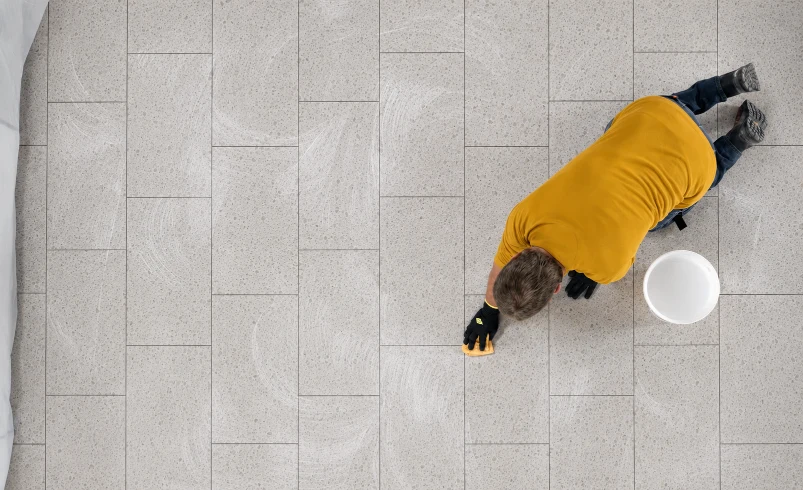
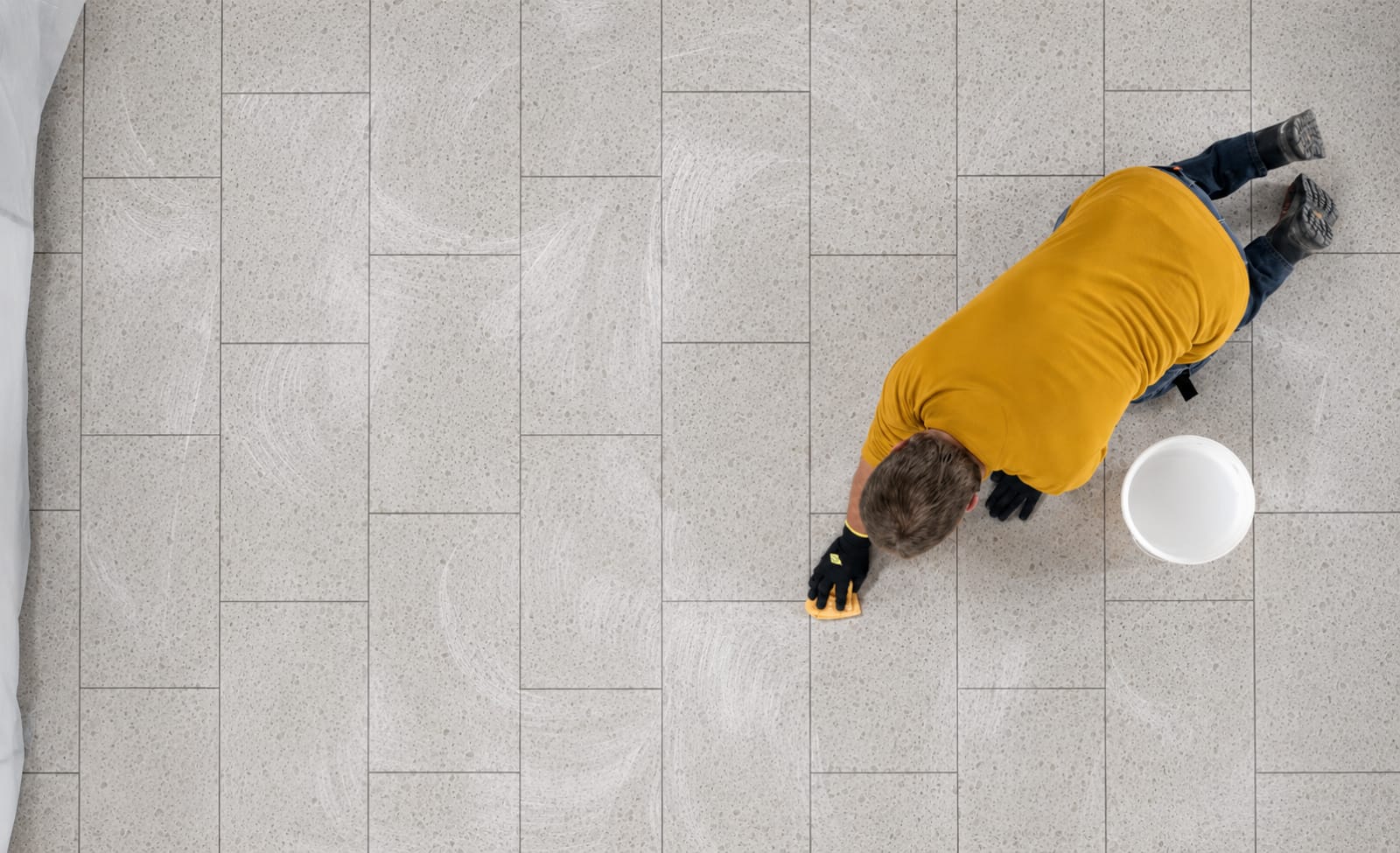
Grout haze is the thin, cloudy film of grout residue left across the face of the tiles after grouting. It is completely normal. Most of it wipes away with a damp sponge as the job is finished, and a light haze buffs off with a soft, dry cloth once the grout has set. It is the haze that is left to dry hard that causes the trouble, and how you remove it depends entirely on your tile.
This is the part people get wrong, and it can be an expensive mistake. Porcelain and most glazed ceramic tiles can take a proprietary, mildly acidic grout haze remover. Natural stone is different. Marble, travertine, limestone and other calcium-based stones are acid-sensitive, and an acidic cleaner will etch and permanently dull them. On stone, only ever use an acid-free, stone-safe haze remover. The same care applies to everyday cleaning: use a pH-neutral cleaner on stone and most tiles, keep harsh acids and bleach away from stone, and avoid abrasive pads on polished surfaces.
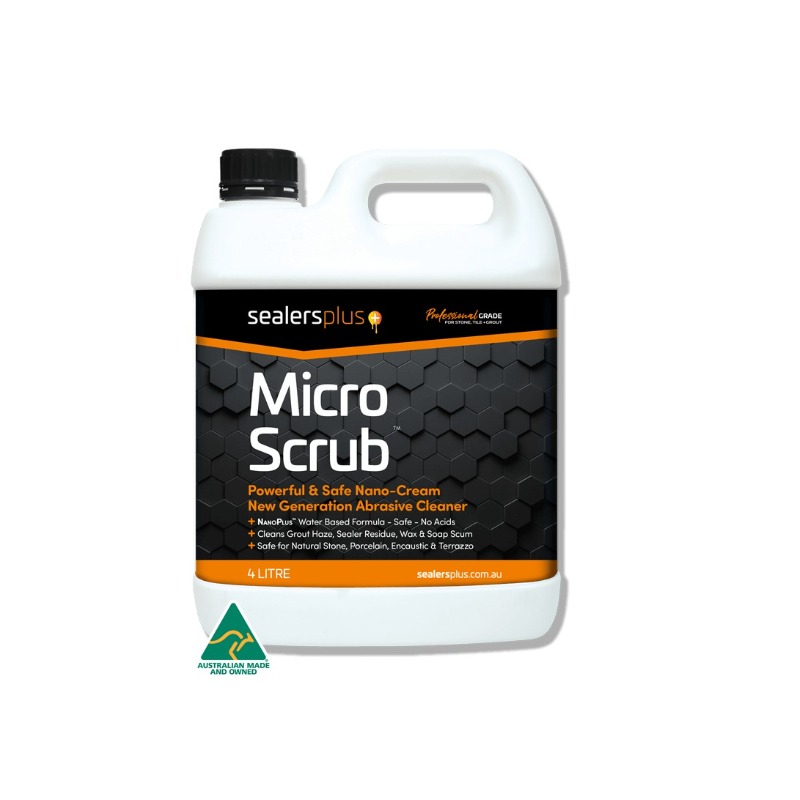
That is why we keep a full range of tile and stone care in store, from sealers to specialty grout haze removers. For natural stone, we usually reach for Micro Scrub, an acid-free, non-toxic cream cleaner that lifts grout haze, wax and sealer residue without etching the stone, and it works just as well on porcelain, terracotta and grout. For stubborn cement haze or efflorescence on hard-wearing tiles there are heavier-duty removers too, and a pH-neutral cleaner keeps everything looking its best day to day.
Acid-free · Safe on natural stone
Micro Scrub
An acid-free, non-toxic nano-cream that lifts grout haze, wax and sealer residue without etching. Safe on natural stone, porcelain, terracotta and grout, and Australian made. From $35.
View Micro Scrub →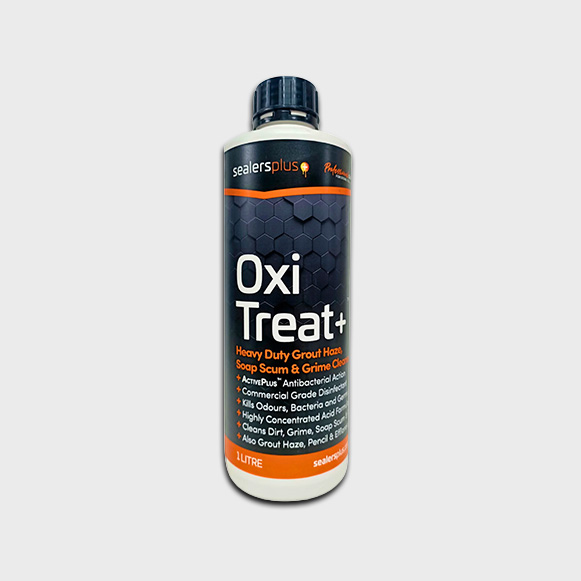
Heavy duty · Porcelain & ceramic
OxiTreat
A professional-grade, acid-based cleaner for stubborn grout haze, cement residue and efflorescence on hard-wearing porcelain and ceramic. Not for acid-sensitive natural stone. $46.
View OxiTreat →When you buy your tiles from us, ask us to match the right haze remover, everyday cleaner and sealer to your exact tile, so nothing you use can harm the surface. You can browse the full sealers and cleaners range in store or online. Whatever you use, test it on a small, hidden area first, especially on darker grout or stone.
Let us match the grout to your tile
The right grout is always the one chosen alongside the tile, the joint width, the room and the look you are after, not as a last-minute afterthought at the checkout. That is exactly the sort of detail our team sorts out with you every day. Bring your tile selection into the Rockdale showroom or send it through online, and we will recommend the grout type, the sanded or unsanded choice, and a colour that flatters your tiles, then point you to a finish that will still look considered in ten years. It is part of the free design guidance we offer, wherever you are in Australia.
Frequently asked questions
What is the difference between epoxy and cement grout?
Cement grout is a cement-based powder mixed with water, and it is porous, so it needs sealing to resist water and stains. Epoxy grout is made from epoxy resin and a hardener, which sets into a non-porous, waterproof and highly stain-resistant joint that never needs sealing. Cement grout is cheaper, easier to apply and comes in more colours; epoxy grout is tougher and more water-resistant but costs more and is harder to install.
Is epoxy grout better than cement grout?
It depends on the space. Epoxy grout is more durable, waterproof and stain-resistant, which makes it the better choice for showers, splashbacks, wet areas, pools and high-traffic or commercial floors. For general walls and floors, and for a softer, more traditional look, a good cement grout that is properly sealed is perfectly suitable and easier on the budget. Better really means better for the job.
What are the disadvantages of epoxy grout?
Epoxy grout costs more, both in material and labour. It sets quickly and is harder to work, so it is best applied by an experienced tiler. The colour range, while growing, is more limited than cement, and some finishes can have a slight sheen rather than a matte, natural look. For a simple dry area with narrow joints, that extra cost and effort is often unnecessary.
Do you need to seal epoxy grout?
No. Epoxy grout is non-porous once cured, so it does not absorb water or stains and does not need sealing. This is one of its main advantages over cement grout, particularly in wet areas and kitchens where staining and mould are a concern.
Do you need to seal cement grout?
Yes. Cement grout is porous, so it should be sealed with a penetrating grout sealer once it has cured, usually after two to three days, and resealed periodically after that. Sealing helps it resist water, staining and mould, especially in showers, splashbacks and floors. If you would rather not seal at all, epoxy grout is the maintenance-free alternative.
What is the difference between sanded and unsanded grout?
Sanded grout contains fine sand and is used for wider joints, generally 3mm and above, such as most floors, where it resists shrinkage and cracking. Unsanded grout is smoother and is used for narrow joints under 3mm, typically walls, and for delicate surfaces like polished stone, glass and some polished porcelain that sanded grout could scratch. When in doubt, match the grout to your joint width and tile finish, or ask our team.
Is epoxy grout waterproof?
Epoxy grout is water-resistant and non-porous, so it does not absorb water the way cement grout does, which makes it excellent for showers, wet areas and pools. It is important to know that grout of any kind is not a waterproofing layer. In an Australian wet area, the waterproof membrane installed behind the tiles does that job to standard AS 3740; the grout finishes and protects the joints.
What is the best grout for a shower?
Epoxy grout is generally the best choice for a shower and other wet areas, because it is non-porous, water-resistant and far less prone to staining and mould than cement. A quality cement grout that is properly sealed and maintained can also work well. Either way, the shower must be correctly waterproofed behind the tiles first, as the grout is not the waterproofing.
How do I remove grout haze from tiles?
Most grout haze wipes off with a damp sponge as the grouting is finished, and a light film buffs away with a soft dry cloth once the grout has set. For haze that has dried hard, use a grout haze remover suited to your tile. A mildly acidic remover is fine on porcelain and glazed ceramic, but on natural stone such as marble, travertine or limestone you must use an acid-free, stone-safe product, because acid will etch and permanently dull the stone. An acid-free cream cleaner like Micro Scrub is a safe choice on stone. Ask our team to match the right cleaner to your tile.
How should I clean natural stone tiles?
Clean natural stone with a pH-neutral cleaner and a soft cloth or mop. Avoid acidic cleaners, including vinegar and many bathroom and grout-haze products, and avoid bleach, since they etch and dull calcium-based stones like marble, travertine and limestone. Keep abrasive pads away from polished finishes, and seal porous stone to help it resist staining. If you are unsure, we can recommend a stone-safe cleaner for your specific tile.


Skip the designer fee, come straight to the experts
Our in-house experts at Design Tiles give you free, personal design guidance, in our Rockdale showroom or virtually anywhere in Australia. You get designer-level results and keep the budget for the tiles. Order sample packs to any state, or book a free consultation with the team.